The African Agribusiness Consortium (AAC) has secured a significant 750 acres of irrigated land at Konadu in the Kwahu Afram Plains South District from the Ministry of Food and Agriculture (MoFA) to establish a large-scale commercial vegetable production facility. This move is part of a partnership aimed at increasing food production, job creation, and commercial agribusiness development in Ghana.
Partnership to Unlock Ghana's Agricultural Potential
The allocation of the land forms part of a partnership between the Ministry and AAC aimed at translating investments in agricultural infrastructure and human capital into tangible outcomes. According to Minister for Food and Agriculture, Eric Opoku, the government has provided the irrigated land while AAC has committed to supplying the logistics and investment required to establish the vegetable production facility. "The Ministry has established an agreement with AAC, and under that agreement, 750 acres of irrigated land at Konadu have been allocated to AAC to provide logistics to establish a vegetable production facility," he said.
The partnership is seen as a crucial step in unlocking Ghana's agricultural potential and advancing the government's Feed Ghana Agenda. Minister Opoku described the partnership as the type of public-private collaboration needed to achieve sustainable growth. "This partnership between the private sector and agricultural development is exactly the kind of collaboration Ghana needs to achieve sustainable growth," he stated.
Developing Professionals for Ghana's Agriculture and Environmental Sectors
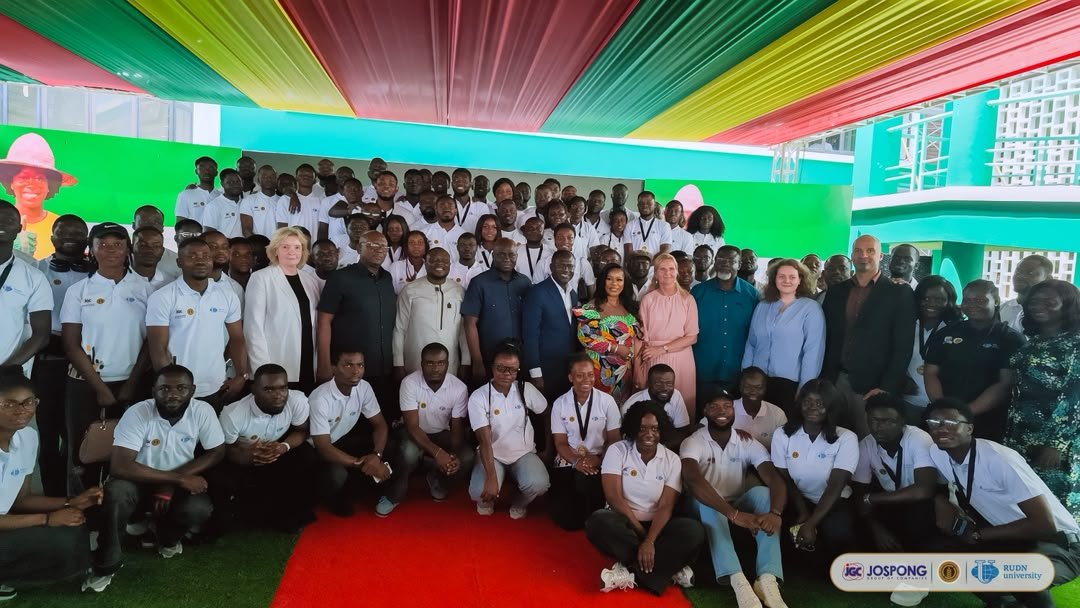
The agreement comes as 118 Ghanaian scholars return home after completing postgraduate studies in agriculture, ecology, and environmental sciences in Russia. The graduates received advanced training in crop production, soil and plant health, sustainable agriculture, climate change, environmental protection, and natural resource management. Dr. Adelaide Araba Siaw Agyepong, Chief Executive Officer of AAC and Executive Director of the Jospong Group, said the scholarship programme was never intended simply to produce graduates but to develop professionals capable of transforming Ghana's agriculture and environmental sectors.
Of the returning graduates, 88 specialised in agriculture-related disciplines, while 30 studied ecology, providing expertise across agricultural production and environmental management. Dr. Siaw Agyepong stressed that the next phase of the programme would focus on translating academic knowledge into practical economic outcomes. "The test before us now is to ensure that their knowledge does not remain in certificates, research, or academic presentations, but is translated into productive farms, strong agricultural enterprises, improved environmental practices, innovative technologies, employment opportunities, and measurable national impact," she said.
Bridging Education and Resources for Commercial Agriculture
The graduates would require access to productive land, irrigation, finance, markets, research support, mentorship, and institutional partnerships to maximise their impact. Dr. Siaw Agyepong called for a structured collaboration between AAC and the Ministry to deploy the graduates across key national priorities, including agricultural production, mechanisation, climate-smart agriculture, environmental restoration, value addition, and agribusiness development. "What is required at this stage is a deliberate bridge between education and resources and institutional support. They must be able to move beyond seeking employment and begin creating businesses, improving productivity, and generating opportunities for others," she said.
AAC is already developing a reintegration framework that will expose the graduates to commercial agriculture, agricultural research, mechanisation, environmental management, value-chain development, and entrepreneurship. The organisation intends to work closely with relevant directorates of the Ministry to identify areas where the graduates can support existing government programmes. "We want them to build enterprises, support farmers, strengthen value chains, and introduce practical solutions to the challenges confronting Ghana's agriculture and environmental sectors," Dr. Siaw Agyepong said.
Minister Challenges Graduates to Deliver Results
Minister Opoku challenged AAC and the returning scholars to demonstrate tangible outcomes from the investment in land, irrigation infrastructure, and education. "We are making available the land with irrigation infrastructure. AAC has pledged to make available all the logistics that are required. And so you must show us the difference. You have the responsibility to demonstrate the difference," he said. The partnership will support the cultivation, processing, storage, and marketing of vegetables, with the aim of increasing food production and creating employment opportunities in the agriculture sector.
Source: Joy Online