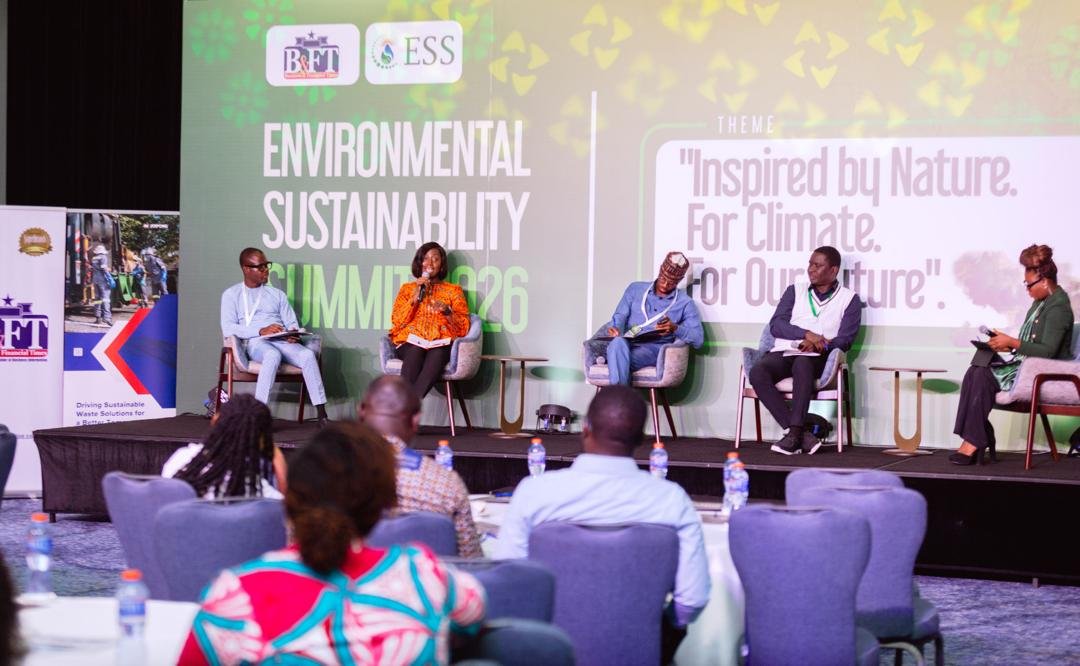
Ghana has several policies on climate action, energy transition, and urban development, but implementation remains slow due to inadequate planning, fragmented institutional coordination, and limited financing. A high-level dialogue on green urban development highlighted the need for practical, bankable projects capable of attracting long-term investment.
Waste Segregation and the Circular Economy
Senior Sustainability Officer at the Jospong Green Transitions Office, Dr. Gloria Boamah Kusi, emphasized that efficient waste segregation at source remains the foundation of any successful circular economy. According to her, waste should no longer be viewed merely as refuse but as a valuable resource capable of generating new products, renewable energy, and employment when properly managed. Dr. Boamah Kusi explained that separating waste at source significantly improves material recovery, making recycling and compost production more efficient.
Integrated Planning for Green Cities
Project Manager for Energy Transition and Green Infrastructure at the French Development Agency (AFD) for Ghana and Liberia, Doris Edem Agbevivi, said waste management, transport, and energy are interconnected sectors that must be planned together if cities are to become environmentally sustainable. She observed that although Ghana has made progress, waste management remains largely linear, with much of the waste collected ending up at disposal sites instead of being recovered for economic value. Mrs. Agbevivi questioned the sustainability of the country's transition to electric mobility if supporting infrastructure is not equally green.
Financing Sustainable Urban Development
Representing the Ministry of Local Government, Chieftaincy and Religious Affairs, Ing. Godfred Fiifi Boadi Esq. noted that countries around the world are pursuing green city agendas, although implementation often differs because of local realities. He argued that investment priorities need to shift, with comparatively smaller investments in waste management delivering greater environmental and economic returns than significantly larger investments in other sectors. Ing. Boadi Esq. also advocated for the effective implementation of Extended Producer Responsibility (EPR), under which manufacturers contribute to the cost of collecting, recycling, and safely disposing of products after consumer use.
Improved Policy Implementation
Deputy Director for Environment at the Ministry of Environment, Science and Technology, Raymond Ohene Ofori, said Ghana already possesses several policy frameworks capable of supporting green city development. According to him, what is required now is effective implementation supported by sustainable financing mechanisms. He disclosed that the Environmental Protection Agency (EPA) now hosts Ghana's Carbon Market Office, creating opportunities for climate finance to support green projects. If there is a clear strategy, institutions can work together to achieve the country's environmental goals.
Ghana's progress towards green city development remains hindered by inadequate planning, fragmented institutional coordination, and limited financing. However, the country has the potential to leapfrog its development challenges by adopting practical, bankable projects that prioritize waste management, renewable energy, and sustainable transport systems. With a clear strategy and effective implementation, Ghana can unlock the economic and environmental benefits of green city development, creating a more resilient and sustainable future for its citizens.
Source: Joy Online