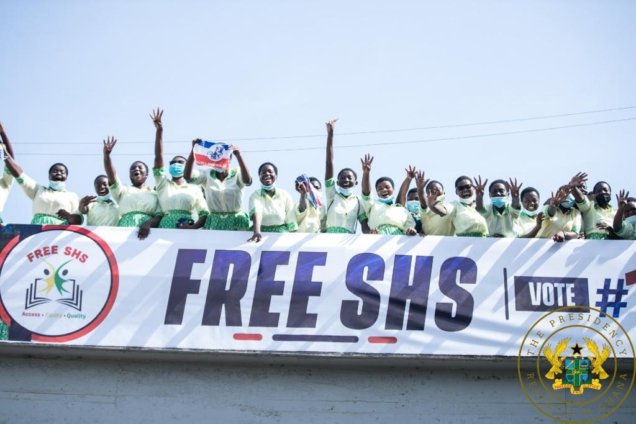
Ghana's Free Secondary High School policy, introduced by President Akufo-Addo's government in 2017, has been in operation for eight years. The policy has significantly increased quantitative access to education in Ghana, with enrollment rates rising steadily since its introduction.
The Qualitative Distortions
While the policy's impact on access to education is undeniable, its effects on the quality of education are less clear. Critics argue that the policy has introduced qualitative distortions, with budgetary allocations increasing but corresponding improvements in quality of outcomes being thin. The evidence suggests that real per-student spending is falling, class sizes are bursting past 60, and WASSCE pass rates are flatlining despite record enrollment.
The policy's design has been criticized for prioritizing quantity over quality. Thomas Piketty's 2015 book, "The Economics of Inequality," suggests that radical redistributive methods, such as redrawing school zones to require parents from different groups to send their children to the same schools, could be more effective in achieving social integration. However, the Akufo-Addo government's response to a proposal to exempt families who could afford to pay fees from the policy was that those who claimed to be able to afford such fees should voluntarily move their wards to the private education stream.
A Clash of Development Gears
Akufo-Addo's response was met with criticism from those who argued that it represented a misunderstanding of the role of public education in eliminating egregious inequity in society. The proposal to exempt families who could afford to pay fees from the policy was seen as a way to focus on those who genuinely needed the support. However, the government's stance has been that the policy is designed to benefit all, regardless of their ability to pay.
The policy's impact on social mobility has also been a subject of debate. Public schooling is widely recognized as a promoter of social mobility, as it transfers capabilities even to the disadvantaged. However, the policy's design has been criticized for creating a class society, where the rich create their own exclusive avenue, leaving the public system desiccated and the poor dependent on it.
A Lost Opportunity
The policy's failure to address the qualitative distortions and its impact on social mobility has been a lost opportunity for Ghana's education system. The Ghanaian public education system has historically made a great contribution to social cohesion, with lifelong friendships formed in the school system between the rich and the poor. However, the policy's design has been criticized for prioritizing the interests of the wealthy over those of the poor.
The Santa Claus democracy that Ghana operates under has been criticized for prioritizing performative rhetoric over radical improvements. The Akufo-Addo government's successors have talked the talk about introducing significant reforms to iron out the creases in the policy implementation, but there is little evidence of concrete change. The danger posed by the class bifurcation happening in the education system is real, and it is imperative that the government takes concrete steps to address it.
Source: Joy Online