Veep Calls on Stakeholders to Back Decentralisation Policy
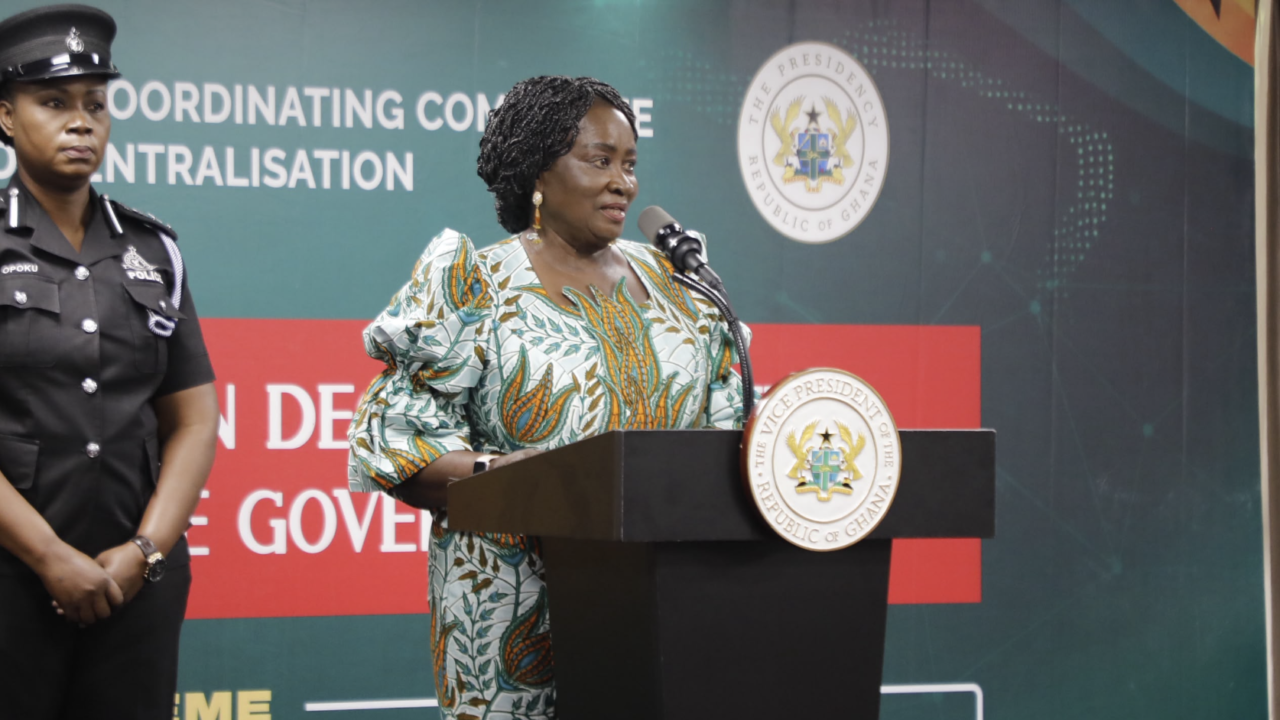
Vice President Professor Jane Naana Opoku-Agyemang has urged stakeholders to support the implementation of Ghana's decentralisation framework. The call was made on Monday in Accra at the Second National Dialogue on Decentralisation and Responsive Governance, organised by the Inter-Ministerial Coordinating Committee on Decentralisation (IMCC).
Decentralisation Policy and Strategic Framework
The National Decentralisation Policy and Strategic Framework (NDPS) 2026-2030 requires collective commitment to translate decentralisation reforms into improved services and tangible development outcomes, according to the Vice President. The framework aims to deepen the transfer of functions and responsibilities to the local level, strengthen local governance institutions, improve public service delivery, and accelerate development.
Stakeholder Support Crucial for Success
Professor Opoku-Agyemang said stakeholder support could take the form of technical assistance, capacity development, financing, advocacy, innovation, and active participation. "Government action alone will not be enough," she said, stressing the need for collective efforts to strengthen local governance and ensure that decentralisation delivers meaningful results to communities.
Prioritising Sanitation and Environmental Health
The Vice President also highlighted the need to prioritise sanitation and environmental health, particularly in the wake of recent flooding that exposed weaknesses in waste management, sanitation practices, and enforcement of environmental standards. She said the proposed District Environment, Health, and Sanitation Department under the NDPS would restore operational responsibility for environmental health and sanitation to Metropolitan, Municipal, and District Assemblies (MMDAs).
Measuring Success by Impact on Citizens
Professor Opoku-Agyemang urged stakeholders to measure decentralisation by its impact on citizens, rather than only by policies, structures, and functions transferred. "Our aim is a Ghana where local institutions have the confidence, the capacity, and the resources to respond to local needs and where communities are active partners in shaping development," she said.
Minister Calls for Stronger Financial Support
Minister for Local Government, Decentralisation, and Religious Affairs, Ahmed Ibrahim, also called for stronger financial support for MMDAs to enable them to effectively bring development to local communities. He said strengthening the capacity and financing of MMDAs was critical to improving sanitation and building resilient communities.
Measuring Success by Quality of Services Delivered
Executive Secretary of the IMCC, Gameli Hoedoafia, urged stronger coordination, effective implementation, and measurable delivery to ensure that the framework did not remain merely a policy document. He also asked stakeholders to measure success by the quality of services delivered and tangible improvements in communities, rather than only by functions transferred or institutions established.
The Second National Dialogue on Decentralisation and Responsive Governance is a crucial step towards translating the NDPS 2026-2030 into reality. With the Vice President's call for collective commitment and stakeholder support, the stage is set for a new phase of decentralisation that prioritises the needs of local communities and delivers tangible development outcomes.
Source: Joy Online