
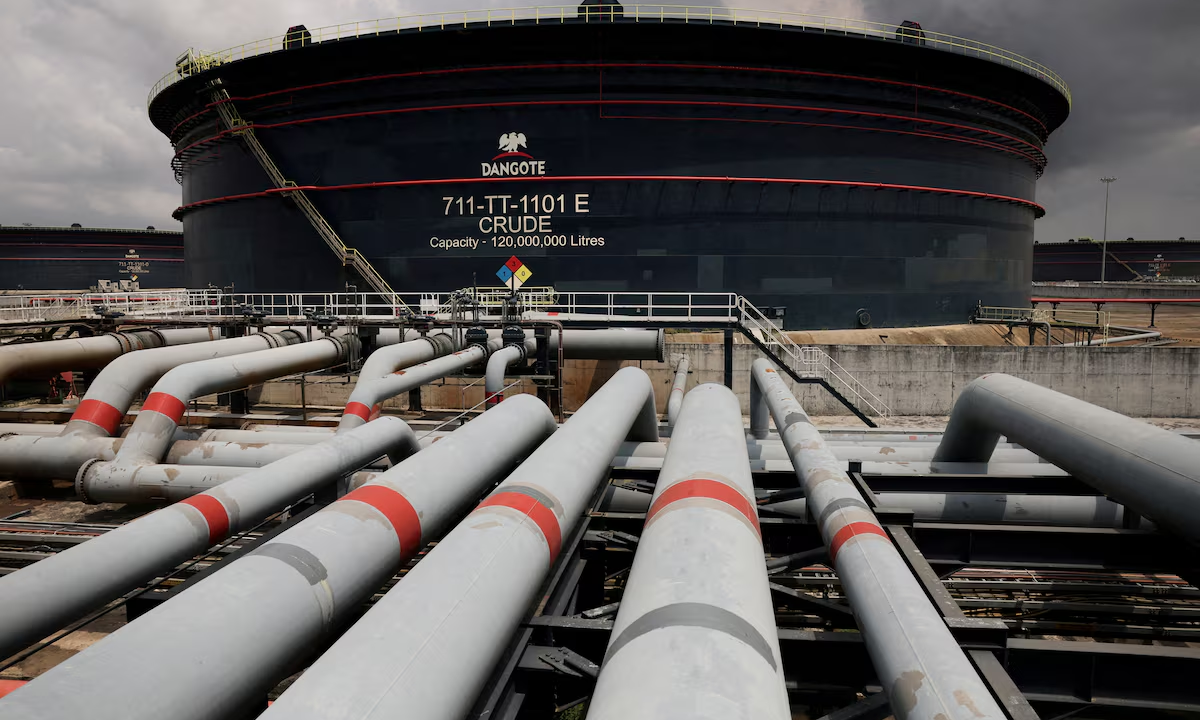
Nigeria's Dangote Refinery Set to Fuel West Africa's Economic Growth
Rabiu Umar, chief executive of Nigeria's Midstream and Downstream Petroleum Regulatory Authority, has announced plans for a regional fuel pricing benchmark and trading hub in West Africa. The move is expected to give Africa a greater role in fuel price discovery and trade, with the start-up of the 650,000 bpd Dangote refinery in 2024 serving as a catalyst.
Regional Fuel Pricing Benchmark Takes Shape
Umar said that the Dangote refinery is reshaping regional fuel supply chains and strengthening the case for a West African pricing and trading ecosystem independent of foreign benchmarks. "Africa must progress from being principally a price-taker in global petroleum markets to becoming an increasingly credible centre of price discovery, trading, investment and value creation," he said.
The regulator cited closer collaboration with S&P Global Commodity Insights as a key step towards establishing a regional refined-products benchmark market. However, Umar warned that inadequate infrastructure, weak logistics, and limited market transparency still pose significant challenges to the development of a credible hub.
Harmonisation of Fuel Standards Key to Success
Regulators are urging West African countries to harmonise fuel standards, licensing, and trade rules to reduce regulatory fragmentation and its associated costs. The lack of standardisation is inflating the cost of regional energy trade, and is seen as a major obstacle to the creation of a regional trading hub.
Investments in Infrastructure Critical
Umar stressed that a regional trading hub would require significant investments in pipelines, storage, marine logistics, and digital trading systems to improve fuel flows and market liquidity. The regulator acknowledged that this would be a substantial undertaking, but argued that the benefits would be worth the costs.
West Africa's New Role in Fuel Price Discovery
The Dangote refinery is expected to play a key role in West Africa's new role in fuel price discovery. The refinery's start-up in 2024 is seen as a major milestone in the region's bid to become a credible centre of price discovery and trading. With its 650,000 bpd capacity, the refinery will provide a significant boost to the region's refining capacity, and is expected to have a major impact on regional fuel prices.
A New Era for West African Energy Trade
The creation of a regional fuel pricing benchmark and trading hub will have significant implications for West African energy trade. The move is expected to reduce the region's reliance on foreign benchmarks, and will provide a new era of transparency and efficiency in regional energy trade. As the region continues to develop its refining capacity and infrastructure, it is likely that West Africa will become an increasingly important player in global energy markets.
Source: Joy Online