Spanish officials have reiterated their stance that the North African enclaves of Ceuta and Melilla are integral parts of Spain, amid Morocco's renewed claims of sovereignty over the territories. The Spanish Defence Minister, Margarita Robles, stated on Wednesday that Ceuta and Melilla "aren’t just Spanish; they’re super-Spanish and cannot be touched."
The comments from Robles come after Morocco's Justice Minister, Abdellatif Ouahbi, said on Tuesday that Rabat had always raised the issue of the cities' status in negotiations with Spain. Ouahbi stated that Morocco's long-term goal is to achieve a resolution through dialogue, but Spanish officials have made it clear that the status of Ceuta and Melilla is not up for discussion.
Ceuta and Melilla: A Long-Standing Dispute
The dispute over Ceuta and Melilla dates back to Morocco's independence in 1956. Morocco has regarded the two enclaves as occupied by Spain, arguing that sovereignty over them should ultimately be transferred to Rabat. Spain, on the other hand, considers Ceuta and Melilla to be integral parts of its territory since the 17th and 15th centuries, respectively.
In a statement on Wednesday, Spain's Foreign Ministry said that Spain's territorial integrity "has not been, and will never be, discussed with anyone." This stance was echoed by Robles, who told reporters in Ceuta that "any attack on Ceuta and Melilla is an attack on Spain as a whole. It must never happen again."
Morocco Steps Up Security
In response to the renewed tensions, Morocco's Interior Ministry announced on Wednesday that it had stepped up security near the borders with Ceuta and Melilla. The ministry warned that it would prosecute organisers and participants of any mass crossing attempts, and urged the public to remain vigilant and responsible.
The ministry also called on Spain to accelerate the return of unaccompanied Moroccan minors in Ceuta. Last week, Spanish Youth Minister Sira Rego said that Madrid would evaluate Morocco's offer to repatriate the children on a case-by-case basis. However, it remains unclear when the children will be returned.
A Flicker of Hope for Dialogue?
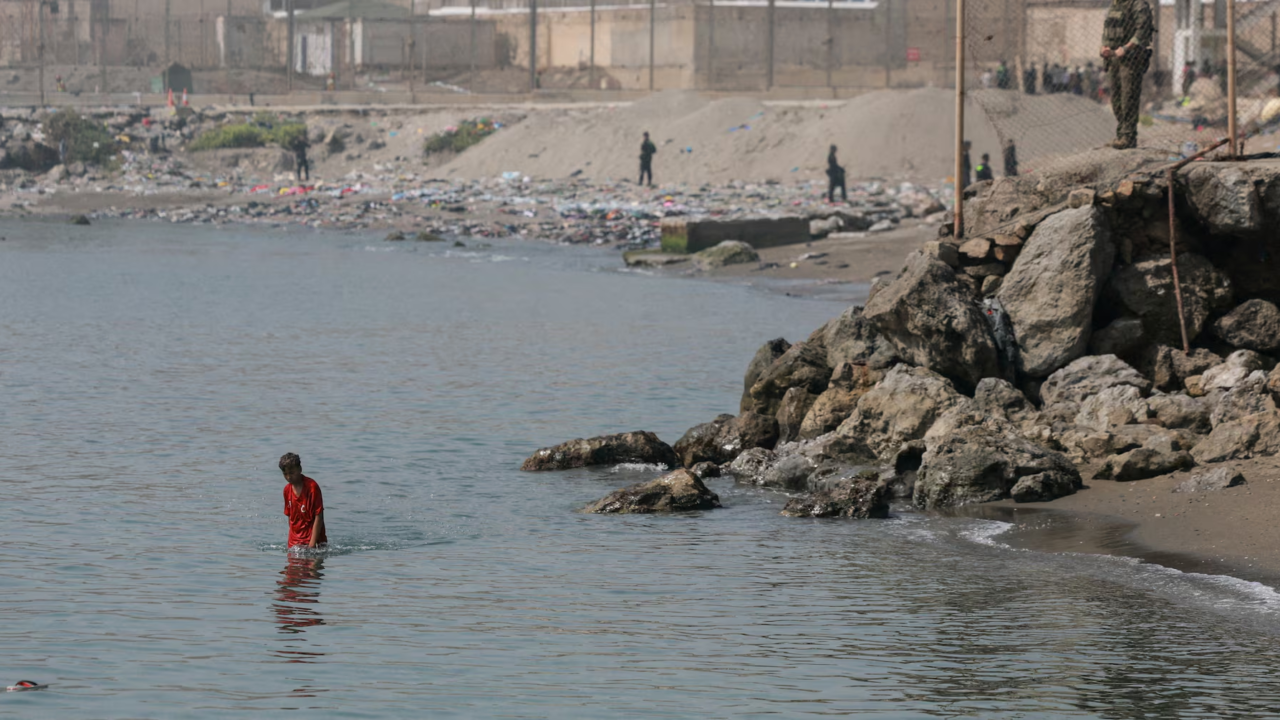
Despite the tensions, there are signs that both sides may be willing to engage in dialogue. Ouahbi's comments on Tuesday marked the first time Rabat has publicly raised the issue of the cities' status since Ceuta's border crisis in late July. The crisis saw an estimated 72,000 migrants briefly cross into the enclave, resulting in at least 96 deaths.
The Spanish government has largely praised Moroccan authorities for their cooperation in repatriating the migrants, blaming the crisis on people-smuggling mafias. However, the incident has highlighted the need for a more permanent solution to the crisis.
As the situation remains tense, it remains to be seen whether Spain and Morocco will be able to find common ground on the issue of Ceuta and Melilla. One thing is certain, however: the status of the two enclaves will continue to be a major point of contention in the years to come.
Source: Joy Online