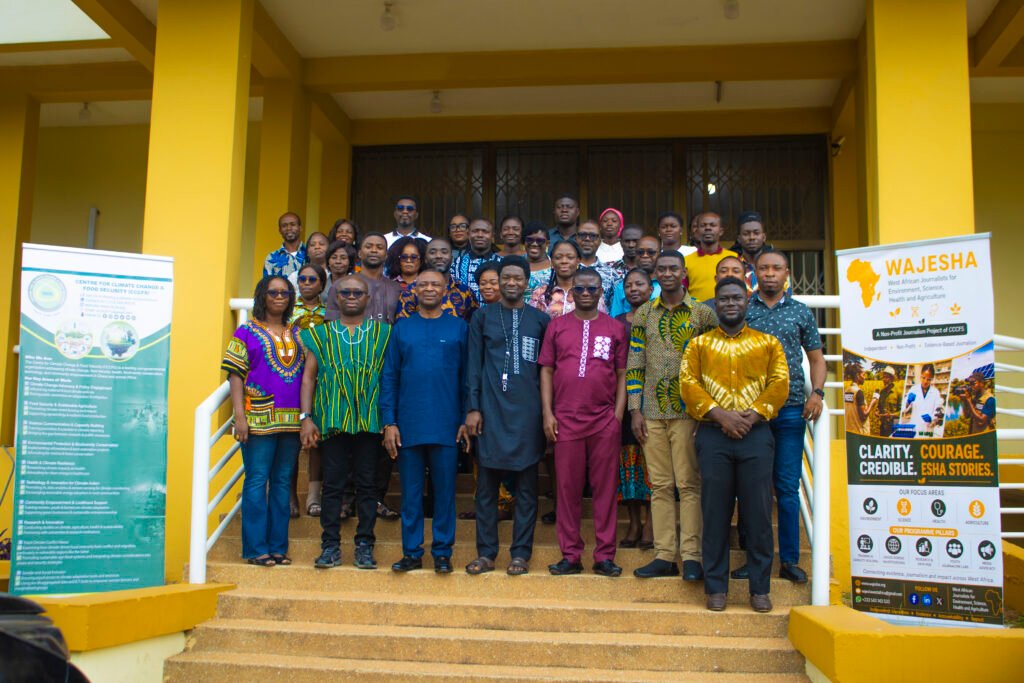
At a special training workshop organized by the University of Skills Training and Entrepreneurial Development (USTED), researchers were urged to make a real impact in society by communicating their findings in language that ordinary people can understand.
The call was made by USTED's Pro Vice Chancellor, Prof Isaac Boateng, who emphasized that research should not be judged solely by the number of papers published or citations received, but by the impact it creates in society.
Closing the Research Communication Gap
USTED's Publication Board Chairman, Dr Christopher Owusu-Ansah, highlighted the gap between research produced by universities and the wider public. He noted that many studies from the Global South are published in international journals where access is often limited by subscription fees and paywalls. "The research that is done is buried behind paywalls," he said.
This is particularly concerning because a significant amount of research is supported through public resources. Dr Owusu-Ansah argued that citizens should have access to research findings that can influence policies and national development. "It is only proper and fair that the research that is done is also thrown into the public space, not just behind paywalls, so that the public will be able to understand the research that is done and which would help to promote proper policies and national development," he stated.
Turning Research into Stories People Can Understand
To help address this challenge, the university invited journalists from the West African Journalists for Environment, Science, Health and Agriculture (WAJESHA) to lead practical sessions on communicating research to wider audiences. The trainers demonstrated how academic studies can be turned into stories that meet the needs of newspapers, broadcasters, and digital platforms without compromising scientific accuracy.
According to Daniel Abugri, New Media Editor at WAJESHA, "A study becomes news when people can see how it affects their lives." Participants were taken through how to write research in a style that journalists can use and how to adapt academic work for different media platforms.
Rethinking How Researchers Communicate Findings
For some participants, the training highlighted the need to move beyond traditional academic communication. Dr Daniel Nimo at the Department of Interdisciplinary Studies said the workshop had helped him understand how research findings could be transformed into stories that ordinary people could follow. "This workshop has been very effective to the extent that it has enlightened some of us to know how we can convert our research work into news where anybody can read to get the understanding," he indicated.
A lecturer at the Civil Engineering Department, Engr Anna Amankwah Minkah, said academic writing is usually designed for specialists within specific fields. "Most of our writing is tailored to research and academia," she pointed out. She emphasized that researchers whose work is intended to influence society must communicate differently. "We should be able to communicate in a way that society will easily grasp what we are trying to say, what our findings are," she added.
Next Steps
The training workshop is a significant step towards closing the research communication gap in Ghana. As USTED continues to promote research communication, it is essential to build on this momentum. The university should consider providing ongoing support to researchers to help them develop their communication skills and adapt their research to meet the needs of different audiences. By doing so, Ghana can ensure that research findings are accessible to everyone, not just those with access to academic journals and paywalls.
Source: Joy Online