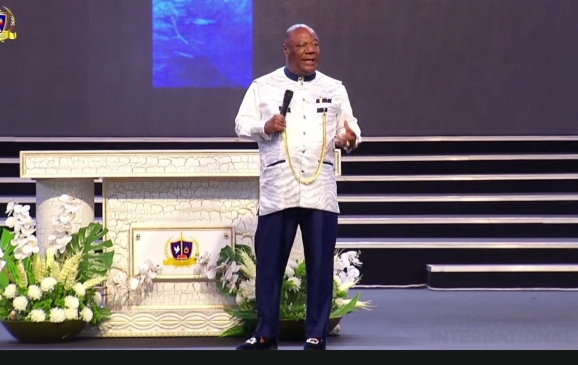
The General Overseer of Action Chapel International, Archbishop Nicholas Duncan-Williams, has raised alarm over what he described as attempts by powerful interests to find new channels into Ghana's gold trade. According to him, these powerful actors are seeking to access the formal gold-trading system through the Ghana Gold Board (GoldBod).
Powerful Forces Behind GoldBod Scandal Exposed
Addressing his congregation on Sunday, Archbishop Duncan-Williams expressed deep concern over the pressures facing the GoldBod. He claimed that some individuals who could no longer obtain gold illegally as easily as they had in the past were now seeking ways to access the formal gold-trading system. "With what I was told by this sheikh and the calls I had, they can't get the gold like before illegally, so they want some channels to the Gold Board so they can purchase the gold now from the Gold Board," he said.
The Archbishop believes that the GoldBod is confronting a highly organised and influential network. "It's clear to me that the Gold Board is dealing with a very powerful movement," he said. He described those behind the alleged interests as "very, very established" people who understand the gold business and know how to operate within the sector.
Archbishop's Call for National Intercession
Archbishop Duncan-Williams has urged his congregation to spend time praying for Ghana, describing the issue as sufficiently serious to warrant national intercession. He believes that the fight against illegal mining is also a fight over the country's future – its rivers, farmland, food supply, institutions, and the ability of future generations to inherit a healthy and prosperous nation. "We are destroying the future of our children and our grandchildren," he warned.
The Archbishop's concerns extend beyond the gold trade to the environmental consequences of illegal mining. He argued that the environmental consequences of illegal mining could eventually threaten the country's ability to feed itself. "I take time to study history a lot, and some things are bothering me," he said. "One of them is how we are managing the future of our children and our grandchildren when it comes to our water bodies, when it comes to the land that produces crops and the food we eat."
Challenges in Enforcing Laws
Despite the measures in place to prevent illegal mining, Archbishop Duncan-Williams questioned whether Ghana's laws were being enforced effectively. "For whatever reason it looks like the rules and the laws are not working because if anybody tries to make it work and enforce the law, we turn everything to politics," he said. He suggested that elected officials could be reluctant to enforce unpopular measures because of concerns about electoral consequences.
The Archbishop repeatedly framed the issue as one of intergenerational responsibility, warning that the country's current approach to natural resources could leave future generations with polluted water, degraded farmland, and fewer economic opportunities. "If you look at the way we are running our society as a country, a nation, the future is in trouble," he said.
The Archbishop's call for national intercession has sparked concerns about the future of Ghana's natural resources and the country's ability to regulate its mineral resources effectively. As the country grapples with the challenges of illegal mining, Archbishop Duncan-Williams' words serve as a stark reminder of the need for effective leadership and the importance of prioritising the future of the nation's children and grandchildren.
Source: Joy Online