
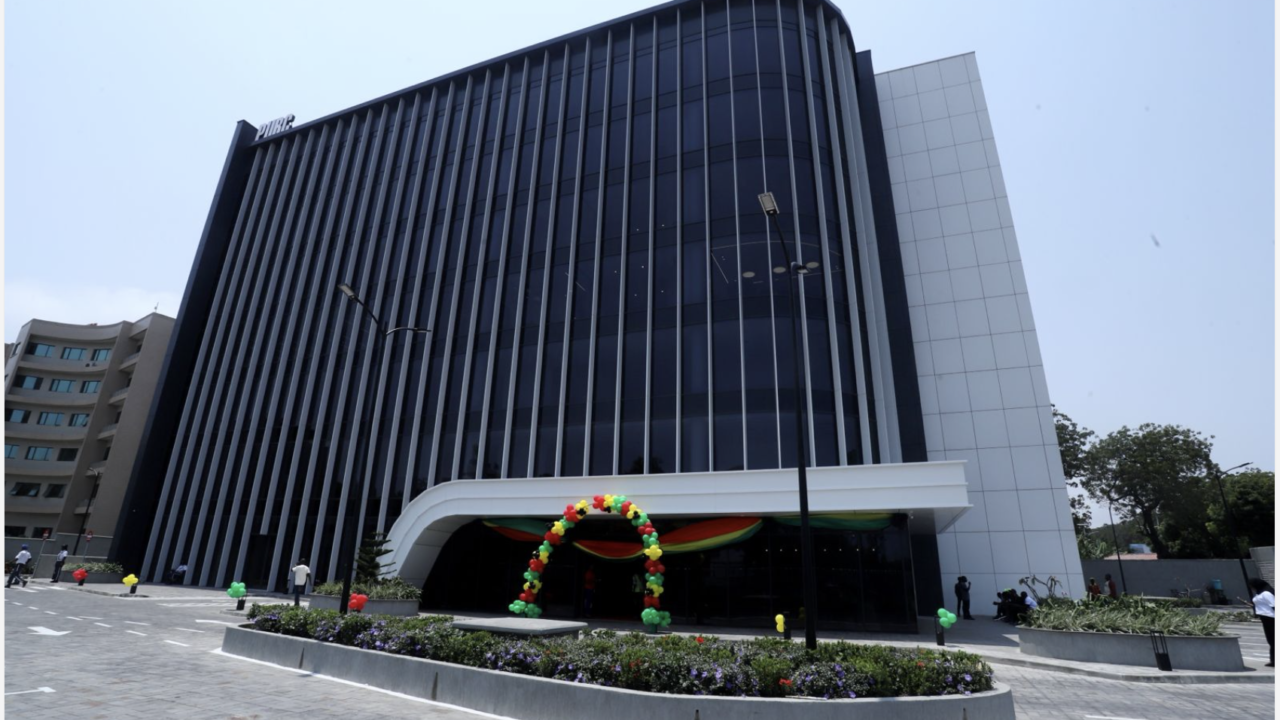
The Public Utilities Regulatory Commission (PURC) has been given a new head office to oversee Ghana's utility sector. The facility was commissioned by the Minister of Energy and Green Transition, Dr John Abdulai Jinapor, in Accra on [CONFIRM: date].
The new head office is a significant development in the growth of the PURC, which has evolved over more than two and a half decades from an institution largely associated with tariff reviews into a regulator with broader responsibilities for the electricity, water, and natural gas sectors.
A New Home for Stronger Utility Regulation
The facility is designed to enable the PURC to deepen regulatory oversight, improve consumer services, and ensure that utility companies remain financially viable to provide reliable services. Dr Jinapor said the new head office should strengthen the Commission's capacity to regulate Ghana's electricity, water, and natural gas utilities. The facility includes modern conference spaces for stakeholder engagement, state-of-the-art training facilities, electricity and water meter laboratories for quality assurance, a real-time monitoring room, and contemporary offices to improve operational efficiency.
A Testament to Institutional Growth
The new head office is a significant investment in the future of utility regulation in Ghana and reflects the Commission's institutional growth. Dr Shafic Suleman, Executive Secretary of the PURC, said the facility had been designed with modern systems and facilities to respond to the increasing complexities of utility regulation. He expressed appreciation to successive boards, management, and staff, the Government, and other stakeholders for their contributions towards completing the project. The building was fully paid for through improved cash flows within the utility sector, attributing the development partly to reforms that had strengthened the Cash Waterfall Mechanism.
Strengthening Enforcement and Stakeholder Engagement
Dr Jinapor urged the PURC to strengthen enforcement, intensify scrutiny of the commercial performance of utilities, and ensure that consumers felt the presence of the regulator through improved service delivery and faster resolution of complaints. He particularly urged the Commission to pay close attention to the commercial performance of the Electricity Company of Ghana (ECG), describing it as a critical link in the financial sustainability of the energy sector. Dr Jinapor also encouraged the PURC to broaden stakeholder engagement and support industrial competitiveness, particularly in relation to the Government's 24-hour economy agenda.
The new head office is expected to provide an improved working environment for staff and strengthen the PURC's capacity to regulate Ghana's electricity, water, and natural gas utilities. As the PURC embarks on this new chapter, it is essential that the Commission continues to prioritize consumer protection, ensures that utilities remain financially viable, and strengthens its enforcement mechanisms to deliver higher standards of service to the people of Ghana.
Source: Joy Online