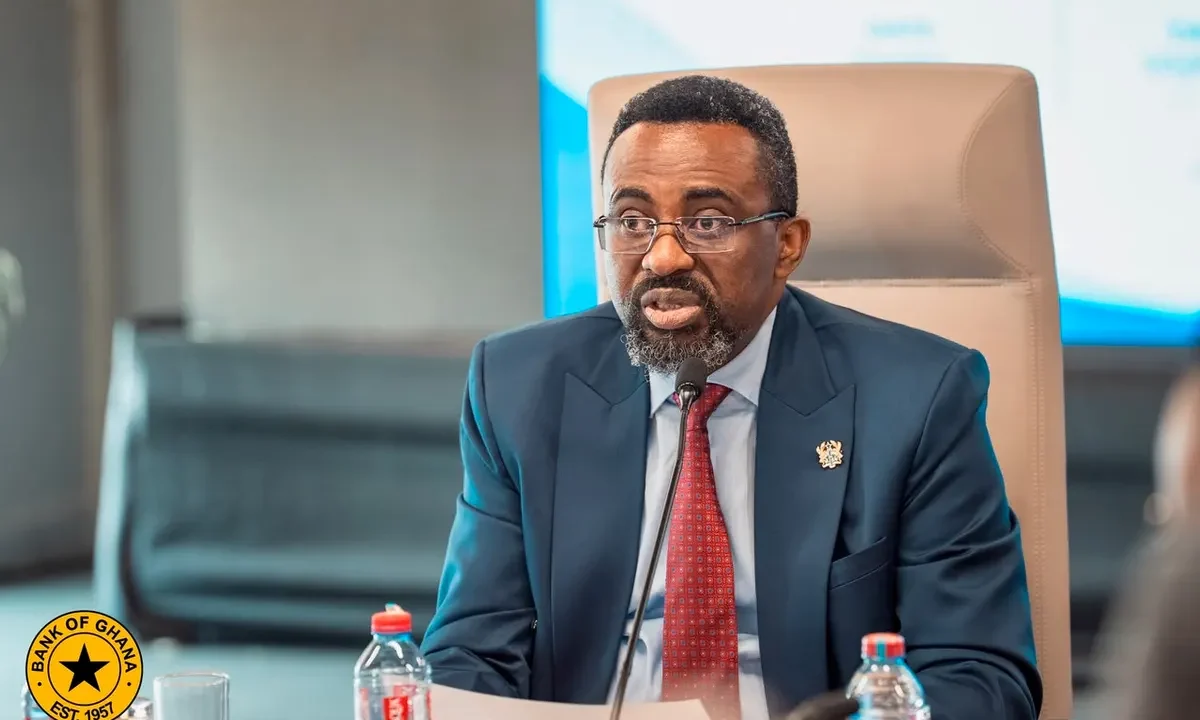
The Bank of Ghana (BoG) Governor, Dr. Johnson Asiamah, has credited the International Monetary Fund (IMF) deal for taming inflation in the country. According to Dr. Asiamah, this achievement was not accidental; it was the result of coordinated policy action, institutional commitment, and the resilience of the Ghanaian economy.
Inflation Decline Attributed to IMF Deal
The BoG's monetary policy goal is to bring inflation back to the 6-10% target by the end of the IMF deal. Dr. Asiamah has explained that the outlook guides BoG policy rate decisions. The bank aims to reduce demand-pull inflation and stabilize prices by discouraging borrowing and increasing the cost of credit.
The BoG Accountability and Transparency Series has reported a decline in inflation to 5.4%. Reserves have risen to US$13.8 billion, and the floating cash stands at 74.5 billion. This downward trend in inflation is attributed to the bank's tight monetary policy stance and complementary efforts across all fronts.
Ghana's Central Bank on Track
Ghana's central bank governor has declared the country back on track at the ongoing IMF World Bank meetings in Washington DC. The governor's declaration comes as a result of the bank's efforts to stabilize the economy. According to the IMF, Ghana's central bank is helping the economy recover through a tight monetary policy stance and complementary efforts.
The IMF has acknowledged the bank's efforts in helping the economy recover. In a report, the IMF stated that complementary efforts across all fronts have helped to lower inflation. The report highlighted the bank's tight monetary policy stance as a key factor in the country's economic recovery.
What's Next for Ghana's Economy?
The BoG Governor's comments on the IMF deal's role in taming inflation have sparked hope for the country's economic recovery. As the country continues to implement policies aimed at stabilizing the economy, investors and citizens alike are watching closely. The BoG's next move will be crucial in determining the country's economic trajectory in the coming months.
The country's economic recovery is closely tied to the success of the IMF deal. If the deal is successful in reducing inflation and stabilizing the economy, it could have a positive impact on the country's economic growth. However, if the deal fails, it could have severe consequences for the country's economy. The next few months will be crucial in determining the outcome of the IMF deal and its impact on Ghana's economy.
Source: 3News