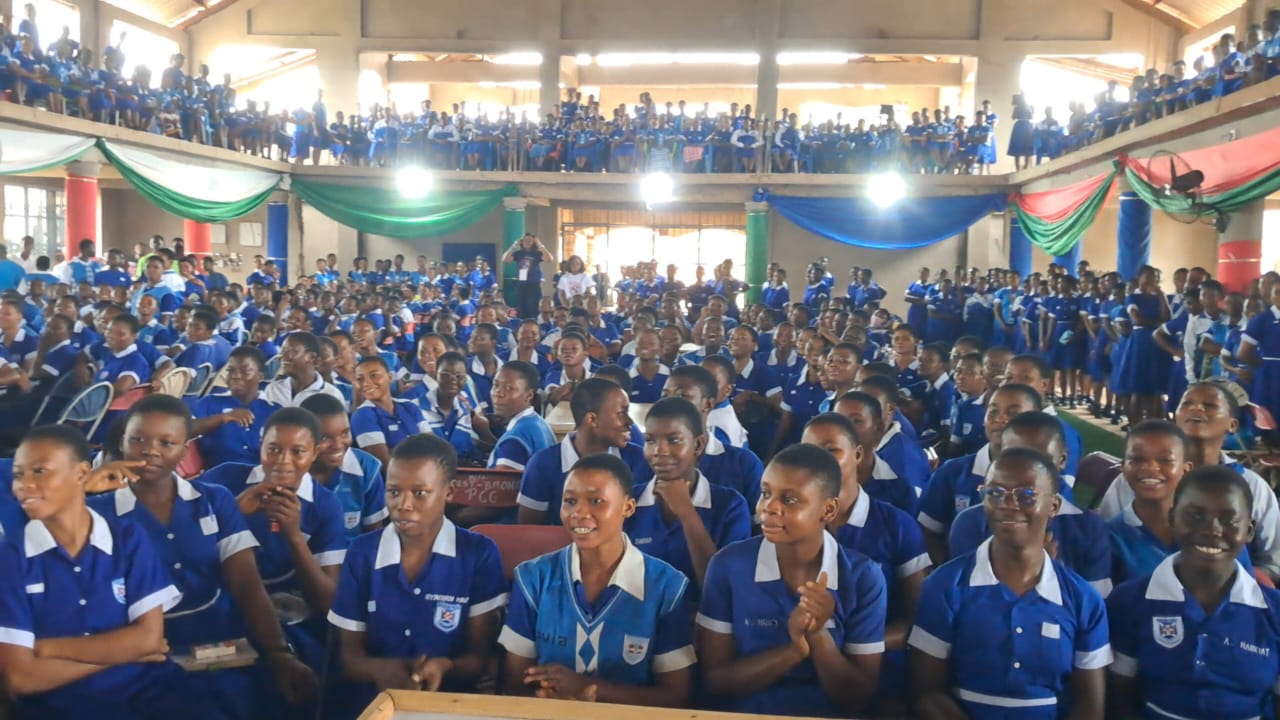
More than 1,500 girls from Berekum have benefited from a reproductive health summit, with organisers calling for stronger collaboration to bridge knowledge gaps affecting the development of the girl child. The summit, organised by the GIMAT Volunteer Network, aimed to educate and empower girls to better understand their bodies, reproductive health, and personal development.
Gaps in Knowledge Persist Despite Advances in Education
Despite advances in technology and modern education, many girls remain "naive" about issues concerning their bodies, according to Fortune Morkporkpor Adalevo, Summit Lead and International Coordinator of the GIMAT Volunteer Network. The summit sought to fill this knowledge gap by educating girls on biological processes such as menstruation, ovulation, and pregnancy, which Mrs Adalevo believes are important to their development and decision-making.
Abortion and Reproductive Health Awareness Take Centre Stage
Key issues discussed at the summit included abortion and its effects, common infections among girls, cervical cancer awareness, safeguarding the girl child, and responsible conduct. Medical doctor at Holy Family Hospital in Berekum, Dr Angel Abena Tiwaa Acheampong, underscored the importance of equipping girls with accurate reproductive health information. Dr Acheampong noted that some girls who become pregnant resort to dangerous methods to terminate their pregnancies before seeking medical attention, often arriving at the hospital only after complications have developed.
Students Reflect on Lessons Learned
For the students, the summit provided lessons that extended beyond reproductive health. A student of Presbyterian SHS, Berekum, Ameyaa Brightina, said she had learned about infections as well as how to conduct herself around colleagues and in other settings. Another participant, Pascaline Amofa Adoma of Methodist Senior High Technical School, said the lessons on becoming a "classy lady" were particularly valuable.
A Call for Collaboration to Empower Girls
Summit Lead Fortune Morkporkpor Adalevo appealed to communities and corporate institutions to support initiatives targeted at empowering girls. She noted that gaps also exist in the relationship between parents and children as well as between schools and students, a situation she said should change to help address issues of the girl child. The Bono Region has recorded 1,188 abortion cases among girls aged 15 to 19 between 2021 and 2024, requiring intentional education on abstinence, safe abortion, and the dangers of unsafe abortion.
Filling the Gap in Reproductive Health Education
The GIMAT Volunteer Network hopes to extend the programme to more regions across Ghana. The organisation is trying to fill the gap in reproductive health education, which it believes is essential for the development and decision-making of girls. With the summit's lessons still fresh in their minds, the girls are now better equipped to make informed decisions about their reproductive health and well-being.
Source: Joy Online