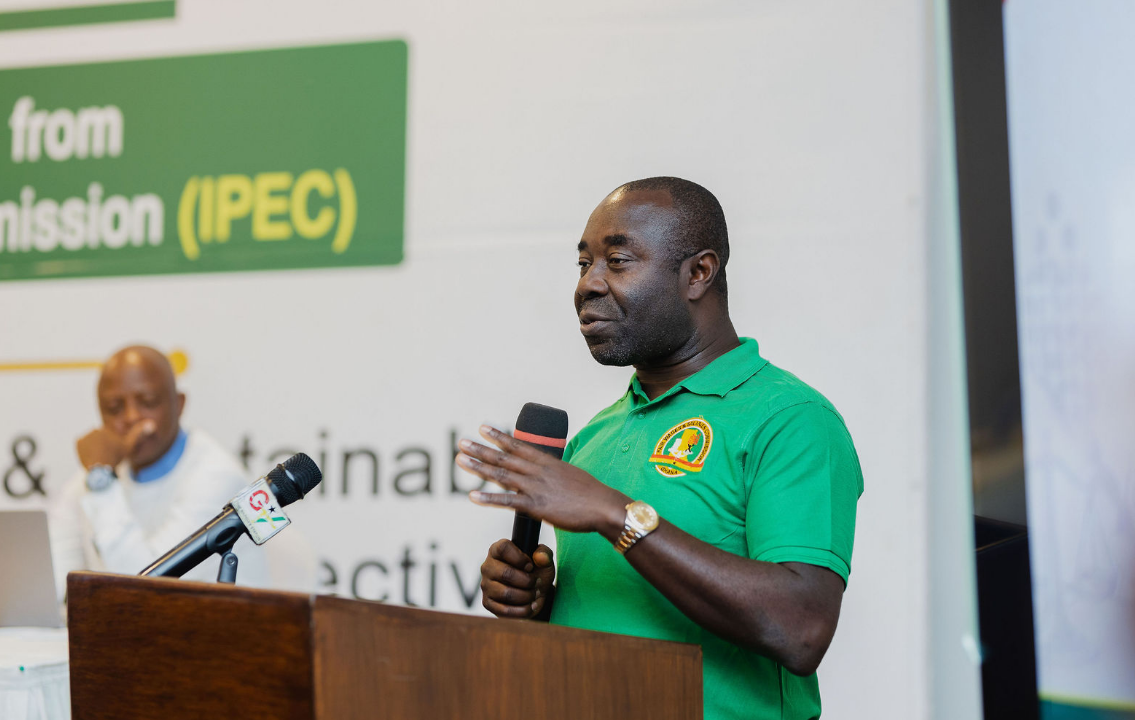
The Minister for Labour, Jobs and Employment, Emmanuel Kwadwo Agyekum, has urged Chief Executives of State-Owned Enterprises (SOEs) to take an active part in shaping Ghana’s new public sector pay system. Speaking in Accra on Friday, Mr Agyekum said the government wants a home-grown, sustainable compensation framework based on broad consultations with stakeholders, not the adoption of any foreign model.
The call came at a one-day stakeholder engagement organised by the Fair Wages and Salaries Commission (FWSC). The event focused on preparing SOE CEOs for the transition to the proposed Independent Public Emoluments Commission (IPEC). The session carried the theme: “Towards an Independent, Equitable & Sustainable Compensation System: Stakeholders’ Perspectives on Ghana’s Public Sector Pay Reforms.”
Mr Agyekum asked SOE leaders to openly share their views and concerns. “This is not coming to take your powers. We want you to support, we want you to contribute, we want you to give any other input that will be able to help us to bring in something that is new. Let it be the best system,” he said.
He stressed that the consultation was necessary to build consensus around the reforms and make sure the system truly reflects Ghana’s realities. Mr Agyekum added that President John Dramani Mahama fully supports the reforms and encouraged the CEOs not to hold back their opinions.
Addressing worries that the IPEC framework might target only office holders covered under Article 71 of the Constitution, the Minister said the government understands the constitutional and legal steps required. “We know it has to go through a process,” he clarified.
Dr George Smith-Graham, Chief Executive of the FWSC, reassured SOE boards that the move to IPEC would not strip them of their mandate. Under the new framework, boards would still assess their organisations’ business models and operating environments. They would submit evidence-based remuneration proposals to IPEC.
“What changes is not the relevance of the board, but the governance architecture within which its proposals are considered,” Dr Smith-Graham said.
He explained that equity in public sector pay does not mean everyone earns the same. Differences in remuneration should have an “objective, transparent and defensible basis.” Such differences could reflect factors like the size and complexity of the organisation, profitability, capacity to pay, productivity, and market scarcity.
Dr Smith-Graham added that IPEC would complement, rather than duplicate, the work of the State Interests and Governance Authority (SIGA). Boards would originate pay proposals, SIGA would provide governance and financial performance perspectives, while IPEC would oversee compensation on behalf of government as shareholder.
The planned IPEC Bill is expected to be laid before Parliament in October 2026. This stakeholder engagement is part of ongoing consultations before that happens.
The government’s push for a new public pay system comes amid calls for more fairness and sustainability in compensation across public institutions. SOEs have often faced criticism over pay disparities and governance challenges.
By involving SOE CEOs directly, the government hopes to build a system that balances organisational needs with public accountability. But the success of this approach will depend on how well the various actors work together in the coming months.
For now, the call is clear: SOE leaders should join the conversation early and openly to shape what could be one of Ghana’s most significant public sector reforms in years.
According to Joy Online.