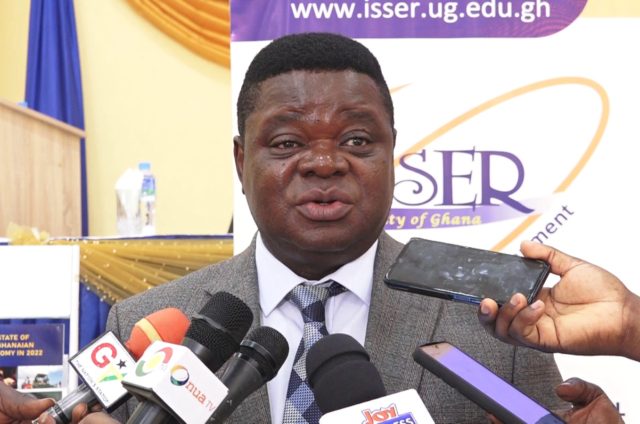
Bank of Ghana Governor Dr Johnson Asiama said he resigned from the Ghana Gold Board (GoldBod) Board of Directors about five months ago and no longer takes part in its meetings. His statement comes after the New Patriotic Party (NPP) raised concerns about his continued membership and possible conflict of interest.
The issue was brought up during an NPP press briefing on September 1 by former Finance Minister and NPP MP for Karaga, Dr Mohammed Amin Adam. He questioned the relationship between the Bank of Ghana and GoldBod, especially regarding the central bank’s role in financing GoldBod’s gold-purchasing operations and the reported losses linked to the domestic gold purchase programme.
Dr Asiama responded by confirming he had already stepped down from the board. “I resigned from the GoldBod Board about five months ago or so. I do not attend board meetings at the GoldBod at all,” he told journalists.
He explained that the Ghana Gold Board Act, 2025 (Act 1140), requires the Bank of Ghana to have representation on the GoldBod Board but does not specifically require the Governor to hold that seat. “The law that governs the activities of the GoldBod, there’s a provision there for the Bank of Ghana to be represented either by the Governor or any other official up to the rank of a director,” Dr Asiama said.
He stressed that the Governor’s personal presence on the board is not mandatory. “It does not necessarily need the Governor to be there.”
The Ghana Gold Board Act sets out the framework for the Board’s operations and includes provisions for central bank involvement. This involvement has attracted attention due to the financial scale of GoldBod’s domestic gold purchase programme, which is partly financed by the Bank of Ghana. The programme aims to encourage the formalisation of gold sales in Ghana, but it has reportedly faced challenges with losses.
Dr Asiama’s clarification comes amid growing scrutiny of the financing arrangements between the central bank and GoldBod. While the Bank of Ghana is required to have a representative on the GoldBod Board, this role can be filled by another official rather than the Governor himself.
The concerns raised by the NPP highlight the political sensitivity around the domestic gold purchase programme and its financial management. They also reflect broader questions about oversight and accountability in the interaction between the Bank of Ghana and GoldBod.
Dr Asiama’s decision to step down from the GoldBod Board five months ago had not been widely publicised until his recent comments. His explanation clarifies the legal provisions governing board membership but does not address the wider questions about the programme’s financial performance.
The domestic gold purchase programme remains a significant initiative within Ghana’s gold sector, which contributes substantially to the country’s economy. The ongoing debate over the Bank of Ghana’s role in financing and oversight will likely continue as stakeholders assess the programme’s impact and sustainability.
According to Joy Online.