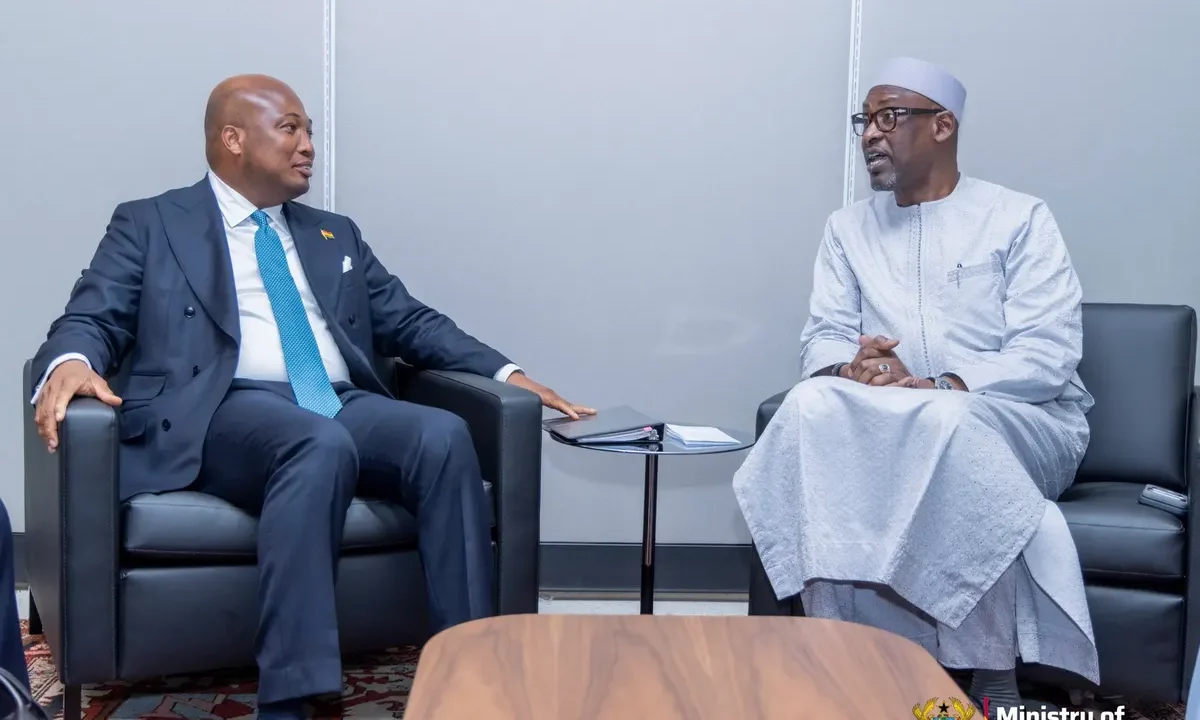
Ghana and Mali have agreed to deepen their cooperation to fight violent extremism, instability, and climate change in West Africa. The agreement came during talks between Ghana’s Foreign Affairs Minister Samuel Okudzeto Ablakwa and his Malian counterpart Abdoulaye Diop at the sidelines of the 81st United Nations General Assembly.
Mr Ablakwa said Ghana values its historic and close ties with Mali, dating back to the Ghana-Mali-Guinea union that helped pioneer African integration. “Ghana is proud of our close partnership with the AES nations which is anchored on trust and solidarity,” he wrote on X. The AES refers to the Alliance of Sahel States, which includes Mali.
The ministers agreed to work together on homegrown solutions to unlock development potential across the region. Ghana’s foreign minister added that “Ghana’s strategic pursuit of Afro-Pragmatism is yielding the desired results.”
President John Dramani Mahama also spoke on security challenges in the Sahel at the Council on Foreign Relations in New York. He traced the rise in instability to the fallout from the Libya conflict, the spread of arms, and the movement of terrorist groups into the Sahel region. He said the recent military coups in the area should be understood in this broader security context.
President Mahama outlined Ghana’s broader vision for a more self-reliant and integrated Africa, tied to what he calls the “Accra Reset.” The Accra Reset was prompted by a withdrawal of US$174 million in programmed development aid, including a US$74 million annual shortfall in the health sector. This exposed vulnerabilities in areas such as medical research, HIV testing, and PEPFAR-supported programmes.
The President said the experience reinforced the need for “African health sovereignty,” with the continent building its own capacity to produce medicines and vaccines instead of depending on external supply chains.
Regarding relations between ECOWAS and the Alliance of Sahel States, President Mahama called for continued dialogue and rebuilding of bridges. He said the fight against terrorism requires regional and international cooperation. Ghana is already strengthening surveillance and intelligence-sharing with neighbouring countries to protect its borders.
Looking ahead to Ghana’s 2027 chairmanship of the African Union, President Mahama said the country plans to focus on advancing regional integration, easing the movement of goods across Africa, and supporting peace and security efforts on the continent.
The discussions between Ghana and Mali come at a time when the Sahel continues to face complex security threats that cross national borders. Both countries appear to be seeking a united front that balances military, political, and developmental strategies to keep the region stable.
The renewed partnership also points to Ghana’s growing role in regional diplomacy. It signals a willingness to work with neighbours on shared challenges rather than rely solely on external actors.
As violent extremism continues to cause disruption in parts of West Africa, the Ghana-Mali agreement may offer a framework for cooperation that other countries in the region could follow. But the success of these efforts will depend on sustained political will and resources to address the root causes of instability.
For now, Ghana’s government is making clear that it sees the fight against extremism as inseparable from broader efforts to build economic resilience and health security. The next few years will show if this approach can make a difference on the ground.
According to 3News.