The building that houses Ghana’s president has had two names in less than twenty years, and the change has followed the party in power.
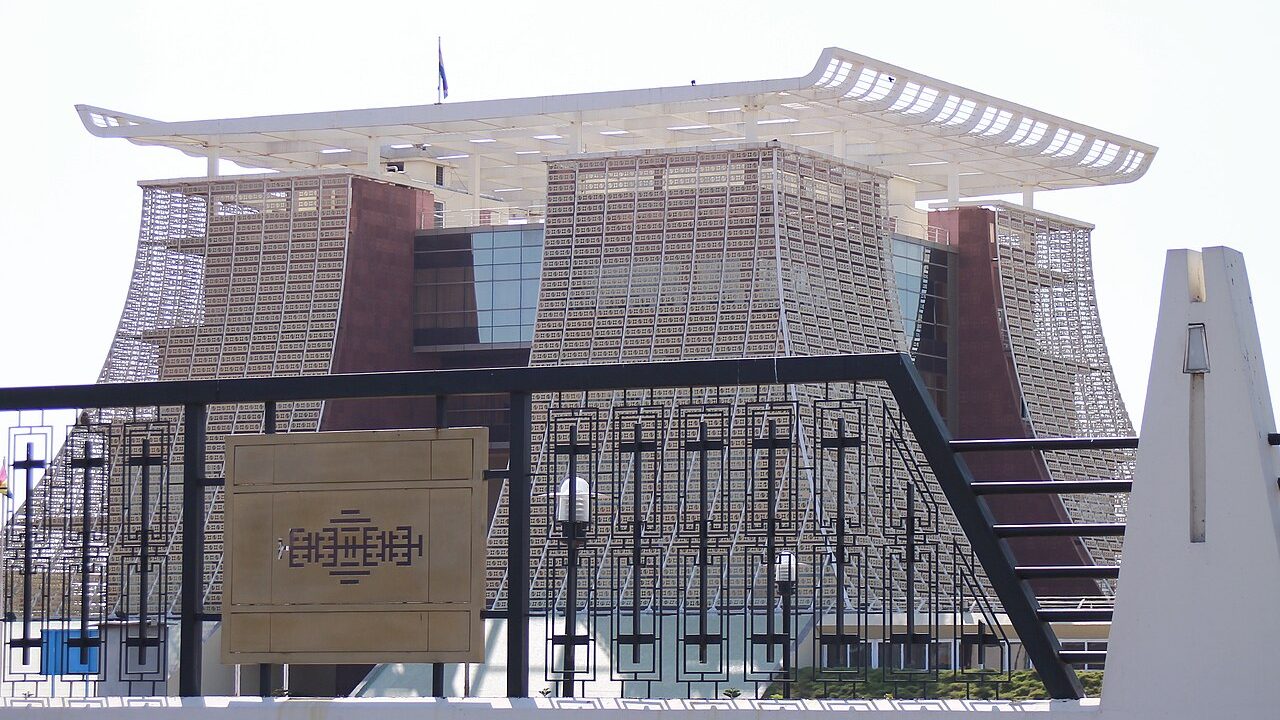
Jubilee House stands on Liberation Road in Accra, on the site of Flagstaff House, the residence and office of Kwame Nkrumah. Its shape is meant to recall the Golden Stool of Asante, and it was built during John Agyekum Kufuor’s presidency with financing from India. The name came from Ghana’s golden jubilee, the fiftieth anniversary of independence in 2007.
Nkrumah’s Flagstaff House
The old Flagstaff House was central to the story of the first republic. Nkrumah lived and worked there, and when soldiers and police overthrew his government on 24 February 1966, the compound was one of the targets of the attack. Nkrumah himself was away, travelling to Hanoi through Beijing. He never returned to Ghana alive.
After the coup, the seat of government settled at the Osu Castle, the old Danish fort on the coast that the British had used as the governor’s residence. For most of the next four decades, Ghana’s rulers worked behind its white walls.
A new house, a new name
Supporters of the move said a republic should not be governed from a fort built for the slave trade and later used by colonial governors. The new palace was completed as Kufuor’s second term drew to a close in 2008.
His successor, John Evans Atta Mills of the National Democratic Congress, preferred to keep working from the Castle, and his government renamed the new building Flagstaff House, the name of the site under Nkrumah. After Mills died in July 2012, John Mahama moved the seat of government from the Castle to Flagstaff House.
When Nana Akufo-Addo of the New Patriotic Party took office in January 2017, the Jubilee House name came back. Mahama returned to power in January 2025 and has governed from the same building.
What the Castle became
The Osu Castle is no longer the seat of government. Its future has been debated for years, with proposals to turn it into a museum that tells the story of the slave trade and of the colonial state. Ghanaians still use “the Castle” as shorthand for the presidency, a habit that has outlived the move.
Why the name matters
The dispute over the name reflects the rivalry between Ghana’s two main parties. The NPP descends from the Danquah Busia tradition that opposed Nkrumah, while the NDC has often claimed his legacy. Jubilee House honours a date both parties celebrated. Flagstaff House recalls the man at the centre of their oldest quarrel.
For visitors on Liberation Road, the building looks the same whatever the sign says. The gold stool shape, visible from the airport road, is the one thing no government has changed.