The capital of Ghana takes its name from ants. The word Accra comes from Nkran, the Akan word for the soldier ants that were once common on the coastal plain, where anthills dotted the grassland.
European traders who arrived on the coast from the fifteenth century onward heard Nkran from their Akan speaking contacts and wrote it down in their own spelling. Over time the Portuguese, Dutch, Danish and English forms settled into Accra.
What the Ga call it
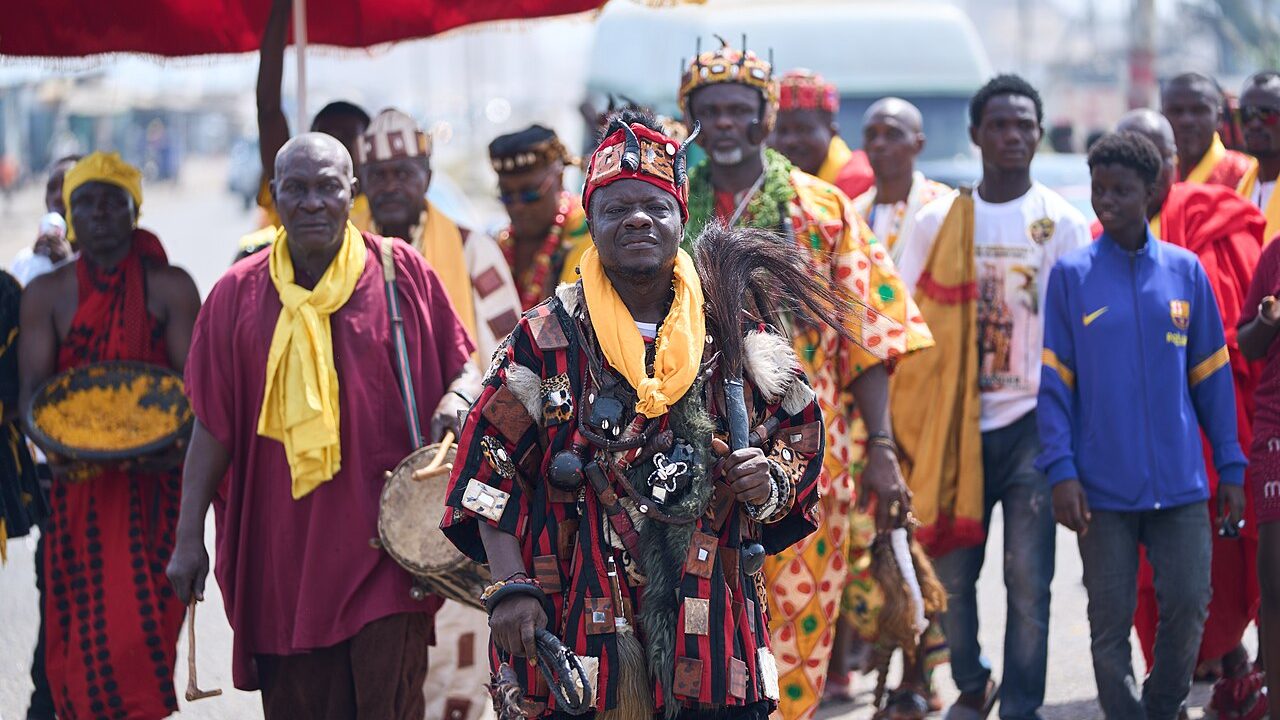
The Ga people, whose towns became the core of the city, have their own name. They call the city and its people Ga, and the old centre is Ga Mashie, which covers the historic quarters of Ussher Town and James Town near the sea. The Ga language is still spoken across the old neighbourhoods, and Ga festivals such as Homowo shape the city’s calendar. The Ga Mantse, the paramount chief of the Ga State, remains an important traditional authority in the capital, and land disputes in Greater Accra often run through the Ga stools.
The Ga towns
Modern Accra grew from a group of coastal Ga towns: Ga Mashie, Osu, La, Teshie, Nungua and others, each with its own chief and traditions. The European forts built along the shore, James Fort by the English, Ussher Fort by the Dutch and Christiansborg by the Danes, attracted trade and settlement.
The British moved the capital of the Gold Coast from Cape Coast to Accra in 1877, and the city expanded inland from the old towns. Today Greater Accra is home to millions of people from every region of Ghana and beyond.
Names across the city
Many place names in Accra carry Ga meanings or history. Others reflect colonial names, such as Ussher Town and James Town, or modern nicknames, such as Circle. The mix tells the story of a city built by Ga towns, European traders, colonial officials and migrants.
Ants and anthills
The anthills are mostly gone now, replaced by roads and buildings. Few residents know that the name of their city refers to the insects. But in the grassland on the edge of the city, on the plains toward Tema and the Shai Hills, termite and ant mounds still rise from the ground.
The Ga elders who pour libation during Homowo use their own word for their home. The name on passports and maps belongs to the ants.