

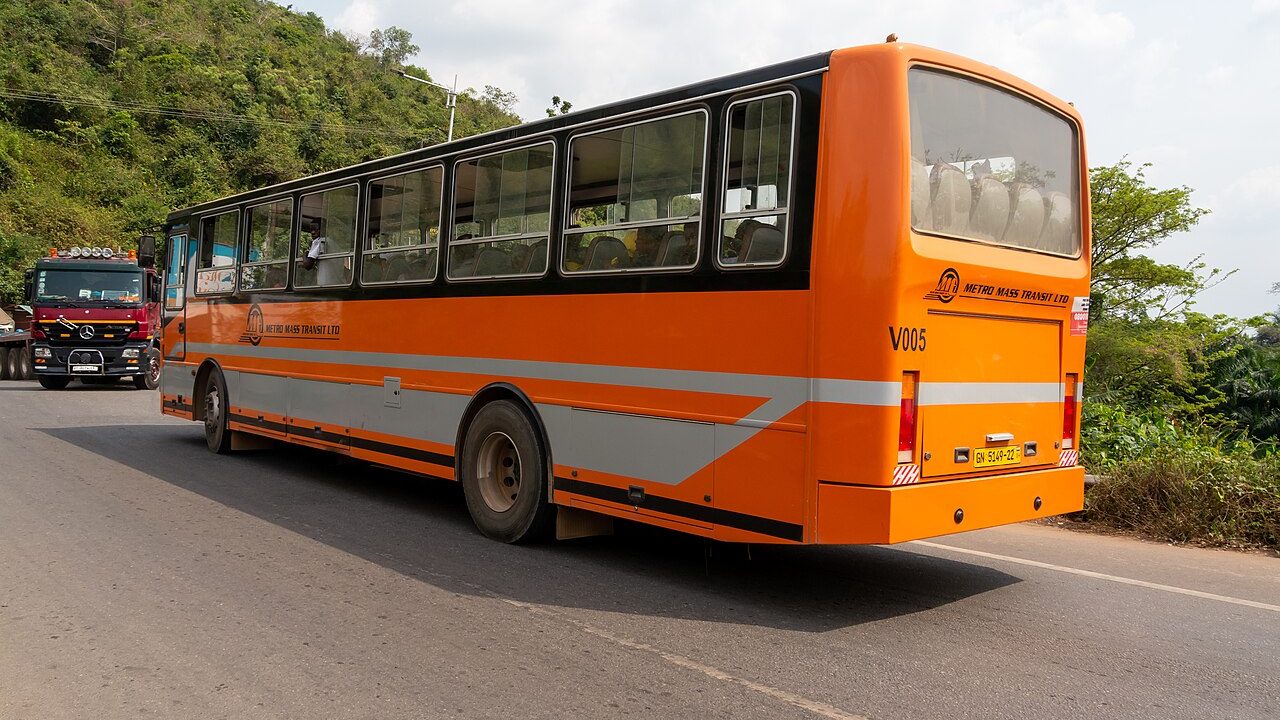
In the mid-2000s, it was hard to cross Accra without seeing them: large buses in the colours of Metro Mass Transit, packed with passengers paying fares well below the trotro rate.
John Kufuor spoke of the need for a mass transit bus system in Ghana’s cities in his inauguration speech on 7 January 2001. Metro Mass Transit Limited was incorporated in March 2003 under his government. Its aim was to provide affordable mass transport in Ghana’s cities and to connect rural areas with regular bus services.
How it started
The company was created as a partnership between the government and private investors, including local financial institutions. It bought large buses and began running routes in Accra, Kumasi and other cities, as well as long-distance and rural services.
Students and schoolchildren were offered cheaper fares, and the buses became popular with workers who wanted a cheaper, more comfortable ride than a crowded trotro.
At its peak
For several years, Metro Mass buses were a common sight across Ghana. They reached towns that had little regular transport and made travel between rural areas and district capitals easier.
The problems
Over time, the fleet aged. Buses broke down and spare parts were expensive. Fares were kept low for social reasons, which made it hard for the company to pay for maintenance and replacement.
The company also competed with thousands of trotros and taxis that were more flexible, stopping anywhere and running routes the big buses could not.
Newer attempts
Other projects tried to bring large-bus transport to Accra, including the Aayalolo bus rapid transit system launched in 2016, which also struggled. Governments have repeatedly announced plans to renew fleets and improve public transport.
A familiar sight in the regions
Outside the big cities, the buses carried traders to market days, students to school and patients to district hospitals. In many farming communities, the arrival of the Metro Mass bus set the rhythm of the day.
Still running
Metro Mass Transit continues to operate, especially on intercity and rural routes, where its buses remain an important link for many communities.
Why it matters
Cities such as Accra move most commuters in small minibuses, which clog roads and burn more fuel per passenger. A single large bus can take dozens of trotro passengers off the road, which is why every few years a new government rediscovers the idea Metro Mass Transit started with.
.jpg)