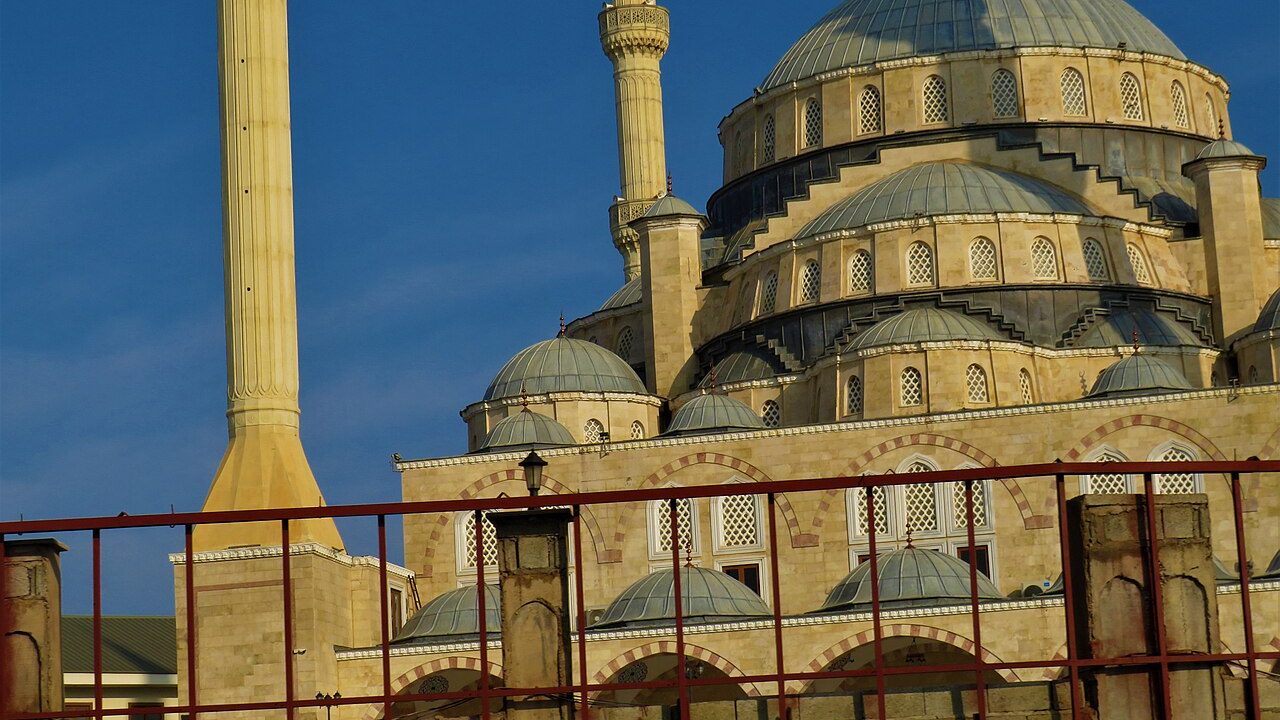
Drive along the roads north of central Accra and four tall minarets rise above the rooftops. They belong to the Ghana National Mosque, one of the largest mosques in West Africa and one of the city’s newest landmarks.
Location
The mosque stands at Kanda, in the Kawukudi area of Accra, near communities with large Muslim populations.
Opening
The mosque was officially opened on 16 July 2021 by President Nana Akufo-Addo. Since then, it has served as Ghana’s national mosque.
Funding
The complex was built at a cost of about US$10 million, funded by the Turkish Hudai Foundation with the support of the Turkish government.
Ottoman style
The mosque is built in an Ottoman Revival style, with a large central dome and four signature minarets, each about 65 metres high. It is often described as modelled on the Blue Mosque in Istanbul.
Capacity
With room for 15,000 worshippers, it is described as the second largest mosque in West Africa.
More than a prayer hall
The complex includes a residence for the imam, a madrasa for Islamic education and a library, making it a centre for learning as well as worship.
Friday prayers and Eid
On Fridays and during the Eid festivals, the mosque and its grounds fill with worshippers dressed in their best clothes. Eid prayers are major public events in Accra.
Muslims in Ghana
Muslims make up a significant part of Ghana’s population, and Islam has deep roots in the north and in the zongo communities of southern cities. The national mosque gave the community a prominent symbol in the capital.
Visiting
Visitors interested in the architecture should dress modestly, avoid prayer times and ask permission before entering or taking photographs. Women are usually asked to cover their hair.
Architecture up close
Inside, the prayer hall is decorated with Turkish-style tiles, calligraphy and chandeliers, beneath a large dome. Outside, courtyards and ablution areas prepare worshippers for prayer. The design brings a style associated with Istanbul to the heart of Accra.
A meeting place
Beyond daily prayers, the complex hosts religious lectures, Quran classes and community events. It has also received visiting dignitaries, and its grounds are used for gatherings during Ramadan and other important occasions.
A skyline changed
For decades, Accra’s skyline was defined by office towers, the Independence Arch and church spires. The minarets at Kawukudi added a new shape, a reminder that the capital belongs to all of Ghana’s faiths.