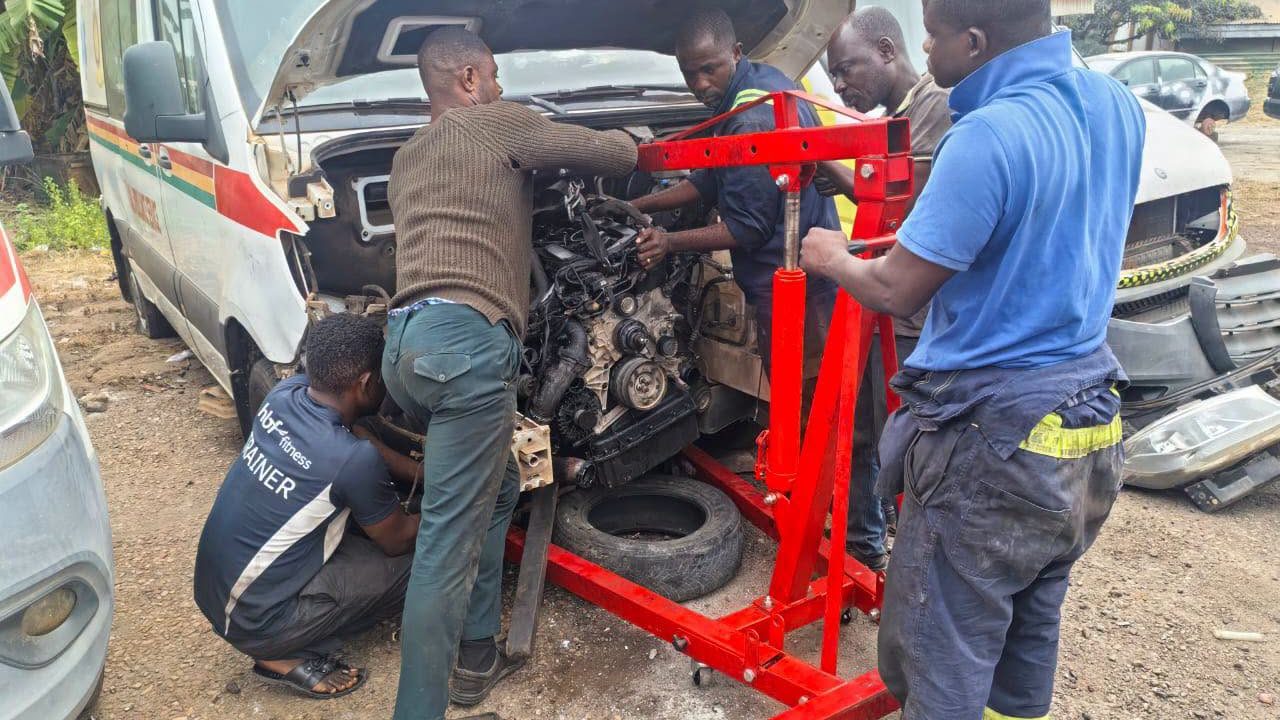
Repair work is underway at the National Ambulance Service’s Central Workshop in Korle-Bu to bring grounded ambulances back into service across Ghana. The operation, called “Operation Restore Fleet,” involves technicians and engineers working day and night to fix vehicles that have developed major mechanical faults after six years of continuous use.
The National Ambulance Service (NAS) posted that the focus is on ambulances that have been inactive due to serious faults. They aim to return as many as possible to active duty while sorting out which vehicles are beyond economic repair. The repair work is part of efforts to improve emergency response times nationwide.
Dr George Kojo Owusu, the Chief Executive Officer of NAS, visited the workshop with senior management staff to inspect the progress. He expressed satisfaction with the work so far and praised the dedication of the workshop personnel. He said the operation was on course and producing positive results.
During his visit, Dr Owusu also noted progress in separating vehicles that are still serviceable from those that are unserviceable. This move is intended to improve workshop efficiency and make maintenance work more straightforward.
The National Ambulance Service is also introducing new fleet management software to improve monitoring and maintenance scheduling. They plan to use the software to support better decision-making on vehicle upkeep. At the same time, additional security measures such as CCTV cameras are being installed at the workshop to protect assets and enhance accountability.
The NAS says this repair programme is part of a wider push to strengthen their ability to respond quickly to medical emergencies across the country. The service has faced challenges with vehicle availability due to faults that come from years of intensive use.
Ambulances are a critical part of emergency healthcare in Ghana, especially for patients needing urgent transfers to hospitals. Repairing these grounded vehicles should increase the number of ambulances on the road, helping reduce delays in emergency response.
Operation Restore Fleet is a response to the reality that many ambulances have spent long periods out of service. Some developed major mechanical issues after six years of nationwide service, which put pressure on the remaining fleet.
The introduction of fleet management software and security upgrades at Korle-Bu signals an effort to improve long-term maintenance and safeguard resources. This could help the NAS avoid similar problems in the future.
Dr Owusu’s inspection and positive remarks suggest that NAS is focused on practical steps to fix its fleet troubles. The work at Korle-Bu is a clear example of addressing operational challenges directly with hands-on repairs and better management systems.
The success of Operation Restore Fleet will likely be measured by how many ambulances return to service and how quickly they can be kept operational. The programme reflects NAS’s goal to ensure timely emergency medical response across Ghana.
According to Joy Online.