President John Mahama has ordered security agencies to tighten controls at Ghana’s ports to block drug trafficking. The directive came after reports of drug consignments leaving Ghana and being intercepted abroad, raising alarms about the country’s vulnerability to becoming a transit point for illicit substances.
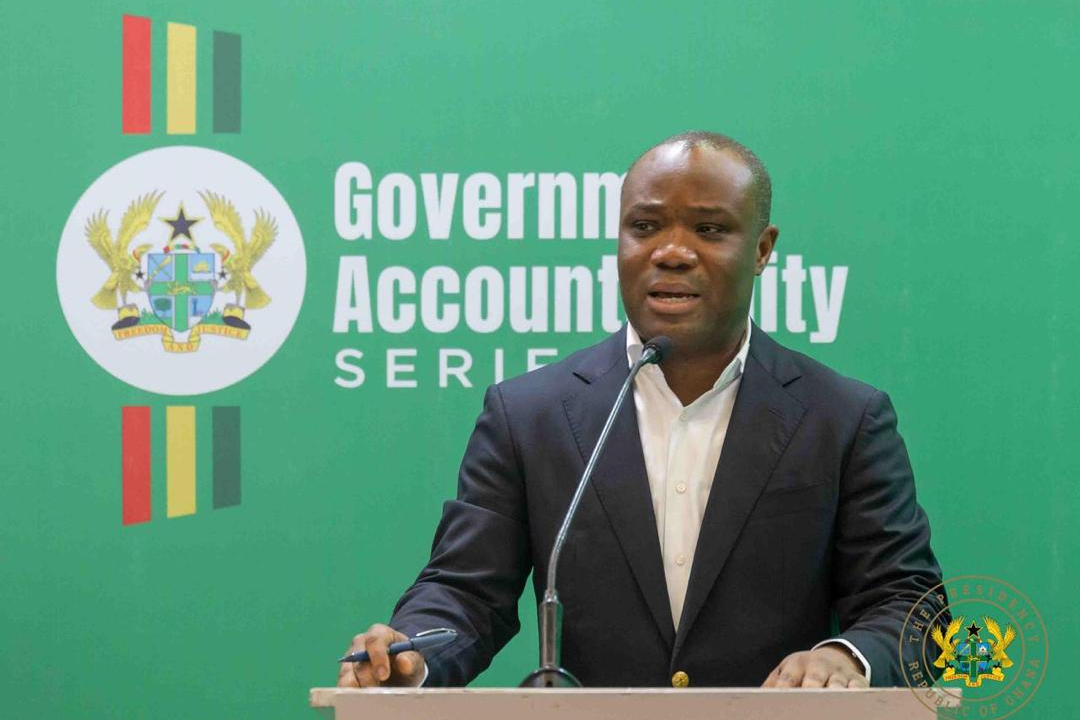
Felix Kwakye Ofosu, government spokesperson and MP for Abura Asebu-Kwamankese, confirmed that President Mahama convened an urgent meeting of security agencies two weeks ago. The session focused on weaknesses within the country’s ports and the lack of coordination among the agencies tasked with securing them.
“It is an expression of the president’s concern that he convened that urgent meeting two weeks ago, involving various security agencies that are supposed to work together to make our ports safe or our ports so ironclad that this sort of activity does not take place,” Ofosu said during an interview on Joy News’ PM Express on Wednesday.
The government’s response follows a Minority motion in Parliament calling for a recall to address claims that Ghana is becoming a drug transit hub. The Minority cited a series of drug seizures and trafficking cases as evidence, pressing for a parliamentary examination of the issue.
Ofosu rejected the label of Ghana as a “cocaine coast” or drug transit hub. He argued that arrests by the police and the Narcotics Control Commission (NACOC) should not be taken as proof of the country’s role in drug trafficking.
“So, if there are 12 cases, and two of them involve transhipment, or if you like exports of drugs outside of Ghana, you don’t put everything together and say Ghana is a volcano,” he said.
He pointed out that the work of NACOC and other law enforcement agencies involves apprehending and preventing drug trafficking and illegal drug use.
“What does NACOC exist to do? To apprehend and prevent drug trafficking, not so, or drug use, illegal drug use, for that matter,” Ofosu said.
However, he acknowledged that consignments escaping Ghanaian security checks and intercepted overseas remain a worry. “Therefore, those that escaped the scrutiny of law enforcement in Ghana and find their way abroad are those that are worrying,” he said.
The meeting also revealed rivalry among agencies operating at the ports. Ofosu described a “tough battle” between agencies, each trying to assert control and sometimes withholding information from one another.
“I sat in the meeting, and it was clear from what transpired that there is some, if you like, tough battle between or among the various agencies. Each of them is trying to assert their supremacy over the ports, and so sometimes they don’t share information,” he said.
President Mahama directed the agencies to end this rivalry and improve collaboration. “So the president says, ‘Okay, I want an end to this turf battle. You must share information. You must collaborate. Bring me a road map that shows you are doing these, among other things necessary to ensure this will happen,’” Ofosu said.
The President emphasized that Ghana must not become a transit route for drug traffickers. “Indeed, the President was clear that he will not tolerate Ghana’s borders becoming a transit point for drug trafficking,” Ofosu added.
The deadline for the agencies to submit their road map was set to expire within days of the announcement. The government has not disclosed details of the measures proposed but has made it clear that tighter security and better agency coordination are priorities.
This push to secure Ghana’s ports against drug trafficking comes amid growing international scrutiny and internal political pressure. The issue remains contentious, with the Minority in Parliament continuing to press for action and greater transparency around drug-related incidents.
According to Joy Online.