A government meeting with Ghana’s teacher unions on October 2 ended without agreement, as the strike by the Ghana National Association of Teachers (GNAT), the National Association of Graduate Teachers (NAGRAT), and the Pre-Tertiary Teachers Association of Ghana (PRETAG) continued into its second week. New proposals from the government will be considered by the unions on October 6.
The three unions have been on a nationwide strike over unresolved issues including the automatic placement of promoted teachers, the negotiation of a new collective agreement, and the implementation of a 20 per cent deprived-area allowance.
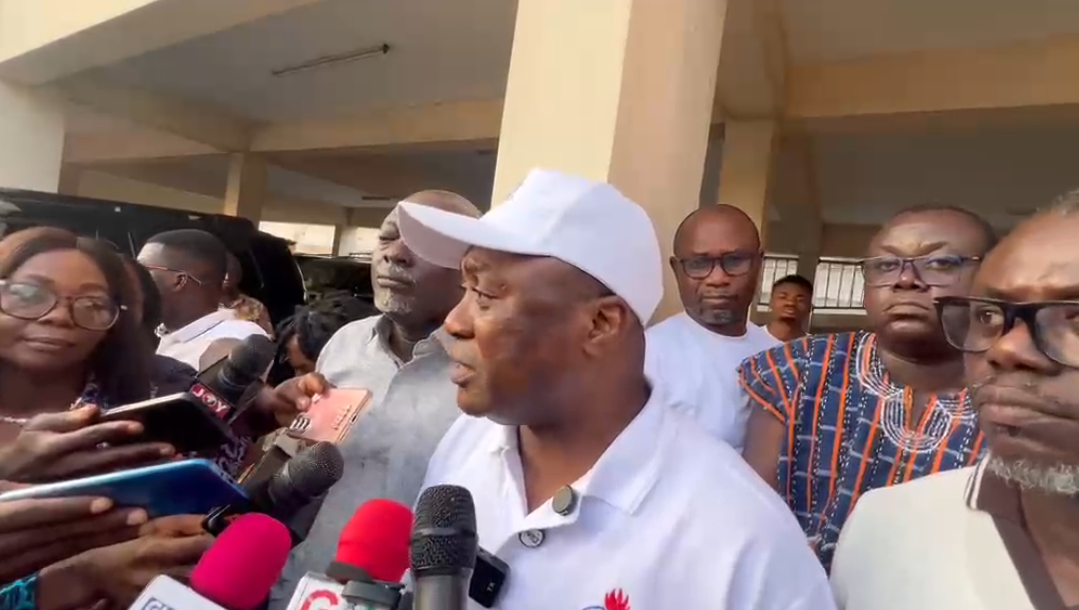
GNAT General Secretary Thomas Musah told reporters after the talks that all the issues on the table were discussed but no conclusion was reached. “We discussed the issues but we could not conclude on them,” he said. He added that the government presented fresh proposals, which the unions will review before returning to the negotiating table next week.
The government delegation included the ministers of education, finance, and employment, alongside heads of relevant agencies. Musah said the discussions focused on “getting the teachers who have been promoted automatically placed, looking at our new collective agreement, and the 20% agreement.”
Education Minister Haruna Iddrisu appealed to the unions to call off the strike, assuring them that the government would honour its commitments. He said the Controller and Accountant-General’s Department was still validating data on teachers owed promotion-related payments and that government was working towards implementing the agreed arrangements.
“Let me repeat that we will not renege on this pledge as government will honour that,” Iddrisu said on October 2. He added that the government hoped this assurance would persuade the unions to consider ending the strike, which has disrupted schools across Ghana.
The strike, ongoing since late September, has affected thousands of students nationwide. The unions maintain the industrial action will continue until their outstanding concerns are fully addressed.
Despite the unresolved talks, the government’s willingness to present new proposals signals a desire to resolve the impasse. The unions’ response on October 6 will determine whether the strike will persist into the coming weeks.
The focus remains on the automatic placement of promoted teachers, a long-standing demand that has delayed salary adjustments and arrears payments for many educators. The 20 per cent deprived-area allowance, aimed at compensating teachers serving in less accessible regions, also remains a contentious point.
The government’s promise to place promoted teachers on their new grades and settle arrears echoes earlier commitments that have yet to be fully implemented. The unions’ insistence on these issues reflects frustration over stalled progress despite previous negotiations.
As the strike continues, the education sector faces mounting pressure. The next round of talks will test whether the government’s new proposals address the unions’ demands sufficiently to bring teachers back to the classroom.
According to Joy Online.