
Artificial Intelligence could lift three times as many Ghanaians out of poverty if its benefits are broadly shared, according to a World Bank report released ahead of the October 2026 Africa Economic Update. The report warns that concentrating AI gains among households already equipped to use the technology will limit poverty reduction.
The World Bank argues that expanding access to affordable and reliable 5G or the best available mobile broadband must combine concentrated investment in urban centers with efforts to connect poorer rural areas. The report points to the high fixed costs of digital infrastructure, recommending prioritising investments in connectivity, electricity, digital skills, and computing capacity in productive urban hubs and secondary cities. These areas generate agglomeration effects that can speed up AI adoption and raise productivity.
At the same time, the report stresses the need to link these urban hubs to underserved rural regions through lower-cost feeder infrastructure and targeted digital services. “The decisive policy question is not how many people can be covered by a nominal network signal, but how many poor households can afford a suitable device, keep it charged, obtain reliable high-speed service, and use locally relevant AI applications,” it said.
The World Bank cautioned that without this approach, AI will mainly amplify the advantages of those already connected, rather than becoming a platform for broad-based productivity growth and poverty reduction.
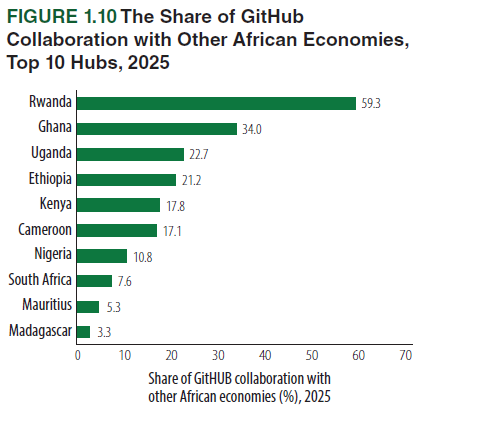
The report also notes encouraging early signs of AI’s impact on African economies. It points to a surge in software development activity since the AI boom, with Nigeria’s GitHub developer base expanding tenfold since 2020 and Ghana’s nearly eightfold. The acceleration in new registrations followed the availability of free AI coding assistants.
The annual World Bank and IMF meetings are taking place in Bangkok, Thailand, this October. The Africa Economic Update’s findings add to ongoing discussions on how AI and digital transformation can shape economic futures on the continent.
The report underlines that expanding digital infrastructure alone is not enough. Reliable electricity and affordable devices are essential for effective use. Data affordability also remains a barrier in many parts of Ghana and similar economies.
The World Bank’s emphasis on connecting secondary cities and linking them to rural communities reflects a shift from focusing solely on capital cities to a more integrated approach. This could open new avenues for AI adoption in sectors beyond urban services, including agriculture and local manufacturing.
Ghana’s near eightfold increase in GitHub users since 2020 suggests rising interest in AI and software development, though the report does not detail the demographic or geographic spread of this growth. The challenge remains to ensure these gains reach poorer households and not just urban elites.
The report’s timing coincides with wider global debates on AI’s role in economic inequality. Ghana’s experience may offer a case study in how developing countries can either bridge or widen divides depending on infrastructure and policy choices.
The World Bank’s call for targeted investments and connectivity strategies frames AI not just as a technological advance but as a policy challenge about inclusion and affordability. How Ghana navigates these issues in the next few years will affect whether AI can be an engine of poverty reduction or a driver of new disparities.
According to Joy Online.