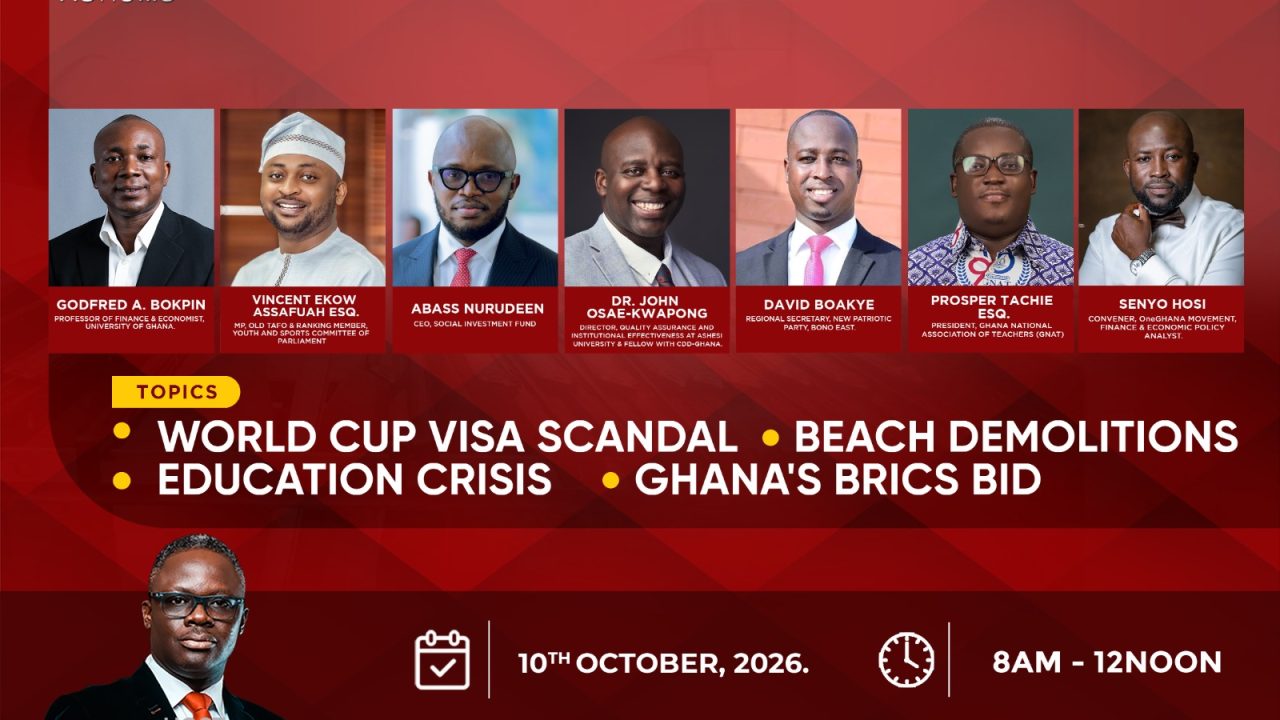
The Minority in Ghana’s Parliament alleges individuals paid between US$7,000 and US$14,000 for visas linked to the 2026 FIFA World Cup, raising questions about the integrity of the process. Vincent Ekow Assafuah, Ranking Member on Parliament’s Youth and Sports Committee, made the claims at a press conference on October 7. He said only two of 50 names submitted by the Ghana Tourism Authority (GTA) as media personnel were verified as professional media practitioners. Similarly, only 15 of 102 names submitted by the National Sports Authority (NSA) were confirmed as actual employees.
President John Dramani Mahama responded by asking former NSA Director-General Yaw Ampofo Ankrah to step aside. Professor Emmanuel Osei Sarpong has been appointed acting Director-General. The Ministry of Sports and Recreation shared a chronology citing correspondence from January 28, 2026, to indicate some arrangements related to the World Cup fan experience predated its involvement. The Economic and Organised Crime Office (EOCO) is expected to investigate, but critics question whether this will be a genuine probe or a cover-up.
On October 10, JoyNews’ flagship current affairs programme, Newsfile, will air an in-depth look at these allegations. Hosted by Samson Lardy Anyenini, the show will run from 8:00am to 12:00 noon on Joy 99.7 FM, JoyNews, and digital platforms.
The programme will also examine the recent demolitions along the La Beach area in Accra, which include La Pleasure Beach and the Polo Beach Club near the Labadi Beach Hotel. The Social Security and National Insurance Trust (SSNIT), which owns the Labadi Beach Hotel and La Palm Royal Beach Hotel, defended the demolitions as a response to “persistent unlawful occupation, encroachment and unauthorised activities” on its beachfront properties. SSNIT described these hotels as part of its investment portfolio and national hospitality assets belonging to Ghana’s workers and pensioners.
Deputy Chief of Staff Stan Dogbe clarified that the demolitions were not part of any government flood mitigation efforts. Instead, they were carried out under National Security supervision at the request of the Labadi Beach Hotel. The Ghana Journalists Association condemned alleged attacks on journalists covering the demolitions. It gave the Ghana Armed Forces two weeks to provide an account of their personnel’s conduct during the operation.
Newsfile will explore who is accountable for the demolitions and the impact on affected parties.
Ghana’s education sector is also in crisis. Three pre-tertiary teacher unions—the Ghana National Association of Teachers (GNAT), the National Association of Graduate Teachers (NAGRAT), and the Pre-Tertiary Teachers Association of Ghana (PRETAG)—have been on strike since September 25. Their demands include delayed promotions, deprived-area allowances, and renewed collective bargaining negotiations. A meeting between the Fair Wages and Salaries Commission and union leaders on October 6 ended without resolution.
Education Minister Haruna Iddrisu promised that the salary grades of at least 51,000 promoted teachers would be validated and their arrears paid by October 16 through a supplementary intervention. “If by October 30, your promotion arrears are not paid, then I will have no honour,” he said.
Another strike by the Ghana Association of University Administrators (GAUA) has lasted over two months, disrupting administrative operations at public universities. Professor Gordon Awandare, Pro-Vice-Chancellor of the University of Ghana, warned that the academic calendar could collapse if the strike continues beyond the coming week. Kwame Nkrumah University of Science and Technology (KNUST) postponed its reopening indefinitely because of the strike.
Newsfile will discuss the unresolved grievances, effects on students, and prospects for ending both strikes.
Finally, the programme will address Ghana’s formal application to join the BRICS economic bloc, announced by Foreign Affairs Minister Samuel Okudzeto Ablakwa. The Minority in Parliament has demanded an urgent briefing on the decision. Samuel Abu Jinapor, Ranking Member on Parliament’s Foreign Affairs Committee, questioned why Ghana seeks full membership rather than following Nigeria’s approach as a BRICS partner country. “Why is it that we are not taking the path of Nigeria, which is a partner country of BRICS and not a full member?” he asked.
Mr Ablakwa defended the application, saying membership could broaden Ghana’s development and diplomatic options. “BRICS offers us that opportunity to have options in our development agenda. We value our traditional relationships,” he said.
Newsfile’s four-hour broadcast will scrutinize Ghana’s unfolding controversies on visas, demolitions, education strikes, and international alliances, putting those in power under the spotlight at a moment when public trust is under strain.
According to Joy Online.