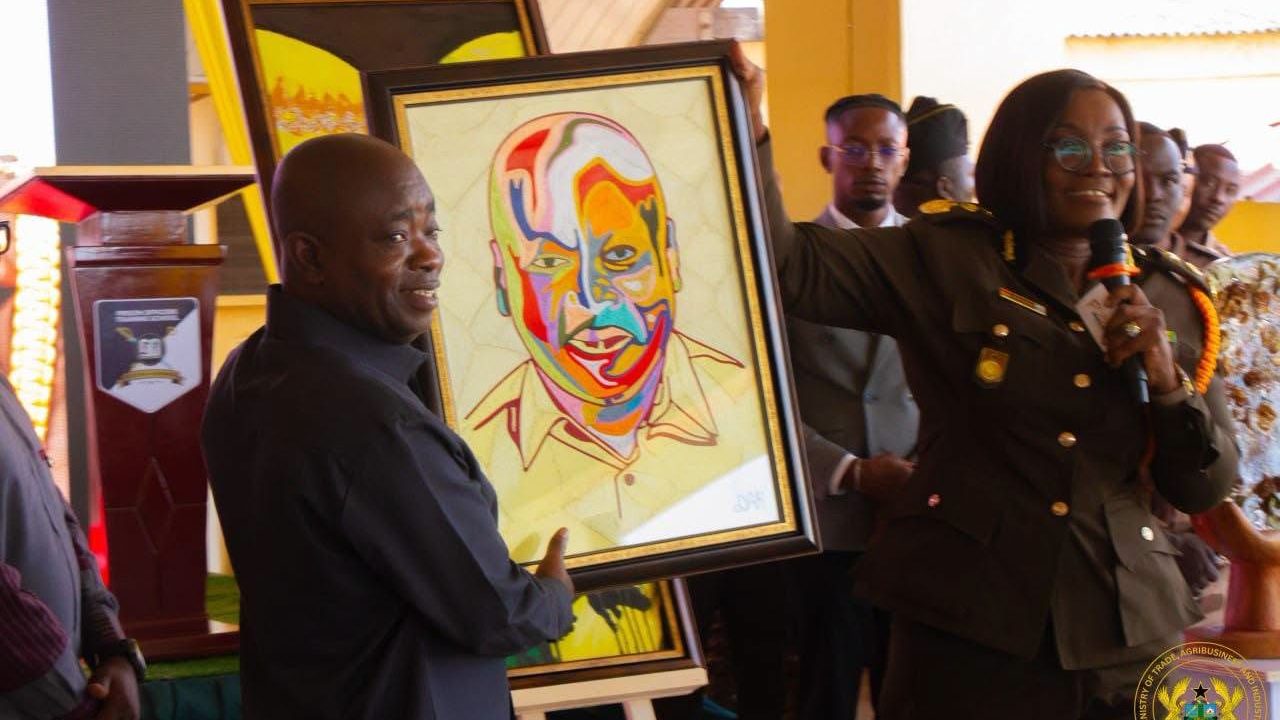
The Ghana Prisons Service has drawn praise from the Ministry of Trade, Agribusiness and Industry for using creative arts to develop inmates’ skills and support their rehabilitation. Deputy Trade Minister Sampson Ahi spoke at the maiden Director-General and Adehyee’s Art Exhibition, describing the initiative as a way for inmates to rediscover talents, rebuild confidence, and prepare for economic opportunities after release.
Mr Ahi addressed the exhibition on behalf of Trade Minister Elizabeth Ofosu-Adjare. He said correctional facilities should move beyond mere custody to provide practical opportunities for personal development and economic independence. “Creative arts could help inmates rediscover their talents, rebuild confidence and develop skills that would support their reintegration into society,” he said.
The Deputy Minister also pointed to the potential of Ghana’s creative arts industry to generate employment, encourage entrepreneurship, and contribute to national development. He urged that art exhibitions involving inmates become sustainable platforms for identifying talent, attracting public-private partnerships, and connecting inmate works to commercial markets.
Mr Ahi called on the public to avoid stigmatizing incarcerated persons by focusing on their past mistakes. He urged recognition of their dignity and capacity to contribute productively to society.
The exhibition was part of wider efforts by the Ghana Prisons Service to use skills training and creative arts to support inmate reformation and reintegration. Director-General Patience Baffoe-Bonnie said the event aligned with the Service’s “Think Prisons 360 Degrees” philosophy. The approach seeks to transform the institution from a predominantly custodial system into one emphasizing rehabilitation, development, and sustainability.
The exhibition brought together artworks created by inmates, offering a public platform for their creative expression and skill development. The Ministry’s endorsement suggests a policy shift toward integrating arts as a tool for personal transformation within correctional facilities.
The event underscored the potential for Ghana’s creative sector to absorb reintegrated inmates as entrepreneurs or employees, bridging the gap between incarceration and economic participation.
The Ghana Prisons Service has positioned creative arts as a practical channel for inmates to acquire skills that extend beyond the prison walls. The Ministry of Trade’s support signals a broader interest in harnessing cultural industries to address social challenges.
According to Joy Online.