On 6 October 2026, Ghana’s Foreign Affairs Minister Samuel Okudzeto Ablakwa announced the government’s decision to apply for membership in BRICS, the bloc of emerging economies initially formed by Brazil, Russia, India, China, and South Africa. The move aims to diversify Ghana’s international partnerships and expand economic opportunities beyond its traditional Western allies.
Ghana’s Cabinet approved the application, with Ablakwa stating the objective was to deepen cooperation with the Global South. India’s foreign minister, visiting Accra at the time, was approached to assist Ghana in managing the application process. The bid is an opening step, not a secured membership, as BRICS follows a consensus process involving sherpas, foreign ministers, and leaders before admitting new members.
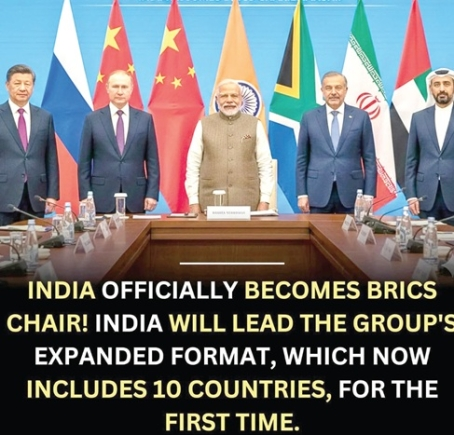
BRICS has expanded from its original five to eleven countries, representing 49 percent of the world population, 39 percent of global GDP, and 23 percent of international trade. Ghana, with an estimated GDP of $114.2 billion in 2025 and a population of 35.1 million, trades heavily with several BRICS countries already. China supplied 45.9 percent of Ghana’s imports from Asia in 2024, while India accounted for 13.7 percent. Ghana-China trade hit a record $14.1 billion in 2025, rising 19.3 percent from the previous year.
The Ghanaian government views BRICS as a platform to move beyond raw commodity exports and imports of manufactured goods. Membership could open access to the New Development Bank, which has $52.7 billion in paid-in capital and supports infrastructure, industrial, and digital projects in member states. Ghana faces challenges such as debt, currency risks, and productivity constraints that BRICS membership alone cannot resolve. Every proposed investment will still need to meet Ghana’s affordability and transparency standards.
Joining BRICS offers Ghana broader diplomatic and economic options. It could reduce Ghana’s dependence on Western markets and investors by expanding ties with China, India, Brazil, and Gulf states. This diversification aims to increase Ghana’s bargaining power without replacing one dependency with another.
BRICS is not a military alliance and does not offer collective security guarantees. Ghana faces threats from jihadist violence in the Sahel, maritime insecurity in the Gulf of Guinea, and cyber attacks. Its existing security partnerships with the United States and European Union remain significant. In August 2026, Ghana’s Defence Ministry detailed ongoing US cooperation, including joint exercises, intelligence sharing, counter-terrorism support, and plans for drone surveillance capabilities. In September, Ghana reaffirmed defence and security ties with Washington, covering logistics, institutional development, peacekeeping, cyber defence, and maritime security.
Accra must balance its BRICS ambitions with these Western security relationships to avoid undermining interoperability with key partners or African security institutions. The goal is to add partnerships and markets, not to trade one set of dependencies for another.
Ghana’s BRICS application also carries geopolitical weight. The bloc advocates for increased Global South representation and reform of institutions whose voting structures have not kept pace with changing economic realities. However, Ghana may face pressure to clarify its stance on contested issues such as sanctions, conflicts, and international norms, given BRICS includes China and Russia, countries in strategic rivalry with the United States and its allies.
BRICS membership depends on Ghana gaining political support from existing members. The country’s bid highlights its desire to reposition itself within a shifting global order, seeking space to manoeuvre economically and diplomatically as power becomes more dispersed. The outcome will hinge on Accra’s ability to convert its interest into tangible gains while managing complex international relationships.
According to Joy Online.