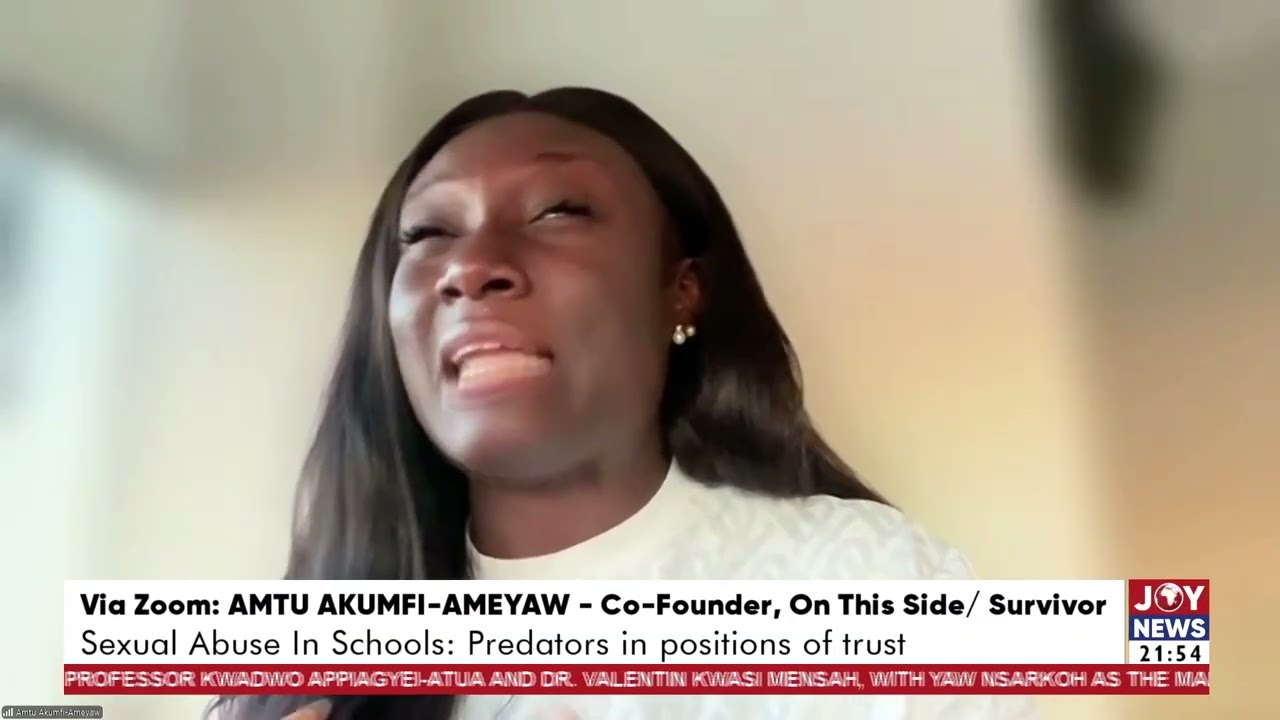
Amtu Akumfi-Ameyaw said every one of us knows a sexual abuser. The co-founder of On This Side made the claim on October 19, during an appearance on Joy News’ PM Express, arguing that society’s reactions often protect perpetrators while dismissing victims.
Her comments responded to the allegations of sexual abuse involving female students at Obuasi Senior High Technical School (SHTS). The case has gained wider attention through Manasseh Azure Awuni’s documentary, Inside the Dreaded Headmaster’s Bungalow, which investigates the claims.
Akumfi-Ameyaw said people frequently turn a blind eye to abusers, especially when they are family members, friends, or respected figures in the community. “Sometimes we cover it because we care too much about other people, because they are loved ones, they are people we respect,” she said.
She compared this protective instinct to selective opposition to corruption. People condemn wrongdoing until someone they care about is involved. “If it hasn’t happened to you or somebody you love, it looks like a joke,” she said. “And then also, if somebody you love or you care about is the abuser, you tend to take an entrenched position of defending them, of making it look like it’s okay.”
This silence and misplaced loyalty allow allegations to be swept under the carpet, leaving survivors isolated while perpetrators are shielded. Akumfi-Ameyaw pointed to a recent video linked to the Obuasi SHTS case, in which a remark describing an alleged incident as “a kiss on the cheek” drew public attention. She said the response showed how people trivialise sexual abuse, especially when it involves someone they know.
Survivors often wrestle with guilt and emotional turmoil after abuse. Akumfi-Ameyaw said they might blame themselves for not preventing the abuse and feel further betrayed when trusted adults fail to support them. She specifically mentioned housemistresses, senior housemistresses, and teachers as figures survivors might seek help from but who sometimes respond inadequately.
When survivors hear others laughing at or dismissing their experiences, they may conclude that what happened to them does not matter. This sometimes explains why survivors initially speak out but later retract their accounts. “They are dealing with their own battles,” she said. She noted that survivors carry heavy emotional burdens before deciding whether to speak publicly.
Akumfi-Ameyaw addressed the recent increase in students coming forward about the Obuasi SHTS allegations. She suggested that seeing others share similar experiences might encourage more survivors to speak. “Because now they feel that they belong. They feel that they identify. They feel that maybe some level of help could get to them,” she said.
She warned against dismissing survivors’ accounts simply because they come after a delay. Fear, shame, isolation, and doubt about receiving help all influence when and whether survivors disclose abuse.
Akumfi-Ameyaw criticised the tendency to place the burden of prevention on girls. Public discussions often focus on instructing girls how to protect themselves — where to go, who to interact with, what to wear. She said that equal emphasis must be placed on educating boys and men about respect and responsible behaviour.
“We continue to ask and dictate how girls should keep themselves. Oh, don’t do this. Don’t go here. Don’t engage with this person. Don’t wear these clothes,” she said. “And we forget that we also have to socialise our men and our boys to be better and responsible human beings of society.”
She acknowledged that boys and men can also experience abuse but noted that women are disproportionately affected, according to global data. The focus on telling potential victims how to avoid abuse, she said, raises questions about whether enough is being done to address the behaviour of perpetrators.
“We have to take it seriously,” Akumfi-Ameyaw said. “We can’t be having families desire to have male kids to become heirs, but we don’t care about teaching them basic things of respect.”
According to Joy Online.