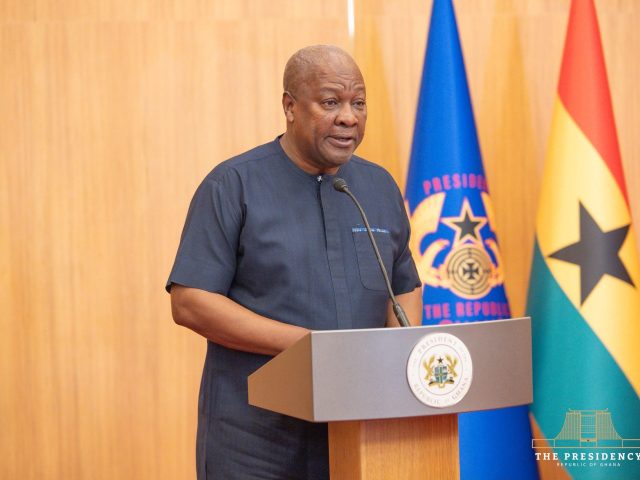
Ships have long left Ghana’s Takoradi port loaded with raw manganese and bauxite, while finished products made from those minerals returned to the country. President John Mahama used this example on Monday to open the second African Minerals Policy Forum, Mining in Motion 2026, in Accra. He urged African nations to move beyond exporting raw minerals and focus on producing finished and semi-finished goods to fuel their economies.
Mahama said Ghana planned to end exports of unprocessed mineral ores by 2030. The government aims to achieve this through phased restrictions supported by legal measures and a clear implementation timeline. He stressed that reaching this goal requires investments in processing facilities, reliable energy, transport infrastructure, technology, skills, and financing.
African leaders gathered at the conference called for greater cooperation on mineral policies across the continent. They want to strengthen regional value chains and attract investment in processing and manufacturing to boost industrial development. Mahama also urged countries to coordinate their negotiating positions to avoid internal competition that weakens their ability to secure better terms from mining companies.
Francisca Tatchouop Belobe, African Union Commissioner for Economic Development, Trade, Tourism, Industry and Minerals, said Africa holds nearly 30 percent of the world’s critical mineral reserves but captures only a small share of the value they generate. “This is Africa’s great paradox: we have immense mineral wealth, yet insufficient industrial value and prosperity for our people,” she said. Belobe called for a shift from mineral extraction toward processing, manufacturing, and developing competitive African businesses.
She urged stronger implementation of continental frameworks, including the African Mining Vision, the African Green Minerals Strategy, and the African Continental Free Trade Area (AfCFTA), to support regional value chains. Jeremiah Koung, Vice-President of Liberia, said African countries should adopt common principles on mineral development while respecting national circumstances. “The African Mineral Vision provides the foundation,” he said.
Koung identified regional infrastructure, reliable geological information, transparent mineral agreements, community benefits, and responsible artisanal and small-scale mining as priorities for cooperation. He added that mining communities should benefit from local employment and business opportunities, environmental protection, and that plans for mine closure and livelihood restoration must begin before extraction ends.
Emmanuel Armah-Kofi Buah, Ghana’s Minister of Lands and Natural Resources, said the country was pursuing reforms to improve local participation, strengthen community protections, and link mineral extraction to domestic processing and manufacturing. Cabinet recently approved a revised minerals and mining policy and endorsed proposed amendments to the Minerals and Mining Act for parliamentary consideration.
“Our citizens have equally legitimate expectations. They want jobs, skills, opportunities for local enterprise, protection of their environment, and a fair share of the prosperity produced from their own resources,” Buah said. The government is also strengthening local content and procurement to allow Ghanaian businesses to participate meaningfully in the mining sector.
Buah called on African countries to identify regional mineral value chains, coordinate infrastructure investments, and collaborate with the private sector to develop commercially viable processing opportunities. Summit speakers agreed that partnerships with foreign investors remain important but should deliver technology transfer, skilled employment, stronger African enterprises, and lasting benefits for mining communities.
The forum’s focus on local processing and coordinated policies signals ongoing efforts to shift Africa’s mineral wealth from raw exports toward industrial growth and job creation.
According to Joy Online.