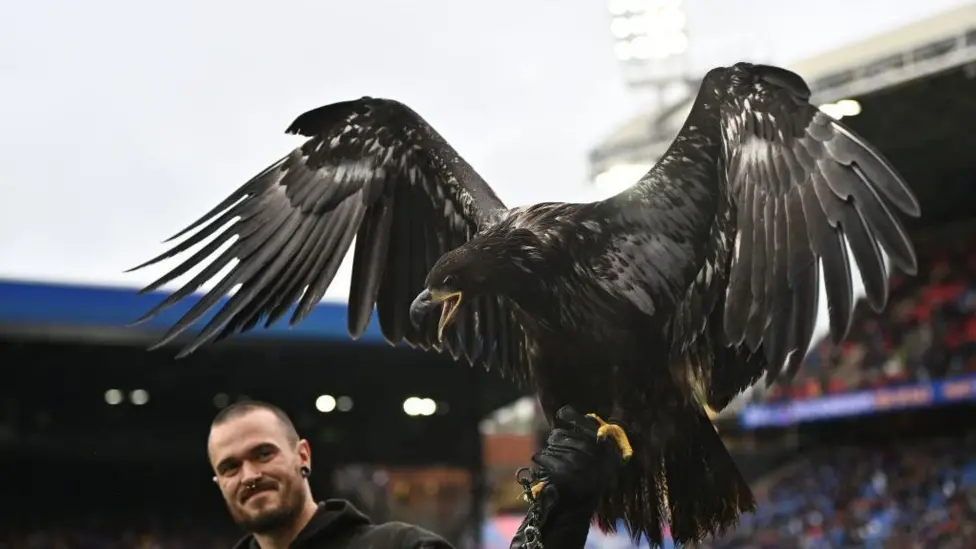
Crystal Palace is facing fresh pressure from animal rights campaigners to stop using its live bald eagle mascot, Phoenix, at Selhurst Park. People for the Ethical Treatment of Animals (PETA) wrote to the club’s CEO Sharon Lacey this week, demanding an immediate end to the practice and a permanent ban on live animal mascots.
The London-based Premier League side has featured a live eagle at home matches since 2010. The first eagle, Kayla, performed for a decade before her death in 2020. Phoenix took over in August 2024, making her debut against West Ham.
PETA said the stadium environment is unsuitable for birds, describing it as “a bright stadium filled with boisterous fans” where animals are likely to become “frightened, disoriented and panicked.” The group warned that such conditions put both the animals and spectators at risk.
The organisation added that forcing eagles into pre-match displays denies them their natural behaviours. Birds would typically avoid human contact, and using them in entertainment settings can cause “frustration and stress.” PETA also cited “detailed records” documenting live mascots being injured or killed through collisions with stadium walls, windows and match balls. They referenced an incident where a falcon embedded its talons in a spectator’s scalp after landing on his head.
In 2017, a fan at a Charlton Athletic match was found guilty of attempting to punch Kayla during a League Cup fixture two years earlier. PETA’s senior corporate projects manager, Dr Carys Bennett, noted that many professional teams use human mascots instead, pointing out that Crystal Palace already has Pete the Eagle, a costumed character, to entertain fans.
“Bald eagles are widely recognised as symbols of freedom,” Bennett said. “They deserve better than to be used as an entertainment prop to amuse the Eagles’ fans.”
Crystal Palace has not publicly responded to PETA’s letter. BBC Sport contacted the club for comment but had not received a response at the time of publication.
The club’s association with the eagle dates back to 1973, when they adopted the nickname “The Eagles.” The live mascot tradition, however, began nearly four decades later and has been a consistent element of matchday rituals at Selhurst Park since.
Phoenix’s presence at games remains a point of contention within the football community, with animal welfare groups increasingly questioning the ethics of using live animals in sports entertainment.
According to Joy Online.