The men who marched toward Christiansborg Castle on 28 February 1948 carried a petition. They had fought for Britain in the Second World War, and they wanted the Governor, Sir Gerald Creasy, to read what the Crown still owed them. At the crossroads in Osu, a British police superintendent named Colin Imray ordered them to turn back. They refused. Shots followed, and three veterans died in the road: Sergeant Cornelius Francis Adjetey, Corporal Patrick Attipoe and Private Odartey Lamptey.
Accounts of the shooting say Imray grabbed a rifle and fired at the leaders of the march, possibly in panic, and several others in the crowd were wounded. The marchers were unarmed veterans of the Gold Coast Regiment of the Royal West African Frontier Force. Some records give the sergeant’s name as Nii Adjetey.
Accra has marked that date ever since. The shooting lasted moments, but it changed the politics of the Gold Coast faster than any debate in the colonial legislature had managed.
A city already angry
The veterans walked into a tense capital. Soldiers from the Gold Coast had served overseas during the war, including in Burma, and many came home to poor job prospects and pensions they considered unfair.
Ordinary households had their own complaint. Prices for imported goods had climbed, and in January 1948 the Ga chief Nii Kwabena Bonne III led a boycott of European merchandise. The boycott was called off on the same day as the march, 28 February, after traders agreed to reduce prices. Shoppers who found the promised cuts smaller than they expected were already angry when news of the shooting arrived.
From the crossroads to the shops
Word of the deaths reached central Accra that day. Crowds attacked European and Syrian-owned stores, and looting spread through the commercial district. The unrest did not stay in the capital. Disturbances followed in Kumasi and other towns over the next several days, and the official count for the whole episode came to 29 dead and 237 injured.
The colonial government responded with arrests. Leaders of the United Gold Coast Convention, the nationalist party formed the previous year, were blamed for stirring up the trouble. Six of them were detained: J. B. Danquah, Kwame Nkrumah, Edward Akufo-Addo, Ebenezer Ako-Adjei, William Ofori Atta and Emmanuel Obetsebi-Lamptey. Ghanaians still call them the Big Six. Their detention gave them a public standing that no campaign could have bought, and the agitation for their release pushed London to look harder at what had gone wrong.
The order of events mattered. The unrest lasted five days, and by 1 March the authorities had declared a state of emergency and brought in a new Riot Act, with strict censorship of the press. The UGCC leadership, meanwhile, cabled London to say the masses were “completely out of control” and mocked the Governor as “Crazy Creasy”. The six men were arrested on 12 March and released about a month later.
The commission that called the constitution outdated
Britain appointed a commission of inquiry under Aiken Watson, with Andrew Dalgleish and Keith Murray as members. Its report delivered a line that nationalists quoted for years: the Gold Coast’s 1946 constitution, it said, had been “outmoded at birth”. That was a sharp verdict on a document barely two years old. Named after Governor Sir Alan Burns, it had given Africans a majority in the Legislative Council, yet real executive power stayed with the Governor and his officials. The commissioners recommended a wider base of African representation in government.
The commission’s brief was “to enquire into and report on the recent disturbances in the Gold Coast and their underlying causes”. It moved quickly, submitting its report on 26 April 1948, less than two months after the shooting. The document was published that June as Colonial No. 231.
That finding led to the committee under Justice Henley Coussey, formed in the months after the report, which drafted proposals for constitutional reform. By then the nationalist movement was splitting. Nkrumah left the UGCC and founded the Convention People’s Party in June 1949 under the demand for “self-government now”. The CPP won the 1951 general election while Nkrumah was in prison, and he walked out to lead government business. On 6 March 1957, the Gold Coast became Ghana.
What remains at the junction
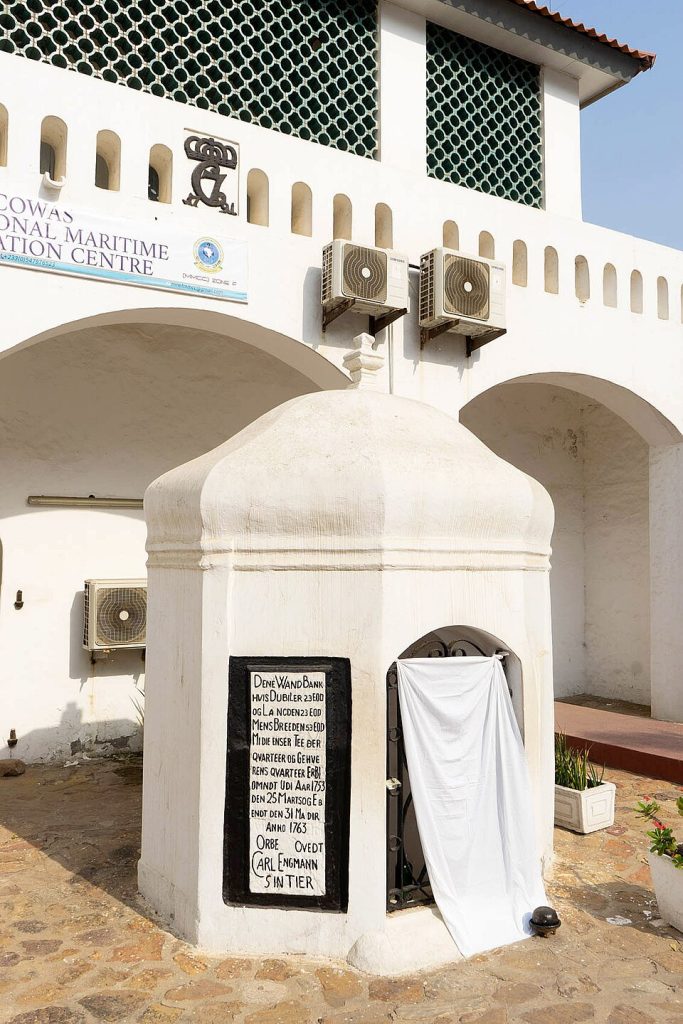
Traffic now runs through the crossroads where the three men fell, close to the castle they never reached. A memorial to the ex-servicemen stands nearby, and veterans and state officials gather each year on 28 February to lay wreaths. The petition itself asked for pensions and fair treatment. Its bearers did not live to see an answer, and the country that came out of their march was one none of them had set out that morning to demand.