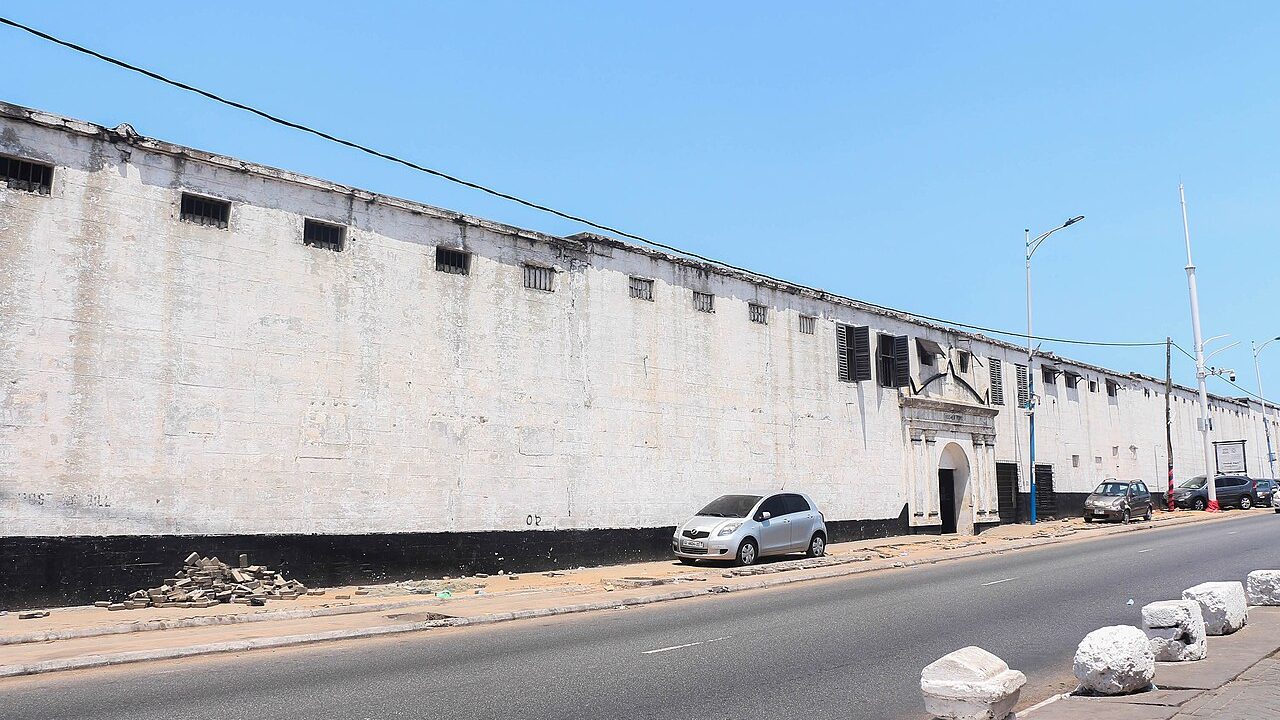
For 219 years, the Dutch flag flew over the fort on the shore at Ussher Town. The Dutch West India Company built a trading post there in 1642, enlarged it into a fort in 1649 and named it Crèvecœur, after a fortress near ‘s-Hertogenbosch in the Netherlands. It became Ussher Fort only after the British took it over in 1868, and the neighbourhood around it still carries the name of the British administrator it honours.
Today the fort is a museum of slavery and one of the components of the UNESCO World Heritage site that covers Ghana’s coastal forts and castles. Its long history as a trade post, a slave dungeon, a police post and a prison makes it one of the most layered buildings in Accra.
A Dutch fort among rivals
The Dutch had been trying to secure a foothold at Accra since 1610, but negotiations with local rulers took decades to produce a fort. When Crèvecœur went up, it stood within sight of its competitors. The English built James Fort a short distance along the shore, and the Danes held Christiansborg Castle at Osu. Three European powers traded from three forts on a few kilometres of the Ga coast.
The trade they competed for included enslaved people. Captives were held in the fort’s dungeons before being shipped across the Atlantic, the history the museum now tells.
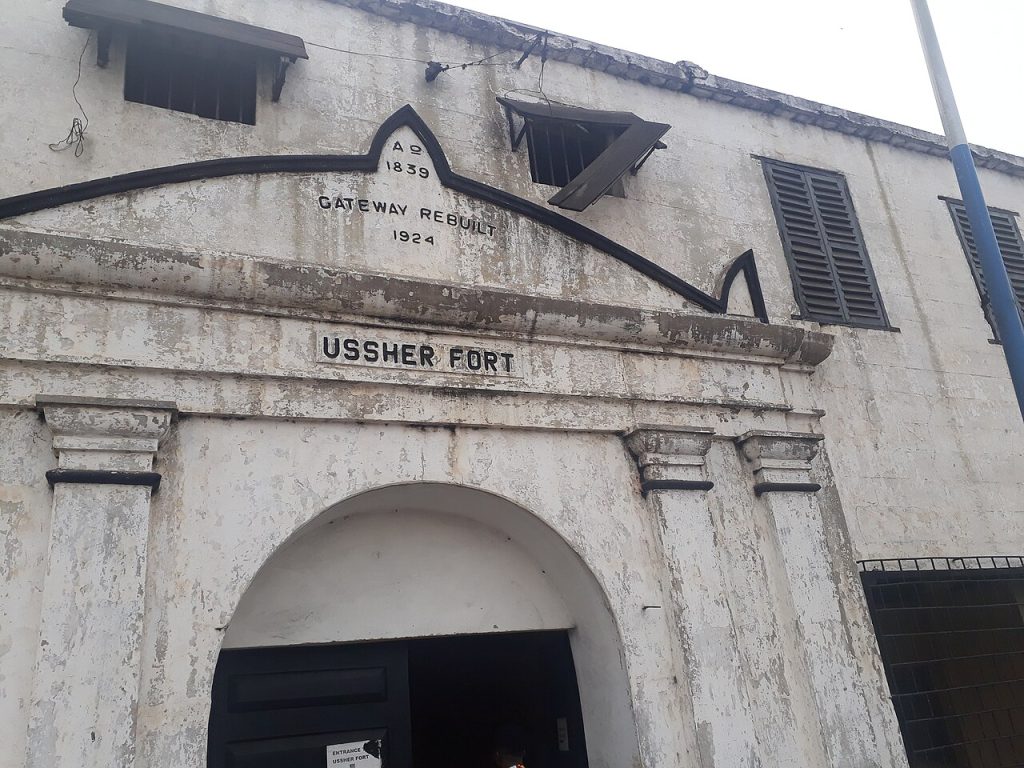
The rivalry turned violent during the Fourth Anglo-Dutch War. In 1782 a British squadron under Captain Thomas Shirley, in HMS Leander with the sloop Alligator, sailed along the Dutch Gold Coast. After failing to take Elmina, Shirley captured several smaller Dutch forts, among them Crèvecœur, which carried 32 guns. The fort was destroyed in the fighting and was not rebuilt until 1839, when the Dutch master of works Hubertus Varlet restored it.
Becoming Ussher Fort
The Anglo-Dutch Gold Coast Treaty of 1867 redrew the two countries’ spheres of influence along the coast, and under it the fort passed to the British in 1868. Within four years the Dutch had left the Gold Coast entirely.
The British renamed the fort in honour of Herbert Taylor Ussher, the administrator of the Gold Coast at the time. The name spread to the district around it, Ussher Town, which with James Town to the west makes up the old heart of Ga Accra. Over its history the fort has also served as a police post and a prison.
World Heritage and the museum
In 1979 UNESCO inscribed the forts and castles of Ghana’s Volta, Greater Accra, Central and Western regions on its World Heritage List as a single property. Ussher Fort is one of its components, alongside better-known sites such as Cape Coast and Elmina castles. Europeans built more than two dozen forts along the coast of what is now Ghana, and many are in poor condition.
The museum of slavery at the fort closed temporarily in 2014. In 2019 the Dutch government provided US$33,593 through the UNESCO/Netherlands Funds-in-Trust to rehabilitate the Ussher Fort Slave Museum and Documentation Centre. The work was completed in June 2021 and handed over at a ceremony attended by Abdourahamane Diallo of UNESCO, Ivor Agyemang Duah, then acting executive director of the Ghana Museums and Monuments Board, and the Dutch ambassador, Ron Strikker.
The fort is also on the Mutual Heritage List kept by the Ghana Museums and Monuments Board and the Netherlands’ heritage agency, which recognises sites that tell a shared Dutch and Ghanaian history. The museums board lists its opening hours as 9am to 4:30pm, Monday to Saturday, including public holidays.
Art on the old walls
In recent years the fort has found a second life as a venue. The Chale Wote Street Art Festival, which grew up on the streets of Jamestown, has used its premises, and in 2021, when Covid restrictions moved the festival online, parts of the programme were staged and filmed inside the fort.
That same August, police arrested two of the festival’s organisers and an artist outside Ussher Fort, an episode the festival’s director blamed on orders from above. The walls that once held captives for the Atlantic trade had become the backdrop for an argument about who gets to use public space in Accra.