
The Court of Appeal's decision to acquit and discharge former Microfinance and Small Loans Centre (MASLOC) Chief Executive Officer Sedina Tamakloe-Attionu has raised red flags among legal practitioners, governance experts, and anti-corruption advocates. The ruling, delivered on Thursday, overturned Tamakloe-Attionu's conviction and 10-year prison sentence.
Investigative Journalist Speaks Out
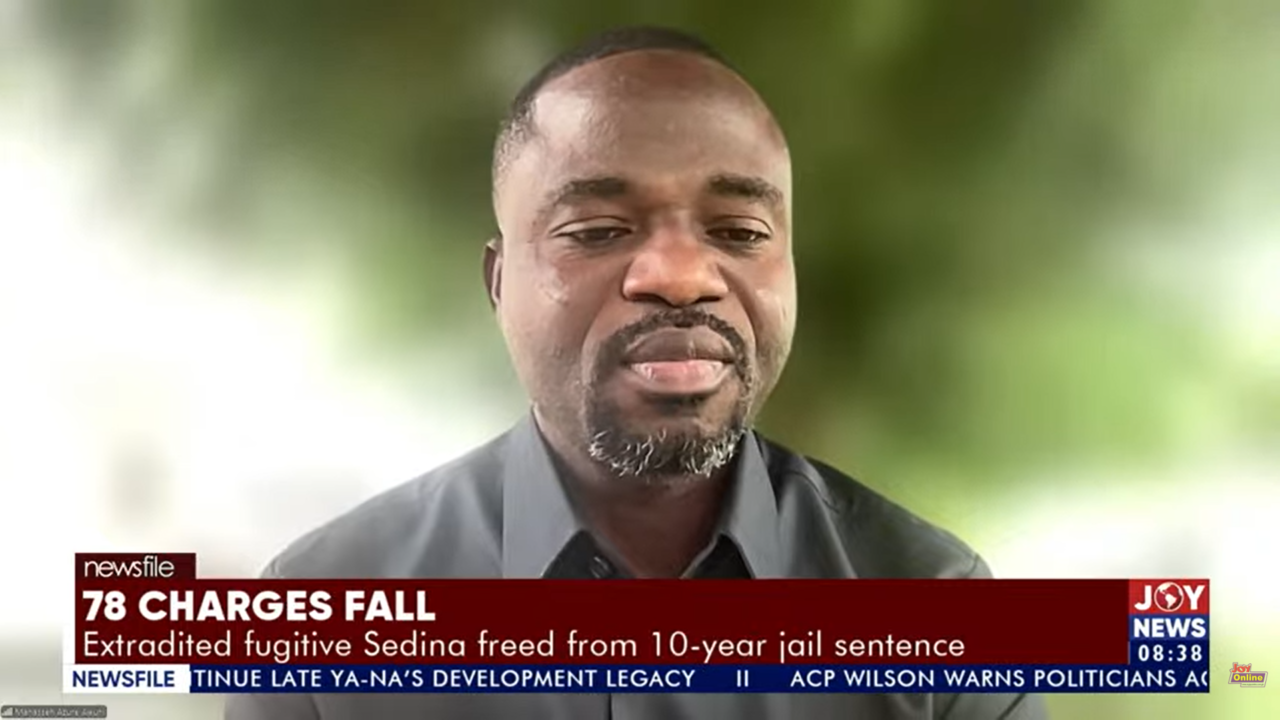
Investigative journalist Manasseh Azure Awuni has described the Court of Appeal's judgment as containing valuable lessons for investigators and prosecutors. Speaking on JoyNews' Newsfile on Saturday, August 1, Awuni said he had taken time to study both the Court of Appeal's judgment and the original High Court decision before arriving at his assessment.
"I had the opportunity to read the entire judgment, and I also read the initial judgment by the High Court and, together with the background, I will say there are instances that I agree with the Court of Appeal judgment," Awuni said.
Lessons for Investigators and Prosecutors
Awuni acknowledged that the appellate court had identified weaknesses that should serve as important lessons for those involved in investigating and prosecuting complex financial crime cases. He suggested that the judgment highlighted the importance of ensuring that investigations are thorough and that evidence presented in court is capable of withstanding legal scrutiny throughout the judicial process.
"There are a number of loose ends. It will serve as lessons for investigators, prosecutors and even investigative journalists like myself," Awuni noted.
Concerns Over the Judgment
However, despite agreeing with portions of the appellate court's findings, Awuni expressed reservations about what he described as the tone adopted in some sections of the judgment. He pointed specifically to the procurement-related issues at the centre of the case, arguing that, in his opinion, there remained sufficient legal basis for the court to uphold part of the High Court's findings.
"Especially the procurement issues, there could have been a way to hold on to that verdict," Awuni added.
Reaction to the Ruling
The ruling has generated widespread debate among legal practitioners, governance experts, and anti-corruption advocates, with differing opinions emerging over whether the judgment reflects deficiencies in the prosecution's case or broader challenges within Ghana's criminal justice system. For Awuni, whose investigative work has contributed to several high-profile public interest cases over the years, the decision should not only be viewed through the lens of the outcome but also as an opportunity for investigators, prosecutors, and journalists to strengthen the quality of evidence gathering and case preparation.
The former MASLOC Chief Executive was extradited from the United States to Ghana on June 9, 2026, after years outside the country. She began serving her 10-year prison sentence at the Nsawam Medium Security Female Prison on June 24 before the Court of Appeal quashed the conviction just weeks later.
Source: Joy Online