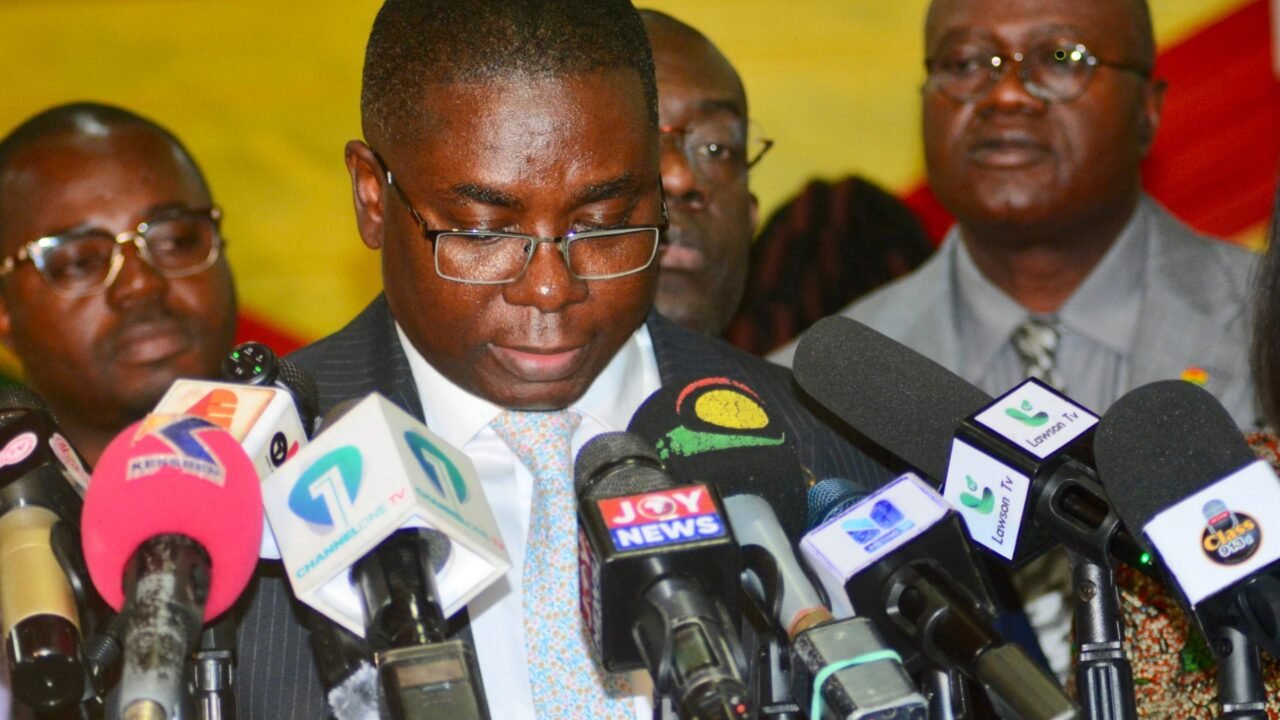
Ghana's Deputy Ranking Member on Parliament's Finance Committee, Dr Gideon Boako, has accused the government of imposing an increasing tax burden on Ghanaians. Speaking in Parliament on Friday, July 31, Dr Boako argued that recent fiscal measures demonstrate a preference for raising taxes instead of addressing inefficiencies in revenue collection.
Government Favors Tax Hikes Over Efficiency
Dr Boako questioned the government's justification for extending the Energy Sector Recovery Levy to fuel oil. He argued that issues such as fuel smuggling and tax non-compliance should be addressed through stronger enforcement rather than by extending existing levies. The Deputy Ranking Member emphasized that the government should account for the use of the levy before seeking to widen its application.
A History of Unfulfilled Tax Objectives
The Energy Sector Recovery Levy was introduced last year to repay debts in the energy sector. However, Dr Boako maintained that the intended objective had not been achieved. This has raised concerns about the government's ability to manage its finances effectively. The levy was initially set at GH¢1 per litre, and Dr Boako's comments suggest that the government's decision to extend it may be motivated by a desire to increase revenue rather than address the underlying issues.
The Dangers of Supermajority Rule
Dr Boako further cautioned Ghanaians against giving any political party an overwhelming majority in Parliament. He argued that such dominance weakens parliamentary oversight and allows governments to push through policies without sufficient scrutiny. Ghana should never make the mistake of giving one political party such a supermajority in Parliament, he added.
Implications for Taxpayers
The government's decision to extend the Energy Sector Recovery Levy has significant implications for taxpayers. As Dr Boako pointed out, the increasing tax burden on Ghanaians is a major concern. The government's failure to address inefficiencies in revenue collection and its preference for raising taxes has raised questions about its commitment to fiscal responsibility. The situation is likely to continue unless the government takes concrete steps to address the underlying issues.
What's Next for Ghana's Taxpayers?
The government's response to Dr Boako's comments will be closely watched by taxpayers and analysts alike. The extension of the Energy Sector Recovery Levy is a contentious issue that requires careful consideration. As the debate continues, one thing is clear: the future of Ghana's tax system hangs in the balance. The government must take a proactive approach to address the concerns raised by Dr Boako and ensure that the tax system is fair and efficient for all.
Source: Joy Online