The Supreme Court of Ghana has ruled that all registered members of political parties must be allowed to vote in the election of party leaders and parliamentary and presidential candidates. This decision, which effectively ends the delegate system, is expected to reshape internal party democracy and reduce the concentration of influence among a relatively small number of delegates.
Landmark Ruling on Vote-Buying
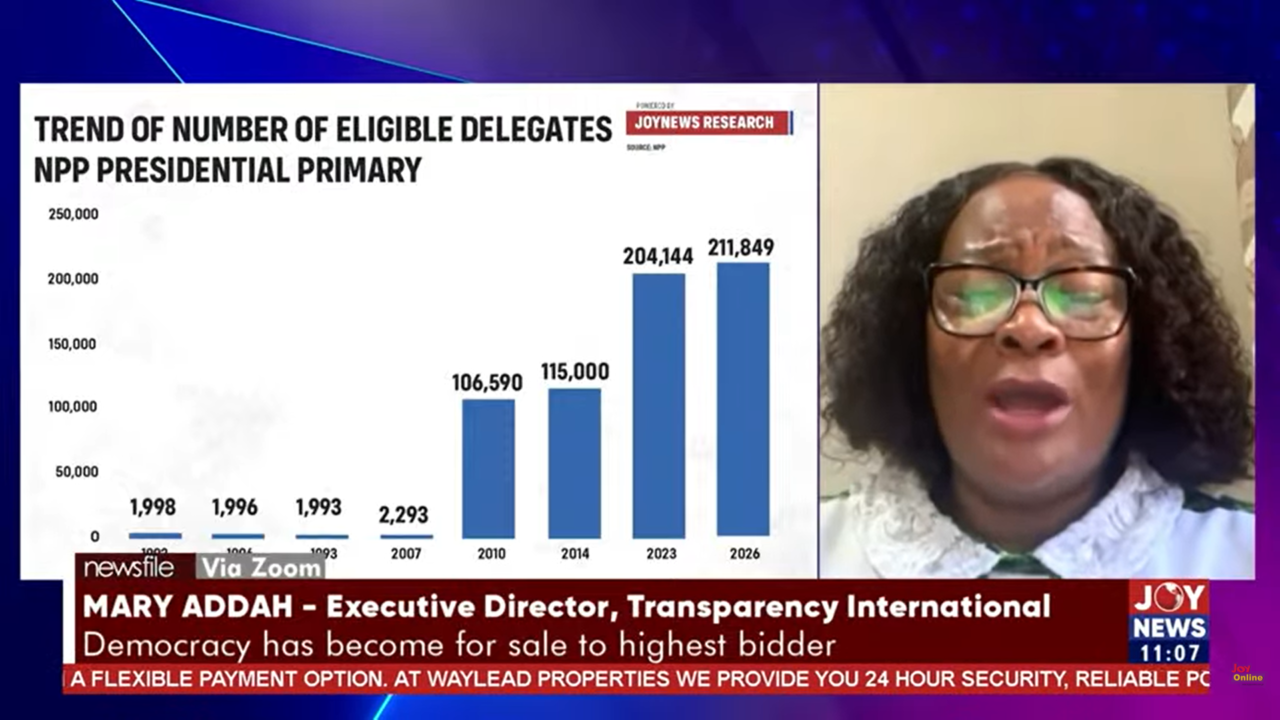
The constitutional challenge, which was determined by a seven-member panel, had generated considerable legal and political debate over whether limiting voting rights to delegates was consistent with the Constitution. Executive Director of Transparency International Ghana, Mary Awelana Addah, has welcomed the Supreme Court's decision, saying it reflects the realities of vote-buying that have long characterised Ghana's internal party politics.
"The justices would have been fully aware of the persistent concerns surrounding the influence of money in internal political party elections before reaching their conclusion," Ms Addah said on JoyNews' Newsfile on Saturday, August 1. "As for the promises, they are many and so I believe that is why this is very instructive, and I am sure that the justices didn't come to this conclusion easily."
Ms Addah argued that the practice of vote-buying has become a visible feature of political contests in Ghana, despite repeated attempts by some political actors to dismiss allegations of inducements as unsubstantiated. "They also live in Ghana and they have seen, and when our politicians again say vote-buying is an issue of conjecture, I believe they are dreaming and they are not facing the reality we have seen," she stated.
Documenting Electoral Misconduct
Ms Addah suggested that weaknesses in evidence collection and enforcement mechanisms have often made it difficult to successfully investigate or prosecute allegations of vote-buying, even where concerns have been widely reported. "We've captured [these incidents], then again, they come at us that there is no evidence to substantiate this because the gaps in there is very weak," she said.
She maintained that this should not be interpreted as proof that the practice does not exist, arguing instead that it highlights the need for stronger accountability measures and more robust systems for documenting electoral misconduct. "Organisations monitoring elections and governance have documented numerous instances that point to the influence of money in political processes," Ms Addah said.
Implications for Future Elections
The Supreme Court's decision is expected to have significant implications for the conduct of future presidential, parliamentary, and executive primaries, as political parties review their constitutions and electoral processes to comply with the court's decision. Ms Addah indicated that expanding participation in internal elections could also reduce the concentration of influence among a relatively small number of delegates, a practice critics have long argued creates fertile ground for vote-buying and undue influence.
In response to suggestions that vote-buying in political party elections is merely speculative, Ms Addah rejected the notion outright. "They also live in Ghana and they have seen, and when our politicians again say vote-buying is an issue of conjecture, I believe they are dreaming and they are not facing the reality we have seen," she stated.
The anti-corruption advocate acknowledged that the implementation of the new system may present logistical and financial challenges for political parties, but she maintained that the benefits of increased transparency and accountability outweigh the costs. As Ghana's political parties review their electoral processes and constitutions to comply with the Supreme Court's decision, one thing is clear: the country is one step closer to a more democratic and transparent political landscape.
Source: Joy Online