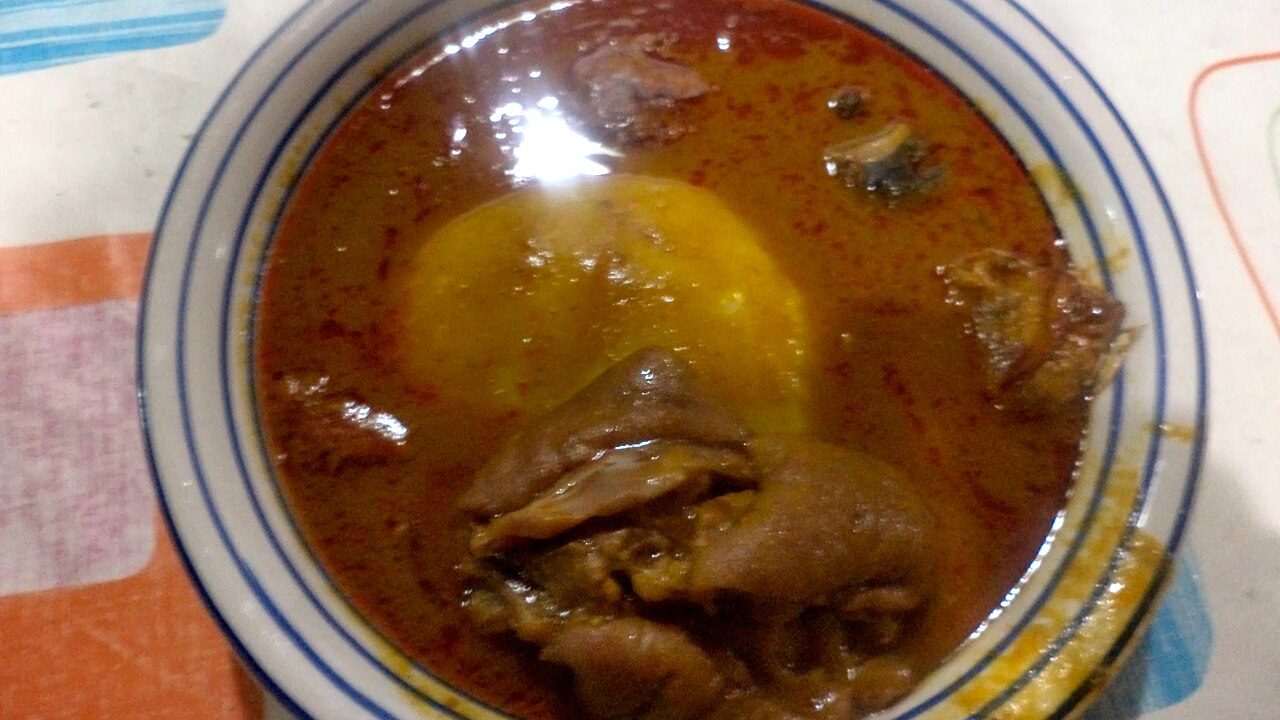
The pot on the fire is deep orange-red, its surface glossy with palm oil. Inside are chunks of goat meat, smoked fish and snails, simmering slowly in a thick broth. This is abenkwan, palm nut soup, one of the great soups of Ghanaian cooking. It takes time to prepare, which is why many families save it for Sundays, festivals and visits from relatives.
The palm fruit and its cream
The soup begins with the fruit of the oil palm. The bunches of red and black fruit are boiled until soft, then pounded to separate the pulp from the hard nuts inside. The pounded pulp is mixed with water and squeezed through the hands or a sieve. The rich, orange liquid that comes out forms the base of the soup. The fibres and nuts are discarded.
Concentrate, meat and seasoning
Many busy cooks in Accra now use tinned palm nut concentrate, which saves hours of work. Purists argue that fresh palm fruit tastes better.
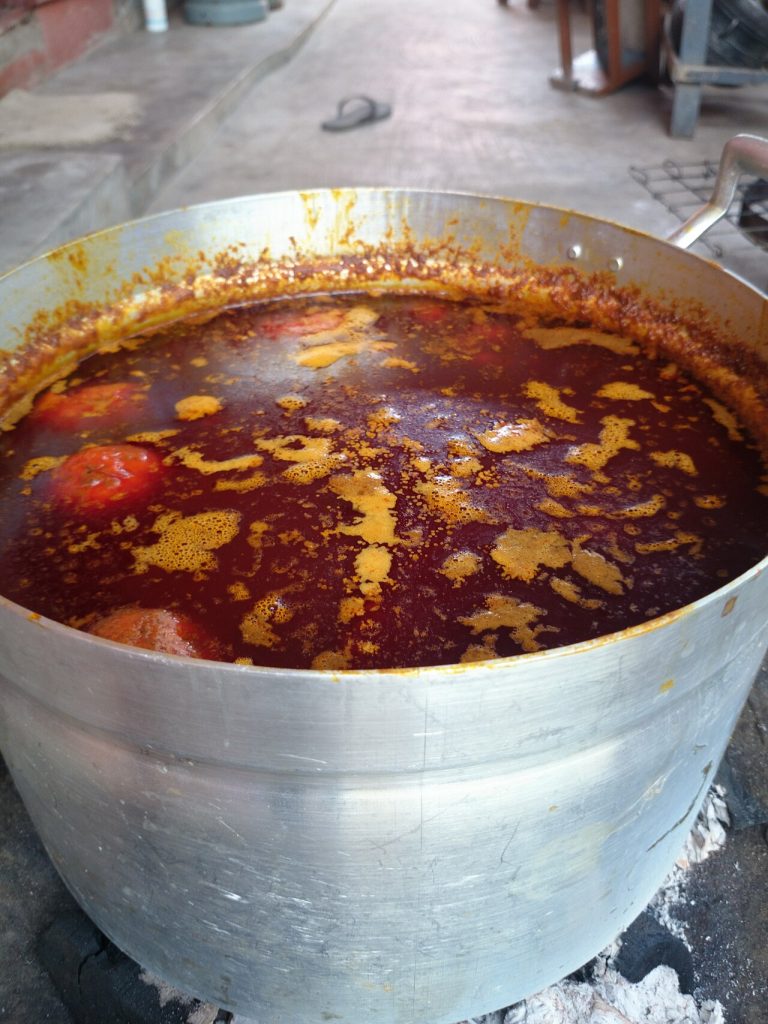
Abenkwan is cooked with meat such as goat, beef or chicken, along with smoked or dried fish. Snails, crabs and mushrooms are added in some homes. Onions, tomatoes, pepper and garden eggs are blended or cooked into the soup. Some cooks add prekese, a fragrant spice pod, or other local seasonings.
Slow cooking and regional versions
The soup simmers for a long time until the palm oil rises to the top and the flavours deepen. The oil is sometimes skimmed off, or left for a richer taste. Abenkwan is most often eaten with fufu, the pounded cassava and plantain dough. It also goes well with banku and omo tuo. Similar palm nut soups are found across West Africa, including banga soup in Nigeria. Each region adds its own spices and ingredients.
Nutrition, chop bars and guests
Red palm oil is rich in vitamin A, and the soup provides protein from the meat and fish. Chop bars in Accra serve abenkwan, especially on certain days of the week, and regular customers know when to come. Serving abenkwan to visitors is a sign of respect in many Ghanaian homes. A pot full of meat and fish tells guests that the host has gone to some trouble for them.
Abenkwan takes hours to cook and only minutes to finish. For many Ghanaian families, that is exactly why it belongs to Sunday.