For more than half a century, the Gold Coast was ruled from Cape Coast. In 1877, the British packed up and moved the capital to Accra.
The move came at the end of the Second Anglo-Asante War of 1873 to 1874, when British forces marched on Kumasi, and in the years when the Gold Coast was being organised as a formal British colony. Cape Coast had been the administrative centre since the 1820s. Accra has been the capital ever since.
Why Accra
Several reasons pushed the change. Accra’s climate is drier than Cape Coast’s, with less rain and, colonial officials believed, fewer of the diseases that killed Europeans in large numbers, including malaria. Accra had also grown into a powerful commercial centre, with Ga, European and other traders running networks that connected the coast to the interior and to eastern trade routes.
Cape Coast, by contrast, faced health problems and strained relations between colonial officials and local chiefs. The British wanted a base that suited the expanding colony.
What the move brought
As the capital, Accra attracted government buildings, offices, officials, clerks and traders. Christiansborg Castle, which the British had acquired from the Danes in 1850, later became the seat of government. The city’s population and economy grew, and it became the centre of politics, commerce and education in the colony.
The railway from the interior, the harbour facilities and, later, Korle Bu Hospital, Achimota College and the University College of the Gold Coast all reinforced Accra’s position.
Cape Coast after 1877
Cape Coast lost its political role but kept its importance in education. Its schools, including Mfantsipim, founded in 1876, Wesley Girls’ High School and St Augustine’s College, made it the educational capital of the country. The University of Cape Coast was founded there in 1962, and the town remains a centre of learning and heritage tourism, with Cape Coast Castle drawing visitors from around the world.
Accra’s growth
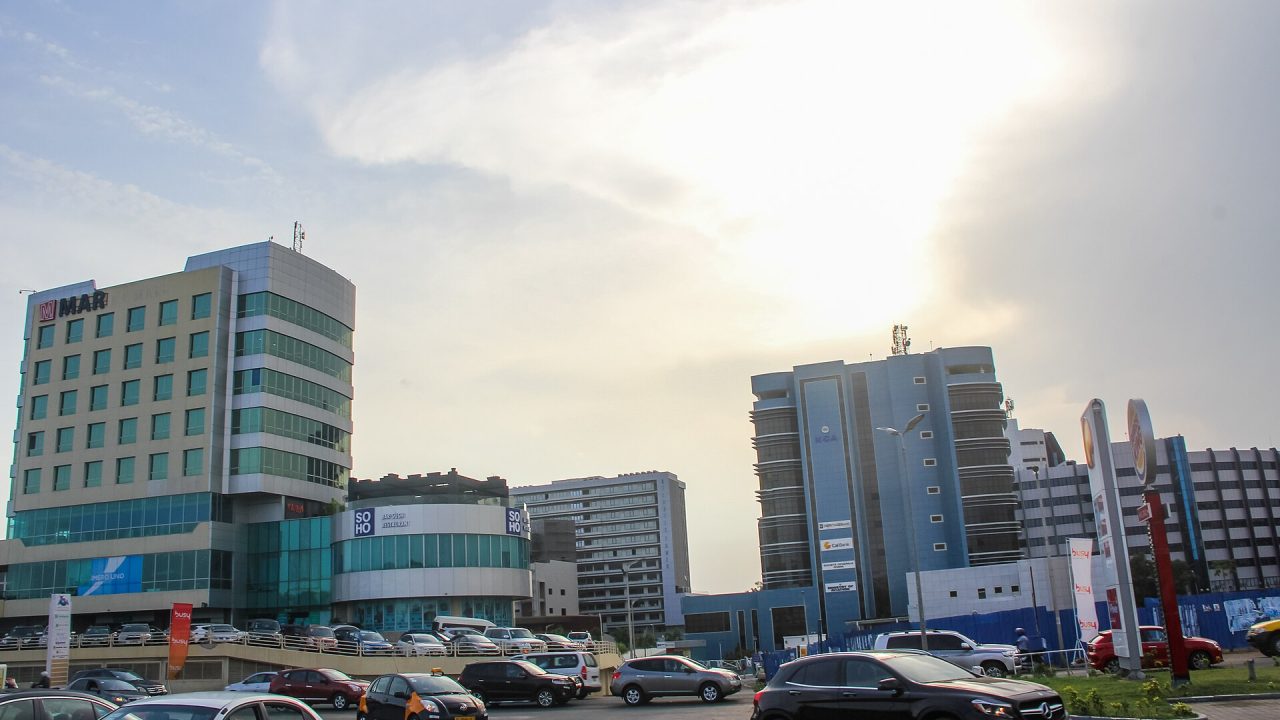
From a colonial town, Accra has grown into a metropolis of several million people, spreading far beyond its original Ga towns of Ga Mashie, Osu, La, Teshie and Nungua. Its growth has brought opportunity and problems: traffic, flooding, housing shortages and pressure on services.
Accra at 149
In 2026, Accra marks 149 years as the capital. The anniversary passes quietly compared with independence celebrations, but it is a reminder that the city’s role was a colonial decision, later embraced by the independent state that made Accra its capital in 1957.
A capital debate
From time to time, Ghanaian commentators have suggested building a new administrative capital outside Accra to ease congestion, as Nigeria did with Abuja. No government has pursued it seriously, and Accra’s central place in national life shows no sign of changing.
The decision was made in 1877 for the comfort of colonial officials. Millions of Ghanaians now live with its consequences every morning in Accra traffic.