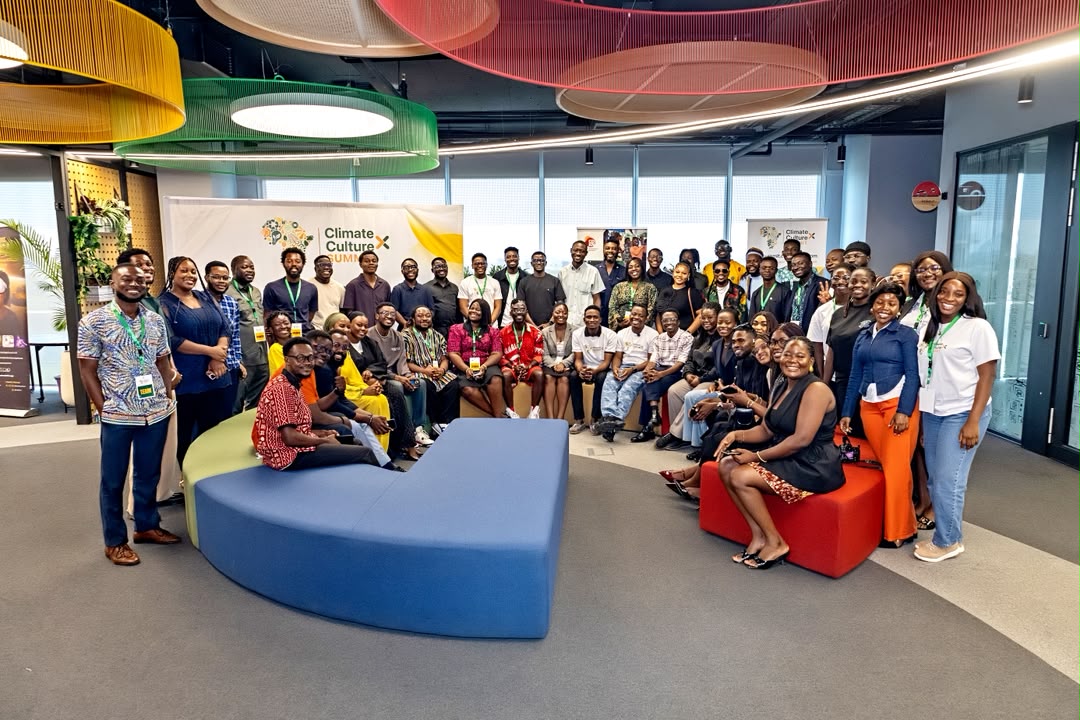
On Thursday, October 22, the Google AI Community Centre in Accra hosted the first-ever Climate x Culture Summit, a gathering that brought together climate experts, creative leaders, researchers, media professionals, financiers and technology innovators to explore Africa’s sustainability challenges through the lens of culture and creativity.
Organised by CultureJoint and the Office of the Minister of State in charge of Climate Change and Sustainability at the Office of the President, the summit took on the theme “Designing Sustainable Creative Experiences for Africa.” The event aimed to move climate discussions beyond traditional environmental policy circles, investigating how music, arts, storytelling, cultural heritage and technology can shape public attitudes and drive sustainable practices.
Kenneth Awotwe Darko, founder of CultureJoint and lead of the summit, opened the event. Ruth Dzokoto, representing the Ministry of Climate Change and Sustainability, delivered the keynote address. Messages of solidarity came from Ruddy Kwakye, a media executive and culture entrepreneur, and Priscilla Adomaah Nsonwaah of the Centre for CSR, West Africa. The opening ceremony included a performance by Eli Six30, also known as The Village Boy, whose music set the tone for conversations about creative expression’s impact on climate awareness.
The first panel, “The Big Picture: Climate × Culture, Why Creativity Matters in the Climate Decade,” was moderated by Derick Ashilevi. Participants included Dr Enoch Bessah, lead for Climate Change and Ecosystem Services Monitoring at the DIPPER Lab, Kwame Nkrumah University of Science and Technology (KNUST); Valerie Kplorm Nutakor, programme coordinator at the Climate and Development Knowledge Network (CDKN); musician and climate activist Okyeame Kwame; and Betty Osei Bonsu Adjei, director of operations and programmes at the Green Africa Youth Organization (GAYO).
Dr Bessah discussed the importance of combining scientific data with indigenous knowledge to help communities adapt to shifting weather patterns. He mentioned the Smart Indigenous Weather App (SIWA), developed through DIPPER Lab’s research, as an example of how traditional forecasting methods can inform practical climate solutions.
Okyeame Kwame stressed the power of culturally relevant communication. He pointed to music, poetry, drumming, dance and festivals as effective ways to convey environmental messages and preserve indigenous practices.
Valerie Kplorm Nutakor and Betty Osei Bonsu Adjei added perspectives on the role of creative-sector stakeholders in climate action, emphasizing the need to connect scientific evidence with cultural experience and knowledge systems that shape community responses to environmental change.
The second panel, “Designing Sustainable Creative Experiences: Greening Ghana’s Events and Creative Industry,” was moderated by Randy Walker. It focused on the environmental impact of festivals, concerts and other live events. Panellists were Joseph Zotoo, senior business development lead at The Or Foundation; Nii Noi Kofi Omaboe, engagement manager at the Ghana National Plastic Action Partnership (GNPAP); culture strategist Peter Ansah; and energy expert Benjamin Nsiah.
The discussion addressed integrating sustainability into event planning and production, with attention to energy use, materials, plastics and waste. The panellists discussed collaboration between event organisers, environmental organisations and production professionals to develop more responsible approaches. They also weighed the challenge of pursuing sustainability without compromising the quality and appeal of cultural events, which are important for employment and business.
A performance by the West African Drum and Dance in Africa band included a song against illegal mining, known locally as galamsey. The performance underscored the summit’s focus on culture as a tool for environmental justice.
The third panel, “Financing the Green Creative Economy: Financing Climate Innovation in Africa’s Creative Economy,” was moderated by Daryl Kwawu. It gathered Eva Ackuaku, head of sustainable financing at CBG Bank; Robert Klah, head of public relations at Charterhouse; Kofi Adjei, head of research at Multimedia Group; and African art curator Nuna Adisenu-Doe.
The session explored challenges and opportunities in financing climate-conscious innovation within Africa’s creative industries. Discussions emphasised linking creative ideas with investment and sustainable financing models to support businesses adopting environmentally responsible practices. The panellists framed sustainability as an opportunity for business development and innovation, rather than solely an environmental obligation.
The summit’s combination of scientific insight, cultural expression and financial strategy reflected a broad approach to Africa’s climate challenges. The presence of musicians, environmentalists, financiers and technology experts together in Accra signalled a new kind of dialogue about sustainability on the continent.
According to Joy Online.