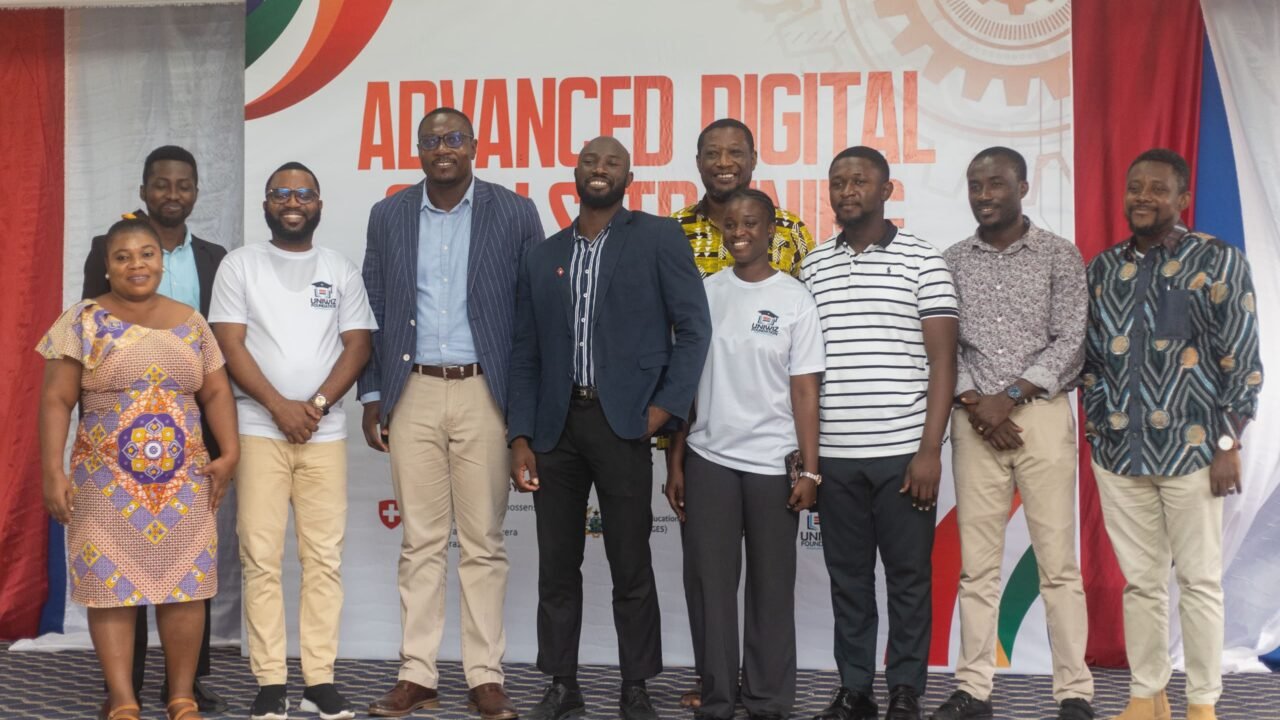
ICT coordinators from districts across the Greater Accra Region have undergone a two-day Advanced Digital Skills Training programme aimed at strengthening digital literacy and enhancing the delivery of Information and Communication Technology (ICT) education in schools. The training, which took place at Methodist University, Dansoman, from August 6 to 7, brought together ICT coordinators and selected ICT teachers from senior high schools to build their technical capacity through practical digital tools and strategies for teaching and learning.
Training Targets Digital Literacy in Schools
The Advanced Digital Skills Training programme was organised by the UNIWIZ Foundation in partnership with the Ghana Education Service (GES), ModePlus Innovation Hub, and Intellite IT Solutions, with support from the Embassy of Switzerland in Ghana. The training was held on the theme, "Advancing Ghana's Education Technology Workforce." The programme aimed to equip participants with practical knowledge and advanced digital tools that would improve the integration of technology into teaching and learning.
Speaking at the opening ceremony, Wisdom Larry Quarme-Doe, Founder and Chief Executive Officer of the UNIWIZ Foundation, said that digital infrastructure and computers alone do not transform schools. He emphasized that educators, particularly ICT coordinators, are the true drivers of digital literacy in schools.
"The true drivers of digital literacy in our schools are our ICT coordinators. You are the digital champions guiding the next generation into the global economy," Quarme-Doe said.
Importance of ICT Education in Ghana
Representing the Greater Accra Regional Director of Education, Regional Planning Officer Ahmed Alhassan described the programme as timely, noting that ICT continues to play an increasingly significant role in Ghana's education system. He highlighted the importance of continuous capacity-building for ICT coordinators and teachers to ensure they remain equipped to teach evolving digital skills.
"ICT has now become a core subject at the basic level and it is now an elective at the WASSCE level. That is why I think this training is so important because those who are providing education for these kids need to have advanced skills in ICT so that they can also impact the children," Alhassan said.
Expanding ICT Facilities in Schools
Mr Alhassan also called on organisations and development partners to support efforts to expand ICT facilities across schools. He noted that government cannot do it all and that stakeholders who are willing to support the Ghanaian education system can come to their offices to direct them to where they need ICT labs, especially where there are clusters of schools.
"The issue is still about establishing more ICT labs in the schools. Government cannot do it all. Stakeholders who are willing to support the Ghanaian education system can come to our offices, and we can direct them to where we need these ICT labs, especially where we have clusters of schools," Alhassan said.
Supporting Ghanaian Children in the Digital Age
The Embassy of Switzerland in Ghana supported the training because it addresses the need to equip children with the digital skills required to thrive in today's world. They reminded participants that the knowledge gained should ultimately benefit learners and that Ghanaian children must be supported to remain competitive in the pace of technological advancement globally.
"We see them as athletes on the field, whereas ours are just about preparing in the dressing room to get on that track. That is how unfortunate the current situation is," the representative from the Embassy said.
Conclusion
The two-day training combined presentations with practical sessions designed to strengthen participants' digital competencies and enhance the teaching of ICT across schools in the Greater Accra Region. The training is a step towards strengthening digital literacy in schools and enhancing the delivery of ICT education in Ghana. As the world continues to advance technologically, it is essential that Ghanaian children are equipped with the necessary digital skills to remain competitive.
Source: Joy Online