The word “tro-tro” is a fare. In Ga, “tro” meant threepence, the coin passengers handed over for a ride in colonial Accra.
The currency is long gone. Ghana moved from the pound to the cedi and pesewa in 1965, and the cedi has been redenominated since. The name did not move at all. Every Accra resident still calls the minibuses tro-tros, and the word has spread to much of the country.
From wooden bodies to Sprinter vans
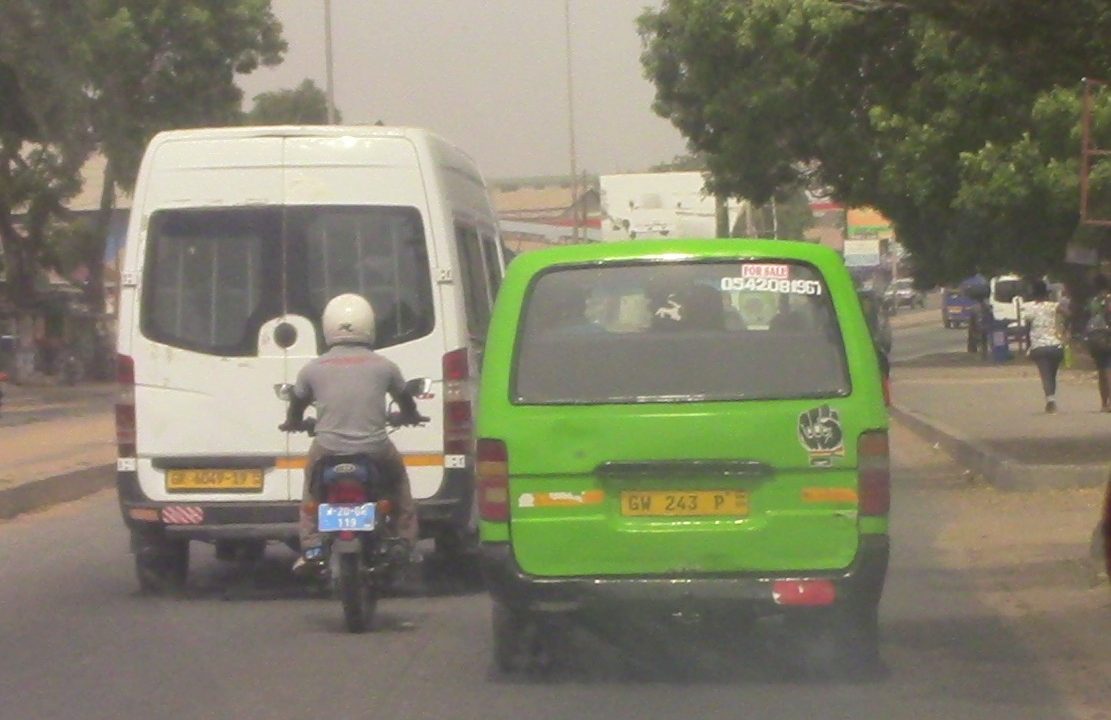
The first tro-tros were lorries and converted trucks, often with wooden passenger bodies built by local carpenters and painted with slogans. Those painted slogans survived every change of vehicle. The Mercedes-Benz Sprinter and Toyota and Nissan vans that fill Accra’s roads today still carry lines on the back window: proverbs, Bible verses, football club names, warnings to jealous neighbours.
The mate and the station
Every tro-tro has a driver and a mate. The mate hangs out of the sliding door calling the route, “Circle! Circle! Circle!”, collects the fares, and decides how many people count as full. Regular riders learn the hand signals for each route, a system that lets a passenger standing at the roadside tell a passing driver where they want to go without a word.
Tro-tros leave from stations, not timetables. A bus fills and then it goes. Big stations such as Circle, Kaneshie, Tema Station and 37 are among the busiest places in the city, with hawkers selling water, bread, phone credit and handkerchiefs through the windows to people waiting for the last seat to fill.
Why the city can’t do without them
Estimates commonly quoted in transport studies say about 70 percent of Accra’s commuters rely on tro-tros for work and shopping. Governments have tried to formalise public transport more than once, with state bus services and a bus rapid transit scheme among the efforts. None has come close to replacing the minibuses, because the minibuses go where the passengers are, including neighbourhoods big buses cannot reach.
The operators are organised through unions such as the Ghana Private Road Transport Union, which negotiates fares with government. Fare changes are national news in Ghana, and a fuel price rise usually means a new fare table taped inside every tro-tro within days.
The etiquette nobody writes down
Riders learn the rules fast. Pass fares forward through other passengers. Have your change ready. Say “bus stop” clearly when you want to get off. The back row is the hardest to leave. If the mate says there is room for one more, there is room for one more.
The coin that gave the tro-tro its name has not been in anyone’s pocket for sixty years. The mate still shouts the route, still counts the heads, and still collects the fare in the same doorway.