Less than a kilometre from Accra’s Central Business District, the air over Agbogbloshie carries a toxic weight few outside the community fully grasp. This sprawling 20-acre scrap yard is where discarded electronics from across the world end their life cycle—and where the desperate search for copper wires is poisoning the air.
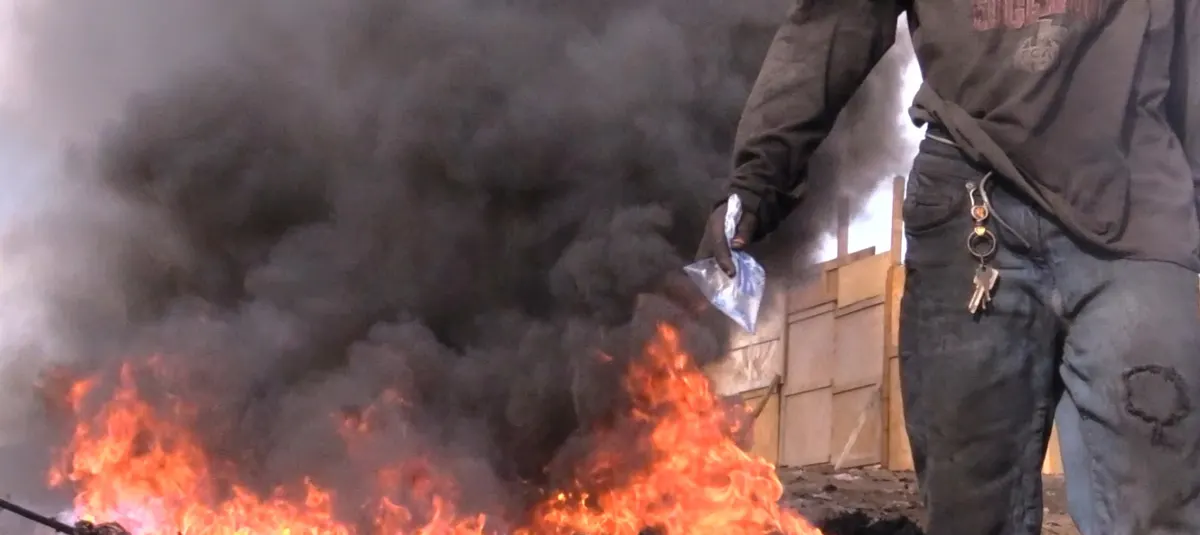
Every day, groups known as the 'Burner Boys' set fire to cables stripped from phones, laptops, refrigerators, and vehicles to extract copper. The smoke that rises carries lead, mercury, and other heavy metals into the lungs of residents and workers. According to a 2024 documentary titled Toxic Smoke, Fragile Lives, soon to premiere on TV3 Ghana, air pollution measurements around Agbogbloshie consistently exceed World Health Organisation (WHO) limits for particulate matter 2.5 (PM2.5) over days, weeks, and years.
The burning is part of a larger problem. The World Health Organisation estimates 62 million tonnes of electronic waste are discarded worldwide every year, but less than 25 percent is recycled properly. A study by the United Nations Institute for Training and Research (UNITAR) found almost 78 percent of e-waste is not formally collected or recycled. This gap creates public health risks that are impossible to ignore in a place like Agbogbloshie.
Ibrahim, a scrap dealer who once worked as an electrician in Tamale, explained why the work keeps him here despite the dangers. “I was an electrician working in Tamale, but business was not going well. Our masters were not paying us for work done,” he said. “I decided to move to Accra, and life has been better. I have a wife and children. I have invested money into this scrap business.” He added that copper cables are the most valuable. “If all these cables are copper, you can make GH¢300 or GH¢400, but you won’t get even GH¢10 from other metals. It’s a business of gains and losses.”
Ibrahim’s colleague, Issah Kwaku, described the risks beyond the toxic smoke. “Someone can sell another person’s products to you because there won’t be any proof or receipts. Burning the cables is also risky due to the smoke. We used to sell the cables to a company that had a formal way of extracting copper; they were exported to China, the United Arab Emirates, India, Russia and other countries.”
At one of the burning sites, Rahim, who calls himself the chief burner boy, shared his experience. “I am 39 years old and have done this work for over 20 years. This work is risky but we don’t have any other job to feed our families.” He added they are “exploring an alternative way to burn the cables so the smoke would ascend straight into the sky without polluting the environment.” Rahim also noted the physical toll. “Being exposed to the heat weakens our body.”
Mohammed Sofo, another burner boy, explained the health consequences he and his colleagues face. “We are mostly affected by malaria. Yes, we usually visit the hospital to check our health and are given medication to treat whatever condition we’re suffering from. The doctors tell us we shouldn’t inhale the smoke because it affects us; they advise us to wear nose masks. The doctors tell us the smoke can affect our heart; we will experience chest pains and coughs.”
Agbogbloshie lies on the banks of the Korle Lagoon, an area already burdened with waste pollution. The community of over 80,000 people faces a daily health crisis from the mix of methane emissions from general waste, carbon emissions from vehicles, open burning of electronic waste, and smoke from household and commercial cooking.
The dangers extend beyond pollution. Recently, a burner boy died from an explosion caused by burning an airbag containing sodium azide, a highly explosive chemical. The boy tried to escape but fell and died. This incident highlights the deadly hazards that workers here face.
The story of Agbogbloshie reflects a global challenge. Electronic waste is growing fast, but safe recycling options are scarce, especially in countries like Ghana. The toxic smoke from burning cables carries heavy metals that settle into the soil and water, affecting the health of nearby communities and the environment.
Despite the risks, many who work in Agbogbloshie see no alternative. They come from across Ghana, drawn by the promise of income. For some, like Ibrahim, this is a way to support their families. But for the 80,000 residents and workers, the price is high: a slow and invisible poison in the air they breathe every day.
According to 3News.