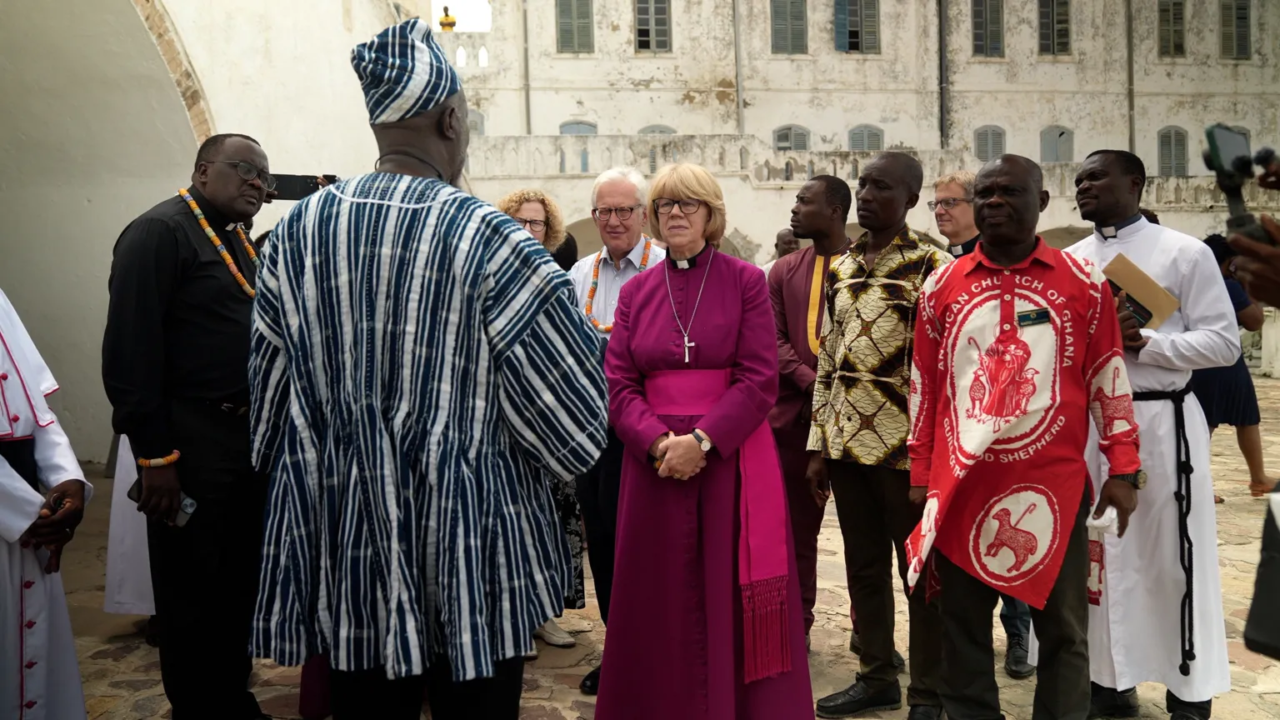
The Archbishop of Canterbury, Dame Sarah Mullally, has renewed her commitment to a £100m fund for reparative justice in Cape Coast, Ghana. On a visit to the historic Cape Coast Castle, she acknowledged the Church of England's role in the transatlantic slave trade.
Archbishop Confronts Church's Role in Slave Trade
Dame Sarah Mullally toured the castle, where enslaved Africans were held before being trafficked to the Americas. "We played a part in the transatlantic slave trade. That is clear," she said. "Part of the Christian belief in repentance is about action, so we are putting in place action to support those communities that feel the legacy of the slave trade."
The archbishop's visit comes three years after the Church of England decided to set up the fund for reparative justice work. The aim is for the fund to be spent on "a programme of investment, research and engagement" in communities damaged by the enslavement of African people during the transatlantic slave trade.
Church's Complicity in Slave Trade
The Church of England has previously apologised for its associations with the slave trade. Its missionary arm ran slave-farmed plantations in the Caribbean to fund the spread of Anglicanism, individual members of clergy were slave owners, and the Church received large donations from slave traders. The Church's historical endowment fund also reported large investments made in a company that trafficked slaves.
Dame Sarah's visit to the castle was a stark reminder of the Church's involvement in the slave trade. Above the dungeons sits a chapel, which she described as a "stark illustration of the way the church was involved in the slave trade". The archbishop said she was "deeply moved" by what she saw on her visit to Ghana.
Ghana's Reparations Campaign
Ghana has been spearheading a global campaign for institutions and nations across the world that benefitted from the slave trade to pay reparations. The country's foreign minister, Samuel Okudzeto Ablakwa, has praised Dame Sarah's commitment to the fund. "What the Archbishop of Canterbury is doing in Ghana on her current visit will begin to send the right signals," he said.
The Christian religion, which was brought to Ghana and Africa by European colonizers, teaches that without admission of sins, there can be no salvation. There can be no going to heaven, according to Minister Ablakwa. He believes that the Church of England's actions will have a significant impact on the Church's own salvation.
Next Steps for the Church
The Church of England's decision to set up the £100m fund has not been without controversy. Some have questioned the historical accuracy of reports into the level of the Church's complicity, while others have raised legal concerns about it and ideological objections. Despite these challenges, the Church remains committed to its goal of supporting communities damaged by the transatlantic slave trade.
Dame Sarah's visit to Cape Coast Castle marks a significant step towards the Church's goal of reparative justice. The archbishop's commitment to the fund and her acknowledgement of the Church's role in the slave trade sends a powerful message about the importance of confronting the past and making amends.
Source: Joy Online