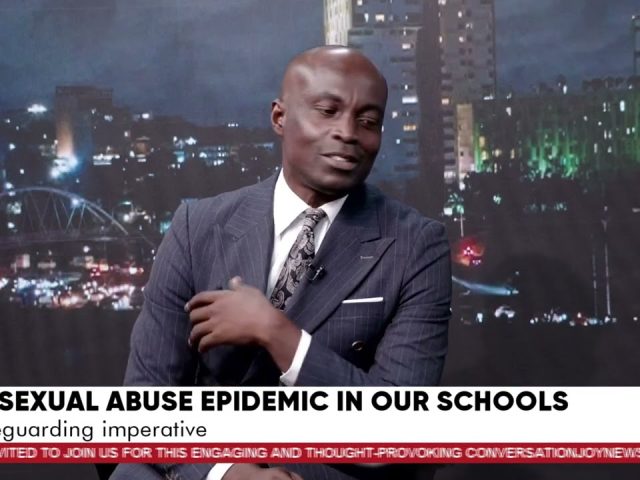

Ashesi University’s Safeguarding Lead, Dr Millicent Adjei, warned this week against asking students to run food errands for school authorities, describing it as a breach of the protective boundary that should be in place for children. Her comments came during an appearance on Joy News’ PM Express on Tuesday, in the wake of the Obuasi Senior High Technical School sexual abuse allegations.
Dr Adjei, who is also Director of International Programs and Campus Cohesion at Ashesi, pointed to the practice of students delivering food to the headmaster’s residence as a sign of early safeguarding failure. “From what is shared, right from even asking a child entrusted to you to take care of your elderly needs, go to the cafeteria, carry your food for you. That boundary should not be crossed, right?” she said.
The investigation that triggered this discussion was led by journalist Manasseh Azure Awuni in a JoyNews report titled Inside the Dreaded Headmaster’s Bungalow. It revealed allegations of sexual abuse involving Zakaria Abdulai, the headmaster of Obuasi SHTS. The Ghana Education Service has since interdicted Abdulai pending further investigations, and the police have received a formal complaint.
Dr Adjei extended her concern beyond the headmaster’s bungalow, cautioning against students being made to carry food anywhere on behalf of staff. “Whether he carried the children to the classroom or wherever, that is a no-no,” she said.
Beyond the physical boundary violations, Dr Adjei identified a second failure: the absence of an environment that made students feel safe enough to report abuse. She noted that one of the victims lacked confidence or comfort in speaking out. “The second level is the environment, the environment that didn’t make it conducive because one of the victims did not feel confident enough or comfortable enough to report, so that enabling environment that allows and empowers them to report was broken.”
She pointed to an instance in which a house prefect had to bring the matter forward. Another account revealed that a girl was hospitalised after being caned, yet no action followed. “So the second layer, where an environment that doesn’t support speaking up when some of these things happen, was also broken, because when you are given that duty of care, you are supposed to be the protector,” Dr Adjei said.
She insisted adults responsible for children must create conditions where students can safely raise concerns. “You are supposed to create that environment where children will be able to come to you, right?”
The Obuasi SHTS case has drawn public attention to safeguarding practices in Ghanaian schools. The Ghana Education Service’s decision to suspend the headmaster came after months of complaints about his conduct surfaced. The investigation is ongoing, with authorities focusing on how the school environment allowed abuse to occur and go unreported.
Dr Adjei’s comments reflect a concern that the boundaries protecting children are not always clear or respected in schools. The practice of asking students to run personal errands for staff, including carrying food, risks exposing them to harm, especially when combined with an atmosphere where reporting abuse is discouraged or ignored.
The school community and education authorities now face questions on how to ensure such boundaries are observed and how to build a culture where students feel protected and supported in speaking out.
According to Joy Online.