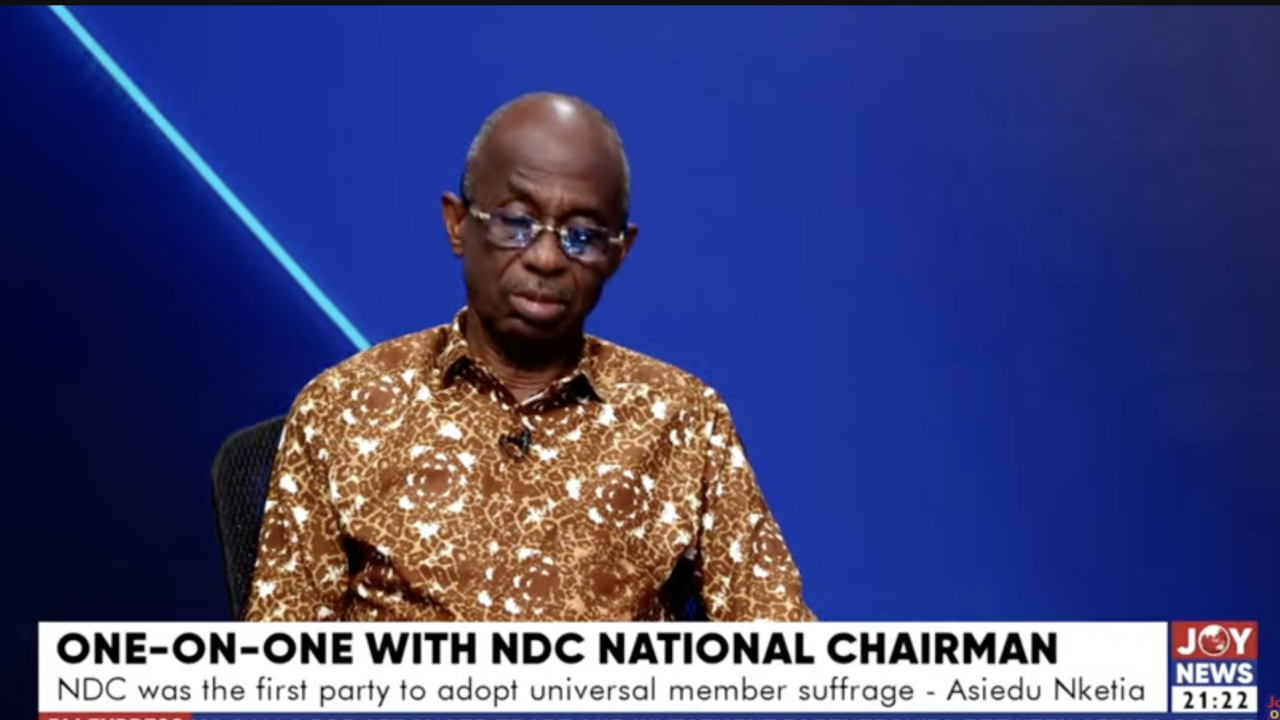
The National Democratic Congress (NDC) National Chairman, Johnson Asiedu Nketia, has called on the government to provide funding for political parties to conduct one-member-one-vote internal elections through the Electoral Commission (EC).
The call comes after a Supreme Court directive requiring political parties to adopt a more inclusive system for selecting their candidates, with the court giving political parties one year to comply. Asiedu Nketia believes the state should consider supporting the process, given the high costs associated with the one-member-one-vote system.
NDC's Experience with One-Member-One-Vote System
In 2014, the NDC conducted its one-member-one-vote internal elections, which cost the party close to GH¢14 million. The party established more than 8,000 polling stations across the country and paid for election materials as well as allowances for officials recruited by the Electoral Commission.
The NDC's experience with the one-member-one-vote system has demonstrated both the benefits and the financial demands of the process. Asiedu Nketia explained that the exercise was more expensive than delegate elections because of the larger number of voters and materials required.
State Funding for Internal Party Elections
Asiedu Nketia argued that since the one-member-one-vote system expands participation among party members, the state should consider supporting the process. He expects that the Electoral Commission's involvement would address the biggest cost component of the exercise.
The NDC National Chairman also backed the establishment of an office to regulate political parties, which would ensure that only organisations that meet the constitutional requirements for recognition as political parties qualify for any state support.
Addressing Concerns Over State Funding
Responding to concerns that state funding for internal party elections could encourage the creation of numerous political parties seeking public resources, Asiedu Nketia said the proposed body would ensure that only organisations that meet the constitutional requirements for recognition as political parties qualify for any state support.
He pointed out that the proposed body would be responsible for ensuring that political parties have structures in more than two-thirds of the country's districts before certifying them as political parties.
NDC's Ability to Meet the Timeline
Asiedu Nketia has maintained that the NDC can meet the timeline, arguing that the party already has experience with the system. He recalled that the party opened polling booths in electoral areas across the country, with additional stations created in communities where electoral areas covered clusters of villages.
The NDC's experience with the one-member-one-vote system has demonstrated both the benefits and the financial demands of the process. Asiedu Nketia believes that with the right support from the state, the party can successfully conduct its internal elections and meet the Supreme Court's directive.
The government's decision on whether to provide funding for political parties to conduct one-member-one-vote internal elections through the Electoral Commission (EC) will have significant implications for the country's electoral landscape. If the government agrees to provide funding, it will be a significant step towards ensuring that all political parties have the resources they need to conduct their internal elections.
However, if the government declines to provide funding, it may lead to a situation where only parties with significant financial resources can conduct their internal elections, which could undermine the democratic process and create an uneven playing field. The outcome of this decision will have far-reaching implications for the country's democratic development.
Source: Joy Online