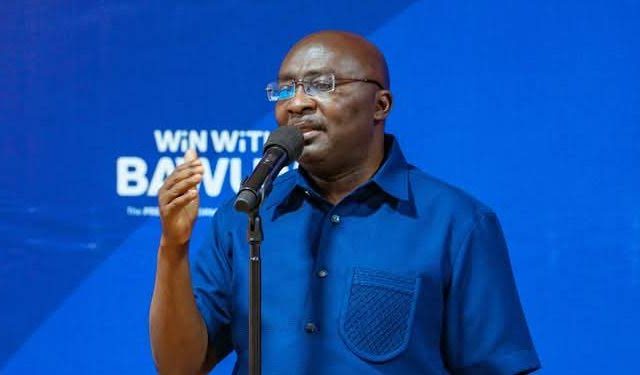

The Economic and Organised Crime Office’s attempt to arrest Manhyia South MP Nana Agyei Baffour Awuah last week was legally flawed, according to Lenin Nicholas Anane Agyei, a lawyer and lecturer at the Ghana School of Law. Speaking on JoyNews’ Newsfile on Saturday, Mr Anane Agyei said the law does not criminalise a refusal to honour an invitation from EOCO, making the attempted arrest without a warrant unlawful.
Mr Anane Agyei described the move as “flawed beyond saving” and pointed to the specific provisions of the Economic and Organised Crime Office Act, 2010 (Act 804). He explained that Section 19(1) gives EOCO the power to invite people to assist with investigations and to compel the production of documents. But the law only criminalises failure to produce documents under Section 19(5). It does not say anything about refusing to respond to an invitation.
“Plainly speaking, the attempted arrest of Honourable Baffour Awuah was flawed beyond saving,” he said. “When you go to Section 19(5), it criminalises failure to produce documents when it is required, but it has not said anything about a refusal to honour an invitation.”
Mr Anane Agyei rejected the idea that the absence of a penalty for ignoring EOCO invitations was an oversight by Parliament. He said Parliament deliberately chose not to criminalise refusal to appear, because an invitation is just that—an invitation.
“And so it was not a lacuna intended by Parliament. Parliament intended not to criminalise refusal to appear, because an invitation is what it is,” he said.
He added that if Parliament had wanted EOCO to arrest people who refused to show up after an invitation, it would have included that in the same section of the law. “If Parliament intended that EOCO requires you to appear and you refuse to, you should have consequences, it would have in that same section been provided,” he said.
Based on this, Mr Anane Agyei argued that even if the MP had failed to respond to EOCO’s invitation, that alone could not justify his arrest.
“So on that score, the failure of Baffour Awuah to respond or attend the invitation, even if he so did, will not have been the basis for EOCO to arrest him in any sort of manner,” he said.
He also questioned the legality of the attempted arrest because there was no arrest warrant. Mr Anane Agyei said the conditions for a warrantless arrest did not exist in this case.
“The fact that there was the absence of warrant and also, the fact that the conditions for a warrantless arrest did not exist,” he said.
While acknowledging that warrantless arrests happen often in Ghana, he pointed out that their frequency does not make them legal.
“I dare say that most of the arrest that happens in this country often are warrantless,” he said.
The comments come after a confrontation between the Manhyia South MP and EOCO officials at the Accra High Court on Wednesday, September 23. The details of the case and the reasons for EOCO’s interest in the MP have not been disclosed publicly.
Mr Anane Agyei’s analysis suggests EOCO’s approach in trying to detain the MP over a failure to attend an invitation could face serious legal challenges. Without a clear statutory basis or a warrant, the office’s power to arrest appears limited under the current law.
According to Joy Online.