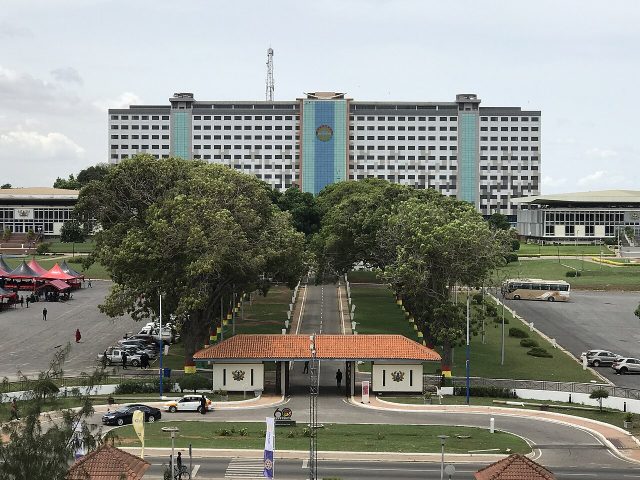
The Bank of Ghana has issued its Guideline for the Regulation and Supervision of Non-Interest Banking in Ghana, marking a significant milestone in the country's financial system. This development comes after close to a decade of advocacy and research by the Islamic Finance Research Institute of Ghana (IFRIG Ghana) and other stakeholders.
A New Era for Non-Interest Banking
The Bank of Ghana has inaugurated the Non-Interest Financial Advisory Council (NIFAC) under the leadership of Governor Dr Johnson Pandit Asiama. This council will provide an important governance mechanism within the Bank of Ghana's regulatory framework, ensuring that innovation takes place within a sound regulatory and supervisory environment.
The guideline is intended to provide the regulatory and supervisory framework for the growing interest in non-interest banking products and services. According to IFRIG Ghana, this development is not just an achievement of one institution or group, but the outcome of a long process of engagement involving regulators, government, financial-sector professionals, religious leaders, academia, civil society, and other stakeholders.
IFRIG Ghana has consistently advocated for the development of a regulatory environment that would allow non-interest banking and finance to operate within Ghana's financial system. The organization has sought to create awareness among policymakers, regulators, bankers, accountants, lawyers, academics, investors, businesses, and the wider public about the opportunities presented by non-interest finance.
A Broad and Inclusive Approach
The journey towards non-interest banking has involved serious engagement between the Central Bank and stakeholders from the Christian, Muslim, and other communities. This engagement is important because the future of non-interest finance in Ghana must be understood as a national financial-sector initiative, not as a project belonging to one religion.
Non-interest finance, although rooted in principles developed within Abrahimic finance, has characteristics that can appeal to people beyond the Muslim community. Its emphasis on asset-backed transactions, transparency, shared risk, ethical investment, and connection with real economic activity provides opportunities for anyone interested in alternative and responsible forms of finance.
Opportunities for Growth
The emergence of non-interest finance in Ghana presents opportunities for the development of the country's capital market, particularly through Sukuk, commonly referred to as non-interest bonds. Sukuk could provide Ghana with an additional mechanism for mobilizing long-term capital for economically productive and socially important projects.
A properly structured Sukuk market could allow institutional and other investors to participate in financing assets and projects while providing issuers with an alternative source of capital. This could be particularly relevant to pension funds, insurance companies, asset managers, banks, and international investors seeking credible long-term investment opportunities.
A Bright Future Ahead
The global Islamic financial services industry has grown into a major component of the international financial system, with the IFSB providing dedicated data covering non-interest banking, non-interest capital markets, and non-interest insurance (Takaful). Ghana should see the emergence of non-interest finance as an opportunity to deepen its financial sector and explore credible sources of long-term financing.
The commitment of the Bank of Ghana to developing a robust supervisory framework for non-interest banking deserves recognition. As IFRIG Ghana notes, "The Governor himself has previously acknowledged the work being undertaken to put the necessary structures in place, including the contribution of Professor John Gatsi and the technical team."
The potential benefits of non-interest finance extend beyond banking halls and individual customers. Ghana must continue to explore credible sources of long-term financing to meet its significant financing requirements for roads, hospitals, schools, housing, energy, and other infrastructure.
Source: Joy Online