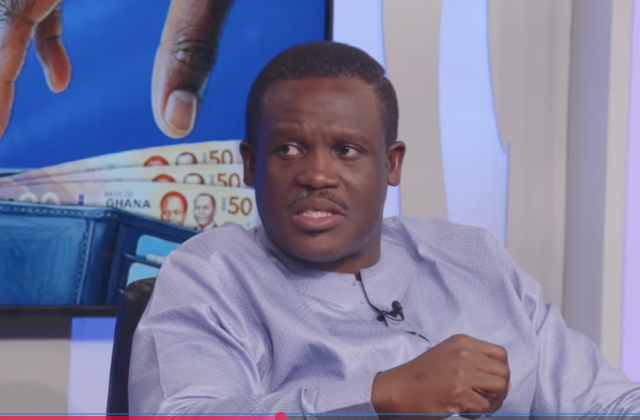
Bright Simons questioned the feasibility of Ghana’s planned AI compute centre during JoyNews’s Digital Economy Forum on October 21. The Vice President of IMANI Africa raised concerns about electricity costs, water supply, and the country’s track record with technology projects.
Simons said the operational efficiency of the AI data centre would hinge on energy prices. “Nobody builds an AI centre unless the energy, say, the price of energy is roughly 3 cents to 5 cents. So if Ghana does it from 10 cents to 12 cents, that AI data computing centre will not be efficient,” he said. The government’s cited rates for AI computing facilities fall short of what he considered necessary for competitiveness.
He added that the facility would face a tough choice: charge users higher fees or rely on government subsidies to stay operational. “If it doesn’t charge more, the government will have to subsidise it,” Simons said.
Beyond costs, Simons questioned whether Ghana could guarantee a reliable electricity supply for a facility of this scale. “Even in terms of the power itself, even if you had the pricing right, the actual availability of power in a country where we were struggling with so-called capacity issues is important. You have to mention that as well,” he said.
Simons also raised concerns about water supply. Large data centres consume substantial volumes of water for cooling and operation. He pointed to Ghana’s experience managing a desalination plant as an example of the difficulties associated with major infrastructure projects. “The amount of water you need for a big data centre of that sort is unbelievable,” he said.
Simons further challenged Communication, Digital Technology and Innovations Minister Samuel Nartey George on what had changed in Ghana’s technology ecosystem that would make the AI centre succeed where past projects failed. He referenced earlier attempts to introduce locally developed government email services and payroll management software.
He mentioned Ghanaian technology entrepreneur Herman Chinery-Hesse, who had pushed for local software adoption but did not achieve wide success. “So the question is, why did Herman fail and why would the Honourable Sam George succeed? I want to understand that dynamic. What has changed? What is new? What new ideas have completely transformed that ecosystem?” Simons asked.
He urged the government to demonstrate what new factors or strategies would prevent the initiative from encountering the same difficulties. Simons called for a rigorous assessment process that includes input from think tanks and other stakeholders before final decisions are made. “My argument is, let’s learn from history. Let’s do these things analytically, open up, ask think tanks to submit memos, debate it rigorously, finally choose something that is well grounded and robust,” he said.
Simons criticised a tendency to praise government initiatives without sufficiently scrutinising their feasibility. He said major technology investments required evidence-based debate and careful analysis. “It’s not that I’m pessimistic. I’m empirical, I’m pragmatic, and I’m a realist,” he added.
The planned AI compute centre remains a key government project aimed at positioning Ghana in the digital economy, but Simons’s remarks underscore the practical challenges related to infrastructure and governance. The government has yet to respond directly to his concerns.
According to Joy Online.