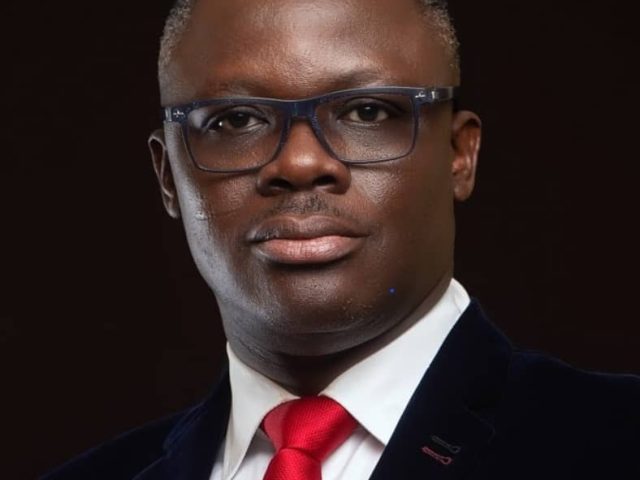

A Private Citizen, Elorm Kwami Gorni, has filed a lawsuit against the Attorney-General, Dr. Dominic Ayine, and the Chief Justice, Justice Paul Bafffoe-Bonnie, at the Supreme Court, challenging the practice of legal vacation. The case is set to test the legitimacy of the Supreme Court's handling of such matters.
The Practice of Legal Vacation
The practice of legal vacation allows judges to take a break from their duties for a specified period, usually during the annual recess. This practice has been in place for decades, but its legitimacy has been questioned by some. Elorm Kwami Gorni's lawsuit seeks to challenge the constitutionality of this practice, arguing that it undermines the independence and impartiality of the judiciary.
A Challenge to the Supreme Court's Legitimacy
The Supreme Court's legitimacy has been a topic of discussion in recent years, with some arguing that the Court's handling of certain cases has eroded public trust. A Harvard Law Review article published in 2022 highlighted the issue, citing the Court's failure to adhere to ethical rules and its refusal to recuse itself from cases where necessary. The article noted that the Court's legitimacy dilemma is a result of its own actions, rather than external factors.
Recusal and the Code of Conduct
The Code of Conduct for United States Judges prohibits ex parte communications between judges and persons interested in their decisions. However, the Supreme Court has repeatedly claimed that it is bound by this code, despite its own actions suggesting otherwise. The Alliance for Justice has argued that the Court's refusal to adhere to the Code of Conduct is a major contributor to its legitimacy crisis.
A Constitutional Challenge
Elorm Kwami Gorni's lawsuit argues that the practice of legal vacation is unconstitutional, as it allows judges to take a break from their duties without due process. The lawsuit also challenges the Supreme Court's authority to hear cases during the annual recess, arguing that this practice undermines the independence and impartiality of the judiciary. The case is set to test the limits of the Supreme Court's power and its commitment to upholding the Constitution.
Next Steps
The case is set to be heard at the Supreme Court, with a date yet to be determined. The outcome of the case is uncertain, but it has the potential to shape the future of the judiciary and the legitimacy of the Supreme Court. As the case proceeds, it remains to be seen whether the Court will uphold the practice of legal vacation or whether it will be struck down as unconstitutional.
Source: 3News