
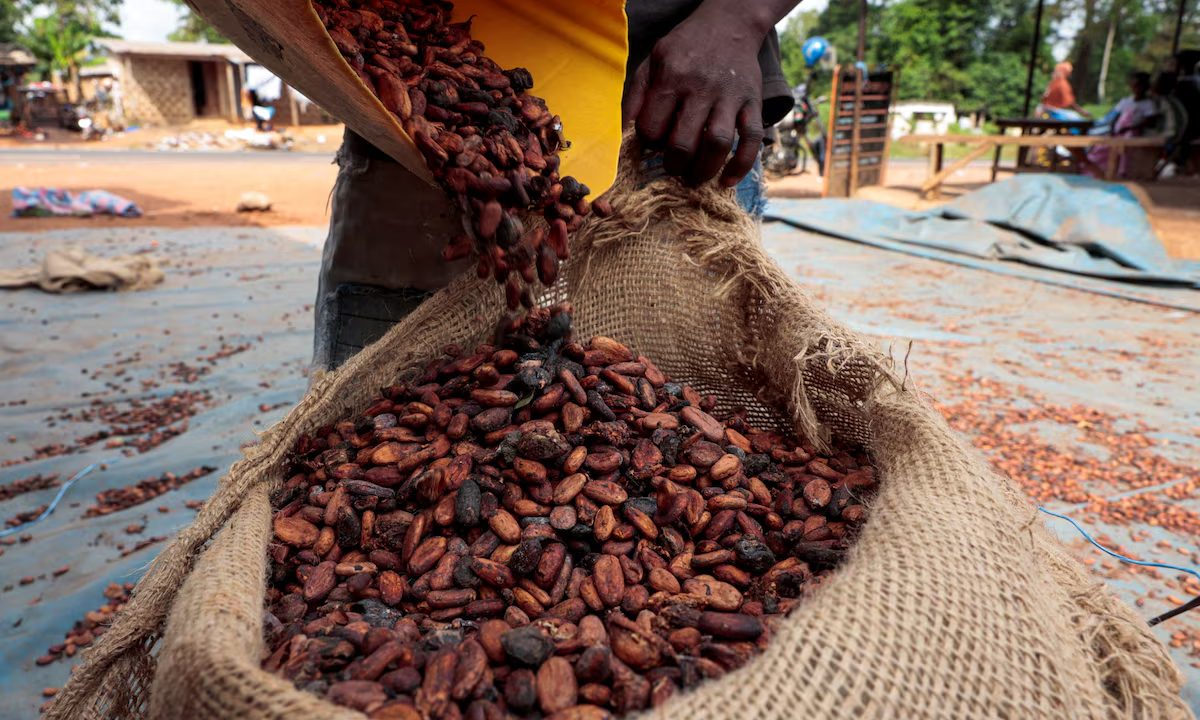
Ghana's government has introduced a new law aimed at protecting cocoa farms from illegal mining, but the legislation has sparked concerns over farmers' rights. The COCOBOD Act, which regulates the cocoa sector, includes clauses that have raised questions about accessibility, proportionality, and fairness.
Land-Use Restrictions Spark Debate
The new law, in particular, has been criticized for its restrictions on land use. Clause 81 requires farmers to obtain prior approval from the Minister before converting cocoa farms to another agricultural crop or land use. While the government maintains that this is a reasonable safeguard, critics argue that it may be a significant hurdle for smallholder farmers.
Many of these farmers cultivate less than five acres of land, often in remote communities with limited access to public institutions and administrative services. Obtaining ministerial approval may require traveling long distances, navigating unfamiliar procedures, and waiting for decisions from a centralized authority. These are significant hurdles for farmers whose expertise lies in producing cocoa, not navigating government bureaucracy.
Criminal Sanctions for Non-Compliance
The concern becomes even more profound when Clause 81 is read together with Clause 110, which reportedly makes it a criminal offense for a farmer to convert a cocoa farm to another crop or land use without complying with the requirements of the Act. This raises serious legal, constitutional, and public policy concerns.
Criminal law is generally reserved for conduct that causes significant public harm. However, should a farmer who wishes to cultivate coconut, rubber, cashew, or another legitimate crop on privately owned land be exposed to criminal prosecution merely because an administrative approval was not obtained? That question deserves careful national reflection.
Governance Implications
The administrative and criminal consequences of Clauses 81 and 110 are therefore more likely to fall on law-abiding farmers than on the criminal actors whose conduct the legislation is intended to prevent. There are also significant governance implications. If thousands of farmers across Ghana are required to obtain ministerial approval before converting relatively small cocoa farms, can such a centralized system realistically process applications efficiently and within a reasonable timeframe?
Administrative delays, inconsistent decision-making, increased transaction costs, and opportunities for rent-seeking are all foreseeable risks. A regulatory system that is cumbersome and inaccessible may ultimately undermine compliance rather than strengthen it.
Targeted Solutions Needed
Rather than criminalizing legitimate land-use decisions, the government should intensify enforcement against illegal mining syndicates, improve producer prices, support the rehabilitation of ageing farms, expand agricultural extension services, and invest in climate-smart cocoa production. If regulatory oversight of land-use changes is considered necessary, a decentralized approval mechanism administered at the district or regional level would be far more accessible, efficient, and responsive than requiring approval from the Minister for every individual case.
The Constitution of Ghana protects the right of citizens to own and enjoy property while permitting the state to regulate land use for the greater good. However, the COCOBOD Act's provisions have raised concerns that the government's efforts to protect cocoa farms may ultimately undermine the rights of the very farmers it aims to support.
The debate surrounding the COCOBOD Act highlights the need for a more nuanced approach to land-use regulation. By prioritizing the needs of smallholder farmers and addressing the underlying challenges facing the cocoa sector, the government can create a more sustainable and equitable system for all stakeholders involved.
Source: Joy Online