
Metropolitan, Municipal and District Assemblies (MMDAs) across the country will receive their second-quarter District Assemblies Common Fund (DACF) transfers this week. The transfers will be made to assemblies that have met the reporting requirements, with four MMDAs yet to comply.
DACF Tightens Compliance Mechanisms
Administrator of the DACF, Mr Michael Harry Yamson, said the Fund has strengthened its compliance mechanisms to ensure that assemblies submit their financial returns through the Integrated Financial Management Information System (GIFMIS) before transfers are effected. This move is intended to strengthen financial accountability and ensure that public funds are released to assemblies that meet the required reporting standards.
Mr Yamson emphasized that assemblies that have not met the requirements will have to wait until they submit the necessary returns before receiving their funds. "Everybody else will get their money between Friday and the following Friday, and those who don’t comply, just wait. Your money is at the Central Bank and whenever you comply, you’ll get it," he said.
Assemblies Urged to Strengthen Internally Generated Funds
Mr Yamson also urged assemblies to strengthen their internally generated funds (IGF), saying excessive dependence on DACF transfers could undermine sustainable local development. He suggested that assemblies could increase revenue through property rates, market levies, and other charges linked to economic activities within their jurisdictions.
"It’s a question of looking at your own economic base rigorously and making some tough choices about making sure that the assembly earns its fair share of these economic flows," Mr Yamson said. He added that stronger local revenue mobilisation formed part of proposals to transform Ghana's decentralisation system and reduce assemblies' dependence on central government transfers.
DACF Introduces Reforms to Improve Transparency
The DACF has also introduced reforms to improve transparency through digital systems, including the Intellects platform, which brings together financial and operational information on assemblies. This system enables the DACF to monitor returns, bank reconciliations, and development projects, with project information tracked to electoral areas.
Mr Yamson said the system is live, transparent, and accurate, with accurate information available to the electoral area. He added that the system will not only show information by district but also by electoral area, giving a better understanding of where development went. "We’ve built a system that is live, that is transparent and that is accurate. Accurate to electoral area," he said.
Community Partners Fund Launched to Mobilise Additional Resources
The DACF has also launched the Community Partners Fund to mobilise additional resources from citizens, the diaspora, corporate bodies, and international organisations to support local development. Mr Yamson said the Fund will complement government transfers and enable the DACF to build stronger links between assemblies and private-sector financing for local development projects.
The ultimate objective, he said, is to move Ghana's decentralisation system beyond dependence on grants towards stronger fiscal, administrative, and political autonomy for local governments. Mr Yamson called for collaboration among Parliament, government institutions, development partners, assemblies, and citizens to ensure that decentralisation delivers meaningful development at the local level.
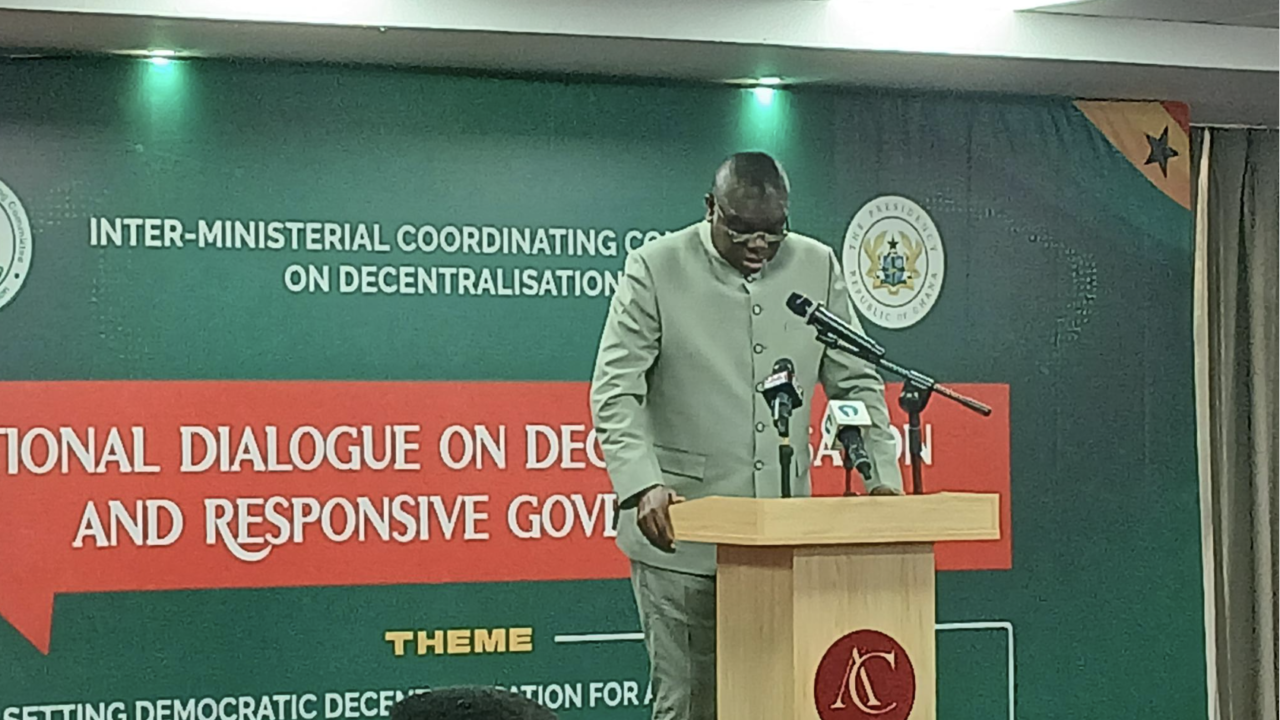
The decentralisation system has been a subject of discussion at the National Dialogue on Decentralisation and Responsive Governance, which brought together regional ministers, MMDCEs, traditional leaders, local government experts, development partners, civil society organisations, and other stakeholders. The two-day dialogue was on the theme: “Resetting Democratic Decentralisation for Accountable Public Service Delivery and Accelerated Local Development.”
Source: Joy Online