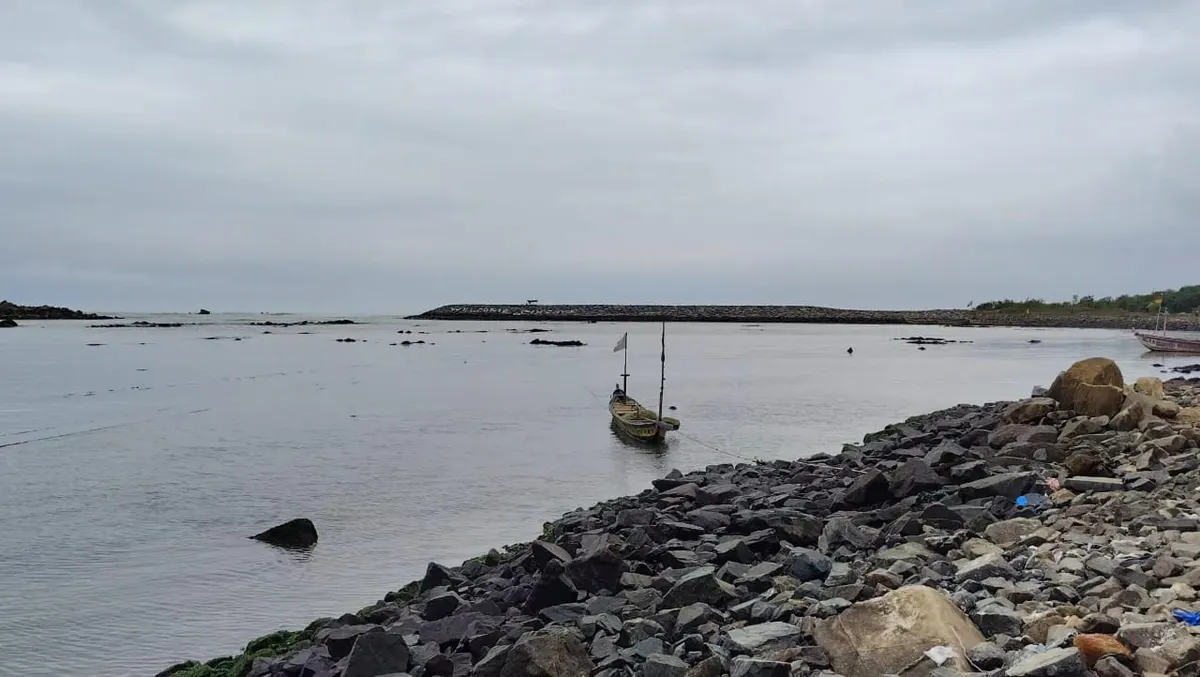
Ten lives have died and GH₵300,000 lost in a single day after dangerous sea currents battered Dixcove’s fishing landing site, fishers say. The community has intensified demands for the government to urgently rebuild the existing breakwater, which they blame for worsening conditions and deadly accidents during peak currents in August and September.
The breakwater was originally designed to absorb and deflect ocean waves, but locals report it has increased risks to vessels and gear. “We are scared, especially in August when the sea currents are high,” said Francis Antwi, a survivor of a recent wreck. The breakwater’s placement has created hazardous conditions that push canoes and nets into perilous currents, leading to frequent capsizes.
Thomas Sagoe, a local fisher, said the structure’s location is the core problem. “You will die if you don’t know how to swim. It would have been better if the breakwater was constructed at the other end,” he said. Fishers estimate that on average, each incident causes GH₵300,000 in damages from wrecked canoes and lost equipment.
The financial impact ripples through families dependent on fishing for daily survival. “We at Dixcove are suffering. Imagine losing about GH₵300,000 in a day to this current. How do we cater for our children?” one fisher asked.
Nana Kwaku Dade II, Chief Fisherman for Lower Dixcove, told Accra Posts the government must reconstruct the breakwater and redirect its opening toward a calmer landing area. He referenced a similar situation in the neighbouring community of Axim, where dangerous currents prompted a successful reconstruction. “We’ve long publicized this matter. They should reconstruct the breakwater. Axim suffered a similar incident, and now theirs has been reconstructed. The currents at Axim were even more dangerous than ours, but that is no more,” Nana Dade said.
He added that fishermen from Dixcove now land at Axim during turbulent sea conditions. “Today, we land at their shores when there’s turbulence at sea,” he said, underscoring the urgency for a local fix.
The fishing community’s frustration has boiled over into political threats. Community leaders have announced plans for a demonstration and warned of an election boycott if authorities fail to act. “We have decided to embark on a demonstration. We will boycott future elections if the government fails to reconstruct the breakwater and get us a harbour,” Nana Kwaku Dade II said.
Meanwhile, fishers continue to take precautions before every trip, though the risks remain high. The crisis in Dixcove reflects broader coastal vulnerabilities across Ghana’s Western Region, where storm surges, tidal waves, and erosion frequently damage fishing canoes, nets, and engines.
A recent study in the Ahanta West District, which includes Dixcove, found that over 91% of fishermen reported occupational accidents within a three-month period. The report linked the high accident rate to inadequate safety infrastructure and environmental challenges.
Experts have warned that poorly sited coastal defence structures can reduce fish catches by making landing beaches hazardous and limiting access to processing sites, causing further economic losses for fishing communities.
For now, the breakwater’s design and location remain at the centre of Dixcove’s mounting losses and human toll.
According to 3News.