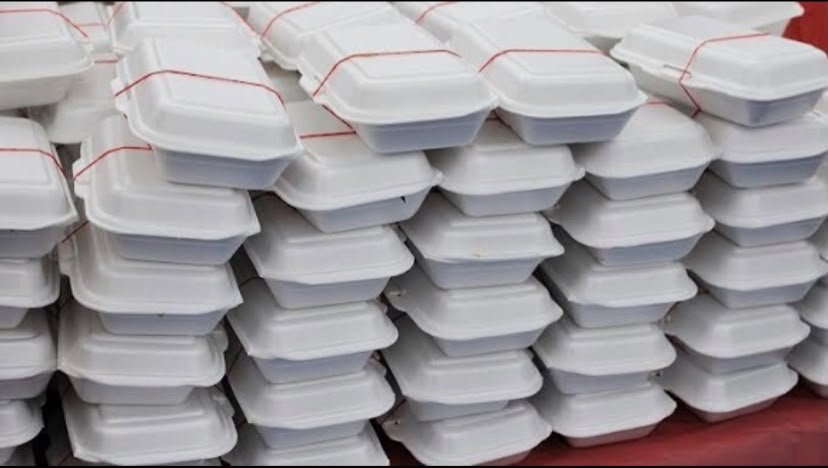
The Environmental Protection Authority (EPA) has announced plans to intensify public education and stakeholder engagement ahead of Ghana's planned ban on single-use styrofoam food packaging, set to take effect on January 1, 2027.
Nationwide Awareness Campaign
The EPA's Director of Human Settlement, Hope Smith Lomotey, revealed that the Authority has spent years engaging stakeholders across the plastics value chain and will continue its awareness campaign in the months leading up to the implementation date. Speaking during the eighth edition of the Loud and Green X Spaces, Mr Lomotey emphasized that the campaign will focus on achieving voluntary compliance before the policy takes effect.
"We have done a lot of engagement and the engagement will still continue with the importers, because we cannot import any raw material for the production of styrofoam without approval from EPA," Mr Lomotey said. The Authority has already engaged importers, manufacturers, hoteliers, restaurants, food vendors, and other businesses expected to be affected by the policy.
Transition to Environmentally Friendly Packaging
The EPA is urging Ghanaians to look beyond the immediate cost of environmentally friendly packaging and consider the long-term environmental and public health benefits of the transition. "It's not going to affect anybody as such, but it will affect, because we are doing a shift. We are shifting from polystyrene or the single-use styrofoam to an alternative which is environmentally friendly," Mr Lomotey said.
The Authority plans to take its message directly to traders and consumers in major commercial centres across the country, including Makola Market in Accra. "Come Tuesday, next week, we are going to the market. We are having a very big campaign at Makola, and we will have some float as well to the principal streets of Accra… and the regions as well are also doing their own campaign," Mr Lomotey revealed.
Compliance and Enforcement
Addressing concerns about the higher cost of biodegradable packaging, Mr Lomotey acknowledged that greener products are currently more expensive than styrofoam. However, he expressed confidence that prices would fall as production and demand increase. "It is true. Anything green, anything environmentally friendly is a little bit expensive because it is better as far as the environment and public health is concerned… After the ban, if a lot of people are on board importing, manufacturing and using it, the demand becomes high. But definitely, the price will gradually stabilise and drop," he said.
The EPA is prepared to enforce the ban where necessary once it comes into force, with prohibited styrofoam products imported after January 1, 2027, not being cleared at Ghana's ports and being confiscated by the authorities. "If you bring the product, you cannot clear it. You can't clear it… It will be confiscated at the port," Mr Lomotey warned.
Ghana's Environmental Reforms
Ghana has previously implemented successful environmental reforms, including the phase-out of leaded fuel and restrictions on plastic packaging within parts of the cement industry. Expressing optimism that the country's transition away from styrofoam would achieve similar success, Mr Lomotey noted that the EPA has faith in Ghanaians to comply with the ban. "I have faith in Ghanaians because this is not the first time we are banning something. People welcome it. And I know we will not get to the point [of] going market to market arresting people that they are still using styrofoam. Everybody will comply," he said.
Source: Joy Online